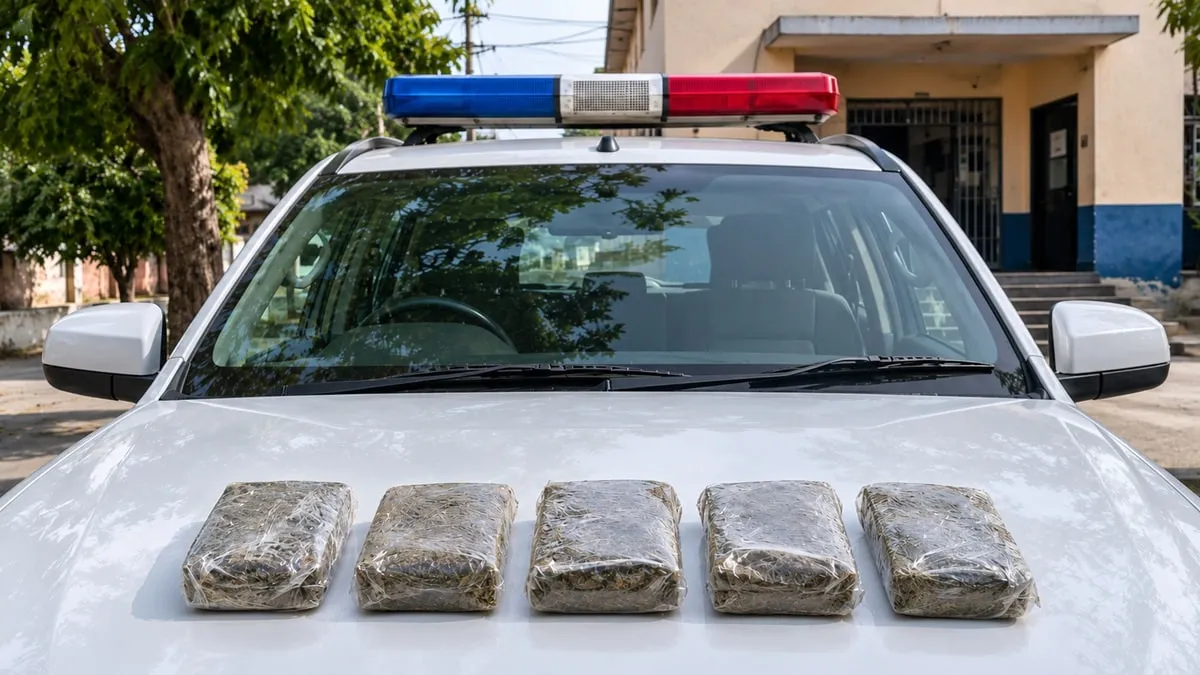
Faisalabad Police Vehicle Seized in Drug Supply Case
Faisalabad City Police Officer Tanweer Hussain Tanvio has suspended four police officials, including a station house officer, and dismissed a constable after he was caught allegedly supplying hashish to a drug dealer in an official police vehicle.
The incident came to light when law enforcement agencies intercepted an official automobile belonging to the law enforcement department. The operation exposed deep vulnerabilities within local station management and triggered immediate disciplinary actions from the top command.
Public trust in local security institutions depends heavily on strict adherence to the law by those sworn to uphold it. When officers charged with fighting crime become perpetrators, it creates a crisis of confidence that requires swift administrative intervention and transparent accountability.
Role of the Narcotics Control Force in the Faisalabad Arrest
The Narcotics Control Force arrested Constable Kashif, posted at Gulberg police station, following a tip-off about a drug delivery. The suspect was allegedly using the station house officer official vehicle to transport five kilograms of hashish to a local drug dealer.
Acting on the information, an Narcotics Control Force team intercepted the vehicle at the identified location and arrested Kashif. Officials recovered five packets of hashish, each weighing one kilogram, and seized the police vehicle used in the alleged drug supply.
Intelligence-led operations by specialized bureaus often target high-value targets or corrupt elements within public services. The precision of this interception highlights the ongoing efforts to dismantle illicit narcotics distribution networks operating within urban centers.
Immediate Inquiry Ordered by City Police Officer Tanweer Hussain Tanvio
Following the incident, City Police Officer Tanvio ordered an inquiry and appointed Senior Superintendent of Police Operations Malik Imran to investigate the matter. Administrative leaders face intense scrutiny when departmental resources are misused for criminal enterprises.
The designated senior superintendent will examine the extent of the conspiracy, determining whether other personnel within the station knew about or facilitated the illegal transport. Internal inquiries typically review station logs, vehicle dispatch records, and communication histories of the accused individuals.
Thorough investigations ensure that accountability reaches beyond the low-ranking operative caught at the scene. Establishing clear facts through a formal inquiry protects institutional integrity while preparing the ground for potential criminal prosecutions.
Dismissals and Suspensions at Gulberg Police Station
Based on the initial findings, Kashif was dismissed from service with immediate effect, while Gulberg station house officer Abdul Ghaffar, Assistant Sub-Inspector Suhail Ahmad, Muharrar Tasneem Ahmad, and Constable Mahboob Ali were suspended over their alleged involvement in drug supply and sales.
The removal of multiple personnel from a single station points toward systemic oversight failures. The suspended officers face administrative reviews that will determine their final employment status and legal liability as the criminal case proceeds through the courts.
Station management roles, such as the station house officer and the muharrar, carry direct responsibility for station assets and personnel conduct. Failing to monitor vehicle usage or subordinate activities creates opportunities for severe abuses of power.
Broader Impact on Regional Law Enforcement and Drug Control
The illicit narcotics trade remains a persistent challenge for regional authorities, making internal corruption a critical obstacle to public safety. When law enforcement vehicles are co-opted for trafficking, it compromises checkpoints and evades routine police scrutiny.
Citizens and local businesses rely on community protection services to maintain order and suppress illegal substances. Incidents of this nature damage community relations and complicate the daily duties of honest officers striving to perform their jobs ethically.
Rebuilding confidence requires visible consequences and structural reforms within station hierarchies. Departmental leaders must demonstrate that criminal actions by sworn personnel will meet with uncompromising disciplinary measures and legal accountability.
Next Steps in the Departmental and Criminal Investigation
The ongoing inquiry led by Senior Superintendent of Police Operations Malik Imran will dictate the next phase of administrative and legal procedures. Investigators will compile evidence for court proceedings while finalizing the departmental report for the City Police Officer.
Observers will watch for formal charges to be filed against all detained and suspended personnel. Judicial processes will determine guilt under national drug control statutes, while internal reviews will establish permanent employment penalties for those found culpable.
Ensuring transparency throughout the legal proceedings remains essential for public reassurance. The outcome of this case will set a precedent for how internal corruption and the misuse of official assets are handled within the regional department.





