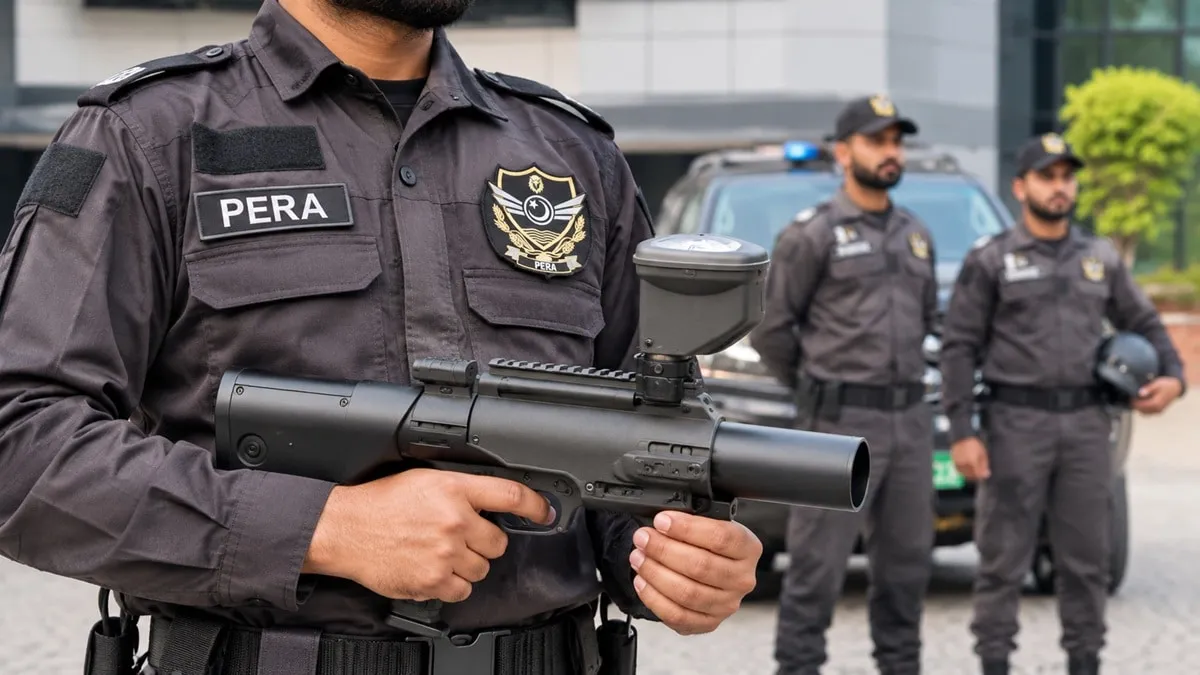
Punjab Government Equips PERA Force With Non-Lethal Chemical Weapons
The Punjab government has decided to equip the Punjab Enforcement and Regulatory Authority (PERA) Force with non-lethal guns that fire chemical-based projectiles. This strategic decision marks a shift in how enforcement personnel will manage confrontations in the field, aiming to increase safety while maintaining order during official duties across the region.
Officials stated that the weapons will reportedly be used against individuals who resist PERA personnel during enforcement operations. By introducing this equipment, the authority hopes to reduce physical altercations and manage uncooperative crowds or suspects without resorting to lethal force.
Understanding the Chemical Projectiles and PAVA Powder
The specialized ammunition chosen for these new weapons contains active chemical irritants designed for crowd control and individual deterrence. The projectiles contain an irritant substance designed to cause severe burning sensations upon impact and exposure.
According to reports, the ammunition reportedly contains 2 percent PAVA powder, which can cause serious irritation to the eyes, nose, and respiratory tract. PAVA, or pelargonic acid vanillylamide, is a synthetic analog of capsaicin, the active component found in chili peppers, and is known for producing intense discomfort and temporary incapacitation.
Health Risks Associated With Non-Lethal Ammunition
Despite being classified as non-lethal, the weapons may pose health risks to those exposed to the chemical substance. Medical experts generally note that while such agents are designed to avoid permanent injury or death, individuals with pre-existing conditions like asthma or severe allergies can experience dangerous complications.
The inclusion of PAVA powder means that exposure affects multiple sensory systems simultaneously. Personnel using these firearms will need to balance enforcement needs with the potential medical vulnerabilities of the subjects they target.
Procurement Costs and Tender Details for PERA Weapons
The acquisition of these specialized enforcement tools involves significant public expenditure. The weapons are expected to cost Rs. 18 million, reflecting the specialized manufacturing and safety standards required for government-issued regulatory gear.
To facilitate the purchase, PERA reportedly issuing a formal tender for their procurement. This tender process invites qualified defense and security suppliers to submit bids for providing the non-lethal firearms and the corresponding chemical projectile ammunition.
Background on Punjab Enforcement and Regulatory Authority Operations
Regulatory authorities in Punjab operate within dense urban and rural environments where enforcement agents frequently encounter resistance. Over recent years, provincial bodies have sought better methods to enforce municipal laws, zoning regulations, and market controls without escalating street-level tensions.
Equipping specialized enforcement units with intermediate force options is a common administrative strategy. It bridges the gap between verbal commands and firearms, offering a tactical solution designed to protect personnel while carrying out mandated inspections and clearings.
Impact on Enforcement Personnel and Local Communities
For the agents serving in the field, having access to non-lethal alternatives provides a psychological and physical safety buffer. Officers dealing with hostile resistance often face difficult choices, and chemical projectile launchers offer a way to neutralize threats from a distance.
For local citizens and business owners, the introduction of these weapons means that enforcement operations could carry higher immediate discomfort if resistance occurs. Communities will need to adapt to stricter enforcement measures backed by advanced tactical gear as PERA expands its operational capacity across Punjab.
What to Watch For in Future PERA Procurements
As the procurement process moves forward, observers will monitor the fulfillment of the Rs. 18 million tender. Key details to follow include the selection of the winning supplier, the exact timeline for weapon delivery, and the formulation of standard operating procedures for PERA personnel.
Additionally, public safety advocates will likely track training protocols established for the force. Ensuring that officers receive proper instruction on deployment thresholds and medical aftercare will determine the long-term success and safety of the new equipment initiative.