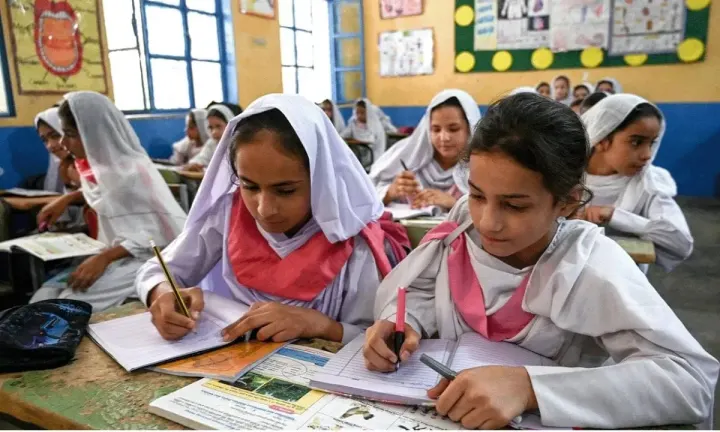
Punjab's School Education Department announced on Monday that textbooks for Grades 1 to 5 will be reduced by up to 40 percent, a move intended to lessen academic pressure and shift teaching away from rote memorisation.
The department said the revised books are in the final stages of preparation, with officials reviewing the material before granting final approval.
Why the Textbook Reduction Matters
Punjab has long struggled with high student-to-teacher ratios and a curriculum that many parents and teachers describe as overly dense. Reducing the volume of content is meant to give young learners more breathing space, allowing teachers to spend class time on discussion, problem-solving and hands-on activities.
Education experts note that younger children benefit from shorter, clearer texts that focus on core ideas rather than exhaustive lists of facts. By cutting up to 40 percent of the material, the government hopes to improve comprehension scores and reduce dropout rates in later years.
What Changes Are Being Made to the Books
The new primary textbooks will retain the core syllabus prescribed by the Punjab School Education Board but will present it in a more concise format. Key changes include:
- Streamlined chapters that eliminate repetitive examples.
- Greater use of illustrations and diagrams to explain concepts.
- Inclusion of QR codes on selected pages that link to short educational videos and supplementary worksheets.
Officials said the QR codes will give students access to digital content that reinforces the printed material, creating a blended-learning environment without requiring a full internet-based curriculum.
How the QR Code Feature Works
Each QR code is printed near the end of a lesson segment. When scanned with a smartphone or tablet, the code opens a secure portal hosted by the Punjab Education Department. The portal contains:
- Animated explanations of the concept covered in the chapter.
- Practice questions with instant feedback.
- Downloadable worksheets for offline use.
Teachers are being trained to integrate these digital resources into daily lessons, and parents will receive guidance on how to help children use the videos at home.
Timeline for Implementation
The department stated that the preparation and review of the Grade 1-5 textbooks will be completed soon, with distribution planned for the start of the next academic session. While exact dates were not disclosed, officials indicated that the books will be on shelves before schools reopen for the September term.
For Grades 6 to 8, the department announced a plan to apply the same reduction and QR-code strategy during the next academic year. This phased approach allows teachers to adjust to the new material and provides time to assess the impact on primary learners.
Background: Punjab's Ongoing Education Reform
Punjab has pursued a series of education reforms over the past decade, including the introduction of the Punjab School Education Board (PSEB) curriculum in 2016 and a statewide teacher-training programme launched in 2019. Those reforms aimed to modernise teaching methods and improve learning outcomes, but assessments have shown that primary students still spend a large portion of class time copying text.
Nationally, the Indian Ministry of Education released the National Education Policy (NEP) 2020, which recommends reducing textbook load and integrating technology at the primary level. Punjab's latest move aligns with NEP guidelines and reflects a broader trend among Indian states to adopt concept-oriented pedagogy.
Impact on Stakeholders
Students will encounter shorter textbooks, which should make homework less time-consuming and allow more play and rest. Teachers will need to adapt lesson plans, focusing on interactive activities rather than lecture-style delivery. Parents may see a reduction in the amount of after-school tutoring required, potentially easing household expenses.
Publishers will have to re-print the revised books and incorporate QR code technology, a process that may affect production timelines and costs. The department has not disclosed the financial impact, but officials assured that the changes will not increase the price of textbooks for families.
What to Watch for Next
Education analysts will monitor the first batch of revised textbooks for student performance data, teacher feedback and parental satisfaction. The department plans to conduct a pilot survey in select districts after the first semester of use, with results expected to inform the rollout for Grades 6-8.
Stakeholders are also awaiting guidelines on how schools will handle the digital component, especially in rural areas with limited internet connectivity. The department has hinted at offline versions of the video content that can be pre-loaded onto school computers.
Overall, the reduction of primary textbook content and the addition of QR-linked resources represent a concrete step toward the broader goal of making education in Punjab more child-friendly and future-ready.