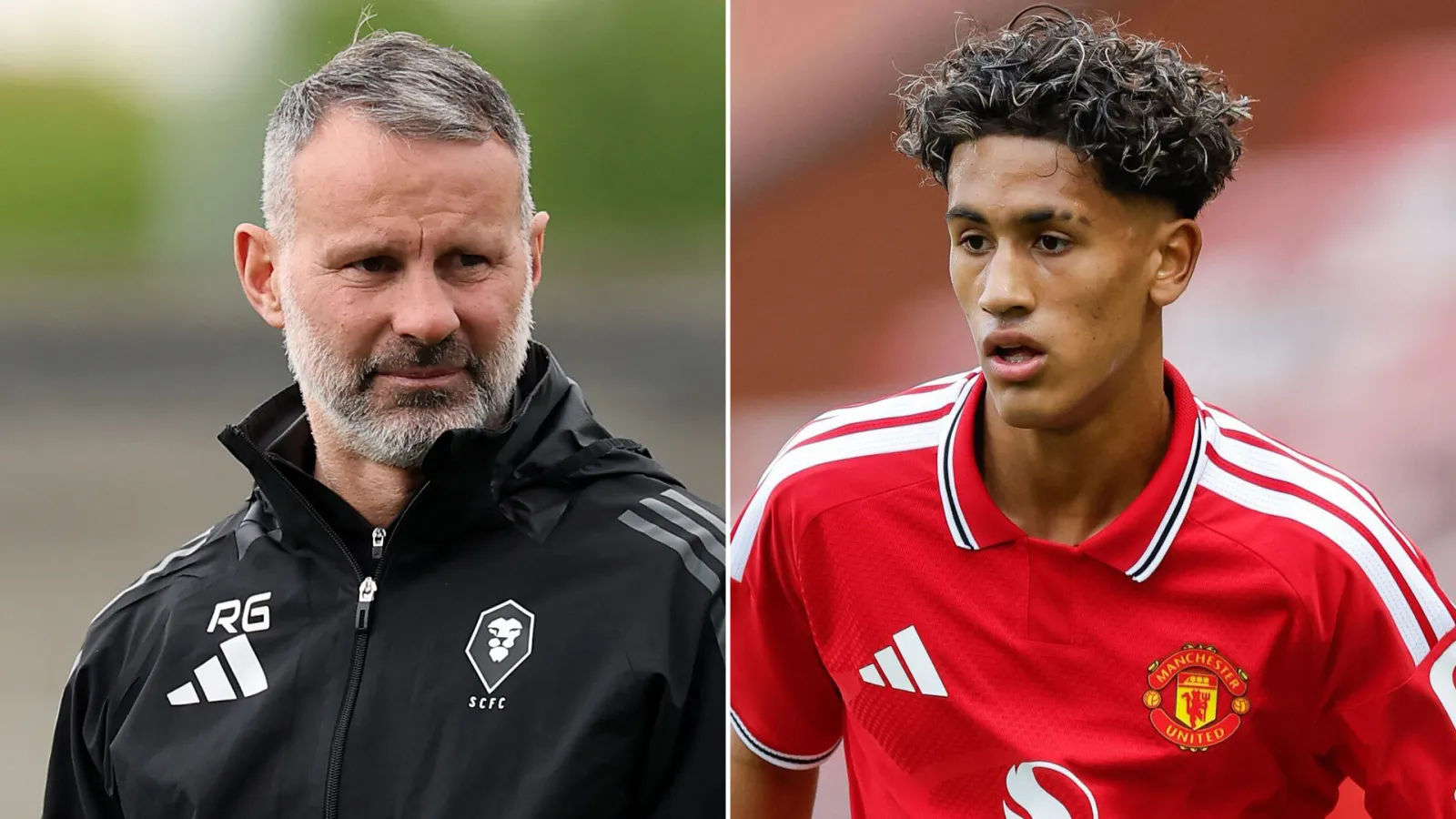
Manchester United legend Ryan Giggs has warned 16-year-old JJ Gabriel that a teenage transfer to a major club will not guarantee a smooth career trajectory.
What Giggs Said on Rio Ferdinand's YouTube Channel
During a recent interview on former teammate Rio Ferdinand's YouTube channel, Giggs addressed the situation surrounding Gabriel, who turned 16 last month and is expected to join Spanish giants Real Madrid in January. Giggs said: "So far in his career everything is going fine, why would you disrupt that? You're on the right track." He added, "I trained at 15, I didn't play for the first team until two years later so you have to have that patience that people just don't seem to have at the moment."
Giggs continued, "And believe it or not, first-team football for Man United is completely different to playing in the youth team, playing pre-season for the first team, it's completely different. That first game, yeah, you might do alright, but you have to do it for 40, 50 games a season. You're going to get injuries, loss of form, bad results, so you have to be patient. If you're on the right trajectory then just bide your time, no matter how good you are."
Why the Warning Matters for a 16-Year-Old Wonderkid
Gabriel made headlines a few months ago when he formally requested a move away from Old Trafford before signing a professional contract. The request surprised United's hierarchy because it came at a stage when most academy players are still honing basic technical and physical attributes.
Real Madrid's interest, according to the article, is based on a training compensation arrangement that United will receive in January. The compensation model, governed by FIFA's Regulations on the Status and Transfer of Players, requires the new club to pay the training club a set fee for each year the player spent in the academy between ages 12 and 21. In Gabriel's case, United will receive a one-off payment rather than a long-term sell-on clause.
Historical Context: Young Players Moving Abroad
Giggs' own path provides a useful benchmark. He debuted for United's first team at 17, stayed until he retired at 40, and amassed 963 appearances and 34 major trophies. By contrast, other British talents who moved abroad as teenagers have had mixed results. For example, Jadon Sancho left Manchester City for Borussia Dortmund at 17 and flourished, while others like Jack Rodwell struggled after early moves to foreign clubs.
The pattern shows that success depends on a combination of physical maturity, mental resilience, and the receiving club's willingness to integrate a teenager gradually. Real Madrid historically favours a "big-club-big-player" model, but it also runs a successful academy (La Fábrica) that has produced players such as Dani Carvajal and Álvaro Morata.
Manchester United's Current Situation
United's on-field performance adds urgency to the discussion. The club sits 18th in the Premier League, a position that threatens relegation. Manager Michael Carrick, appointed after the dismissal of Erik ten Hag, faces intense scrutiny and could be dismissed if results do not improve. Sir Jim Ratcliffe's recent investment has not yet translated into consistent performances, and the squad is experiencing "growing pains" as noted in the source.
These struggles mean that United's academy prospects are under heightened pressure to deliver immediate impact. The club's recent transfer policy has focused on loan deals and free-signings rather than big-ticket purchases, reflecting a tighter financial environment after the Ratcliffe takeover.
Who Is Behind Gabriel's Decision?
The article mentions that Gabriel's career appears to be driven by his ex-professional footballing father, Joe O'Cearuill. While no public statements from O'Cearuill have been released, it is common for former players to guide their children through contract negotiations, especially when large clubs and international moves are involved.
Agents also play a crucial role. In similar high-profile teenage transfers, agents negotiate clauses that protect the player's development, such as guaranteed playing time or loan-back options. It is unclear whether Gabriel's representation has secured such terms with Real Madrid.
Potential Impact on Gabriel's Development
If Gabriel moves to Madrid in January, he will join a squad that regularly competes in the UEFA Champions League and the Spanish La Liga. The training environment will be world-class, but competition for first-team minutes is fierce. Real Madrid's recent policy has seen a blend of seasoned internationals and home-grown talent, yet the club still tends to rely on established stars for key matches.
For a 16-year-old, the risk includes limited game time, cultural adaptation challenges, and heightened media scrutiny. Giggs' advice stresses the need for patience, echoing the idea that a gradual integration, perhaps starting with the Castilla side, offers a more sustainable pathway.
What Comes Next for JJ Gabriel and Manchester United
The January transfer window will determine whether United receives the training compensation and whether Gabriel signs a pre-contract with Real Madrid. United's legal team will need to ensure compliance with FIFA's regulations, especially regarding the player's age and the protection of minors.
United's management will also have to decide how to fill the void left by Gabriel's departure, even if he has not yet featured for the first team. The club's scouting department may look to promote another academy prospect or explore the loan market.
For Gabriel, the next steps involve completing medical examinations, obtaining a Spanish work permit, and possibly attending language classes to aid his integration. Real Madrid's academy staff will likely assess his technical and tactical readiness before assigning him to a specific squad.
Practical Takeaways for Young Players and Their Families
- Patience is essential; early first-team exposure does not guarantee long-term success.
- Understanding the financial terms of a transfer, such as training compensation, helps families evaluate the true value of a move.
- Choosing a club with a clear development pathway, whether through reserve teams or strategic loan spells, can protect a teenager's growth.
- Legal compliance with FIFA's regulations on minors is non-negotiable and must be overseen by experienced counsel.
Giggs' warning serves as a reminder that even the most promising talents benefit from a measured approach. While the allure of Real Madrid is undeniable, the journey from academy prospect to senior star is rarely linear.
As Manchester United battles to climb out of the relegation zone, the club's future may hinge on how it balances immediate results with the long-term nurturing of its youth pipeline. Gabriel's case will be watched closely by other clubs, agents, and families navigating the complex world of teenage football transfers.