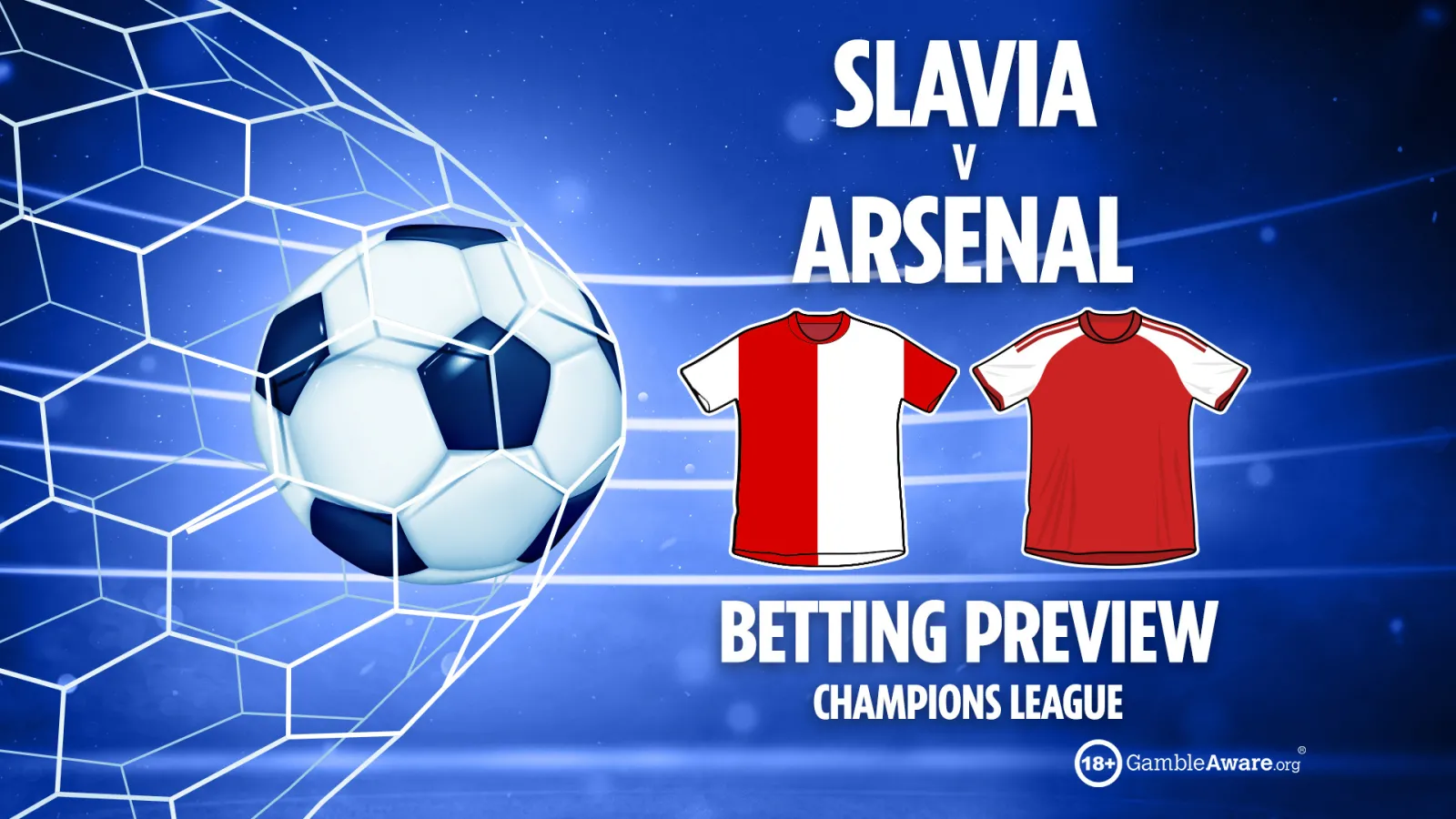
Arsenal are in Czechia on Wednesday night for a matchday four Champions League tie against Slavia Prague. The squad arrived following a strong domestic bounce-back, aiming to secure another vital victory in the premier European club tournament.
Arsenal responded really well to their League Cup embarrassment by beating Liverpool on Sunday. The Reds will rightly feel hard done by at a few decisions throughout the game but ultimately Arsenal defended well to see it out after taking the lead through Kai Havertz. It marks the fourth match out of the last six that they have won without conceding, with a previous cup setback and a draw at Bayern Munich in the last round of matches forming the other results in that run. Confidence is back on track, and with seven points from three games in the competition, another couple of victories are required to progress safely into the knockout stages.
Slavia Prague vs Arsenal Match Context
The visiting English side will be confident of claiming maximum points against a Slavia Prague team holding just one point from their three fixtures so far. That solitary point came last time out against Fenerbahce, following defeats to Sabah and Lens earlier in the group stage. The Czech hosts have been able to focus solely on this upcoming match in recent weeks, having built up a healthy seven-point lead at the top of the Czech top flight.
European fixtures carry significant weight for both clubs as the league phase reaches its midway point. Arsenal manager Mikel Arteta must balance domestic ambitions with European demands, especially given the physical toll of a packed autumn schedule. Slavia Prague, accustomed to the tactical demands of continental football, view home fixtures as essential opportunities to upset established continental giants.
Understanding the Champions League Group Stage Format
The modern Champions League structure features an expanded single-league phase where every participant plays eight matches against different opponents. Teams finishing in the top eight of the overall table automatically advance to the round of sixteen. Clubs finishing between ninth and twenty-fourth enter a two-legged knockout playoff round to secure their progression, while those below twenty-fourth are eliminated entirely.
For Arsenal, accumulating ten points after four games would place them in a very strong position to target a top-eight finish. Avoidance of the extra playoff round is a primary objective for elite clubs seeking to manage player fatigue across a punishing domestic and international calendar.
Recent Form and Defensive Stability
Defensive organization has underpinned Arsenal's recent recovery. Keeping four clean sheets in their last six outings demonstrates a renewed resilience at the back, which will be tested by a disciplined Slavia Prague attacking unit in their home stadium. The ability to grind out results when not playing at their fluid best separates title contenders from inconsistent performers.
Kai Havertz continues to play a central role in the offensive structure, providing crucial goals and physical presence. Alongside him, defenders such as Gabriel offer aerial threat from set-pieces while maintaining solidity alongside William Saliba and the rest of the backline.
Tactical Outlook and Expected Approaches
Slavia Prague typically employ an organized, high-intensity tactical system designed to disrupt opponent buildup play and exploit transition moments. Playing in front of a passionate home crowd in Czechia, they are expected to press aggressively in the opening stages to unsettle the visitors.
Arsenal are likely to prioritize controlled possession, using their technical superiority in midfield to dictate the tempo. Quick ball circulation and patient probing will be necessary to break down a well-drilled defensive block.
What Lies Ahead in the European Campaign
Following this matchday four encounter, both clubs will monitor the remaining fixtures in the league phase closely. The margin for error narrows significantly as December approaches, making every point crucial for final league placement.
Supporters and analysts will watch how squad rotation influences performance levels as the winter schedule intensifies across domestic and international competitions.