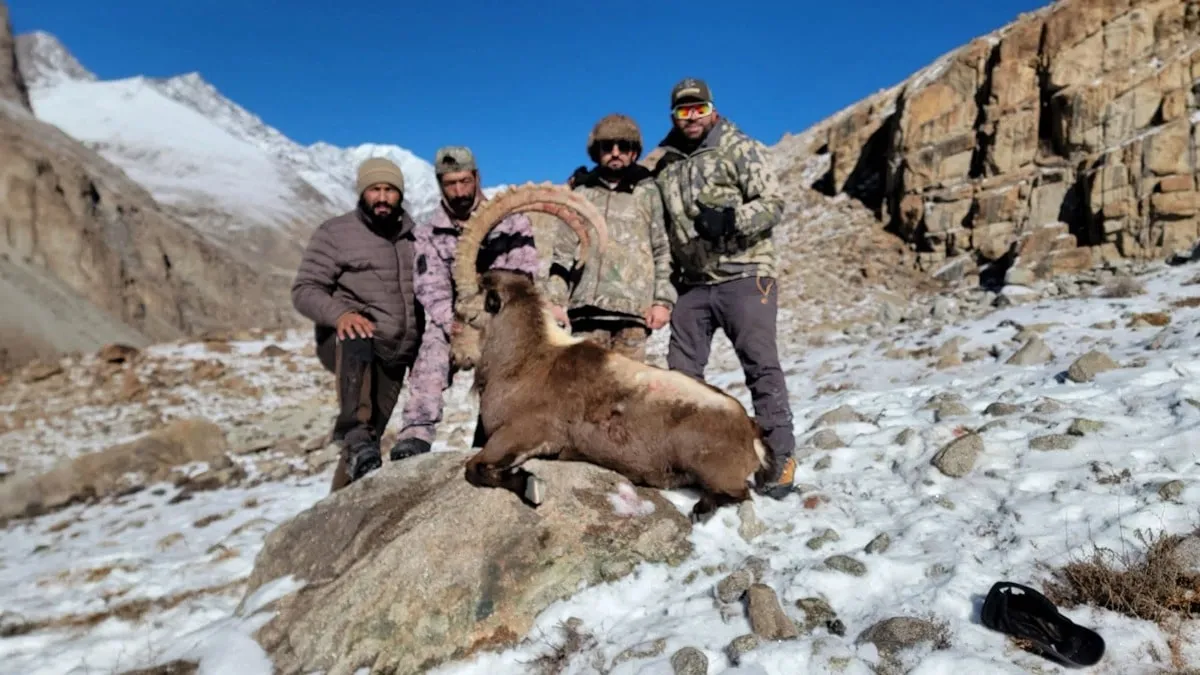
Spanish Citizen Pays $11,000 for First Legal Hunt of 2026-27 Season
A Spanish citizen paid $11,000 for a trophy permit to hunt a Himalayan ibex with 44-inch horns in Gilgit-Baltistan's upper Hunza region on Tuesday, in the first legal hunt of the 2026-27 season.
Miguel Gorostidi Martinez De Ubago hunted the animal in a Community Controlled Hunting Area in Misgar, Wildlife Management Officer Shabbirullah Baig said. He also paid $300 for a shooting licence.
The hunting season will continue until April 10, 2027. Around 80% of the revenue generated through trophy permits goes toward local conservation efforts under a community-based program launched in 1990.
Separately, wildlife officials arrested a suspected poacher in Gojal Valley on Tuesday morning. Wildlife watchman Shah Jahangir caught Nadir Aman, a resident of Haramosh, carrying two illegally hunted Himalayan ibexes during a routine patrol in Khyber village.
Understanding Trophy Hunting Programs in Gilgit-Baltistan
The community-based conservation model in Gilgit-Baltistan relies on regulated trophy hunting to protect endangered and vulnerable mountain wildlife populations. Established in 1990, the program allows a strictly limited number of permits to be auctioned off to international and domestic hunters each year. The high costs associated with these permits provide vital financial support for remote communities that share habitats with these animals.
Instead of viewing wildlife solely as a threat to livestock or agricultural fields, local residents have a financial incentive to protect the species from illegal hunting and habitat destruction. The system ensures that local villagers act as stewards of the land, monitoring animal populations and reporting unauthorized incursions by outsiders.
Wildlife management authorities work closely with local councils to determine quotas for each season. These quotas are based on thorough population surveys to ensure that only older males, which are past their prime reproductive years, are targeted. This careful management has allowed species like the Himalayan ibex and the markhor to recover from historical population lows.
The Role of Community Controlled Hunting Areas
Community Controlled Hunting Areas are designated zones where local residents participate directly in wildlife management and enforcement. The revenue collected from permits is divided between community development projects and conservation initiatives. Villages use these funds to build schools, improve clean water supplies, and repair local infrastructure.
Because the community receives 80% of the revenue generated through trophy permits, residents take an active role in protecting the wildlife from poachers. This localized approach has transformed the relationship between villagers and wildlife, shifting the dynamic from conflict to coexistence. Programs like the one in Misgar demonstrate how sustainable tourism can support both rural economies and biodiversity.
Officials supervise every legal hunt to ensure compliance with strict regulations regarding horn size, animal age, and permitted locations. Hunters must secure proper documentation, including expensive trophy permits and local shooting licences, before taking part in the season.
Anti-Poaching Efforts and Enforcement in Gojal Valley
While legal trophy hunting supports conservation, illegal poaching remains a persistent threat to mountain wildlife in northern regions. Wildlife departments deploy watchmen to conduct routine patrols in vulnerable areas to catch individuals operating outside the law. Law enforcement officers maintain a constant presence in valleys and remote villages to deter unauthorized killing.
The arrest in Gojal Valley highlights the ongoing risks faced by local wildlife populations from illegal hunters who bypass the regulated system. Wildlife watchmen rely on local intelligence and regular patrols to intercept poachers before they can transport illegal animal parts to external markets. Authorities enforce strict legal penalties for anyone caught hunting without official permits or outside the designated season.
The contrast between legal guided hunts and illicit poaching underscores the importance of strict oversight by regional wildlife management officers. While legal participants contribute thousands of dollars to conservation funds, illegal poachers deplete animal numbers without providing any financial return to the local communities.
The Extended Timeline of the 2026-27 Hunting Season
The 2026-27 hunting season spans several months, giving international and domestic sportsmen ample opportunity to participate under strict supervision. The season officially runs until April 10, 2027, allowing wildlife officials to monitor populations across changing winter and spring weather conditions. Weather patterns in the high-altitude terrain often dictate when specific areas remain accessible to hunters and guides.
Permit holders must coordinate their expeditions with local wildlife officers and community guides who know the terrain and animal habits. These precautions ensure safety for all participants and maintain order throughout the remote mountain ranges. As the season progresses, authorities will continue issuing updates on permitted harvests and ongoing conservation metrics.