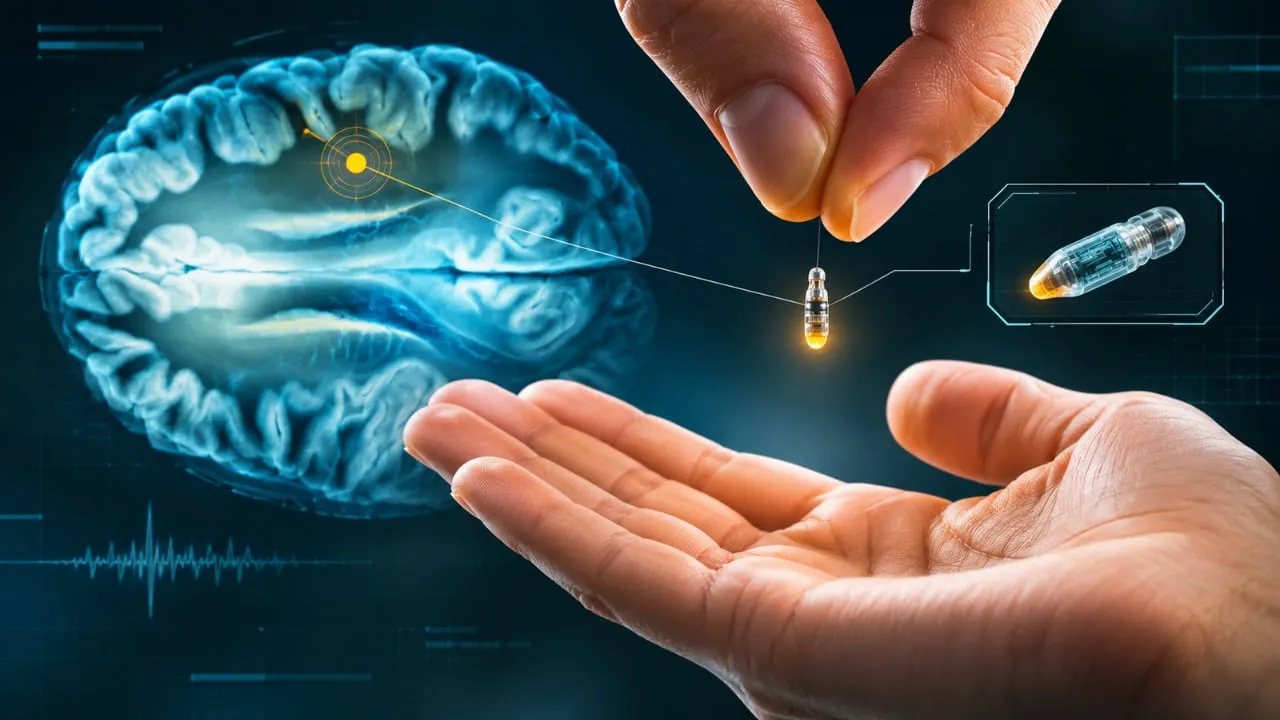
How Caltech Researchers Built BrainBots for Drug Delivery
A team of investigators based at the California Institute of Technology has developed microscopic, biodegradable robots capable of transporting pharmaceutical payloads directly across the protective blood-brain barrier. The scientific findings detailing this advance appeared on November 25 in the publication Science Robotics. Led by Wei Gao, who serves as a professor of medical engineering at the institution, the project offers a fresh strategy for treating complex neurological conditions.
Traditional therapies often fail because the natural defense system of the brain blocks most therapeutic compounds from entering. This barrier protects the central nervous system from circulating toxins and pathogens, but it also creates a major obstacle for physicians attempting to treat brain tumors, neurodegenerative disorders, and other afflictions. The newly invented capsules provide a way to bypass this biological wall without requiring invasive surgical procedures.
The Mechanics of BrainBots and Near-Infrared Activation
The newly engineered structures, formally named BrainBots, measure approximately 250 nanometers in size. Each individual unit contains ammonium bicarbonate, which is a gas-generating compound housed inside an internal compartment. This chamber features a temperature-sensitive gate designed to melt when exposed to specific thermal conditions. Along with the gas generator, the capsule carries the targeted medication and specialized DNA molecules known as aptamers.
These aptamers serve as navigation aids, binding to the cells that line the inner walls of the blood-brain barrier to help the microscopic machines attach themselves securely. The activation sequence relies on near-infrared light directed through the skull of the patient. That light generates localized heat, which causes the temperature-sensitive gate to open. Once the gate is unsealed, the chemical reaction produces gas that propels the device forward toward the barrier.
After successfully crossing into the targeted brain tissue, the capsules naturally break down and release their therapeutic cargo. This active propulsion mechanism solves a major shortcoming of older techniques, since passive injection of drug-loaded nanoparticles rarely delivers a sufficient concentration of medicine to the correct location.
Overcoming the Challenge of the Blood-Brain Barrier
The blood-brain barrier consists of tightly packed endothelial cells that line the blood vessels inside the brain and spinal cord. While this selective membrane is essential for maintaining a stable neural environment, it restricts nearly all large-molecule drugs and more than ninety-eight percent of small-molecule drugs. Medical researchers have spent decades searching for reliable ways to transport pharmaceutical treatments past this wall without causing permanent cellular damage or triggering dangerous inflammation.
Conditions such as glioblastoma and Parkinson disease prove exceptionally difficult to manage because standard intravenous or oral medications cannot penetrate the central nervous system in high enough quantities. Surgeons sometimes inject treatments directly into the brain or cerebrospinal fluid, but these invasive methods carry severe risks of infection, bleeding, and trauma for the patient. The creation of microscopic transport systems aims to eliminate the need for such drastic interventions.
Promising Results in Preclinical Mouse Trials
During laboratory evaluations focused on glioblastoma, which is a notoriously aggressive form of brain cancer, the performance of the devices proved remarkable. Activated BrainBots delivered roughly five times more of the chemotherapy drug doxorubicin to the brain compared to nonactivated versions. This targeted delivery slowed down tumor growth and extended the lifespan of the test subjects. Furthermore, the approach reduced systemic toxicity when compared against the administration of conventional doxorubicin alone.
Observations confirmed that the treatment achieved these outcomes without causing any detectable disruption or structural damage to the blood-brain barrier itself. Because the units are constructed entirely from biocompatible and biodegradable materials, any capsules that fail to reach the brain are absorbed and broken down naturally by organs such as the liver and spleen.
"Because the BrainBots are so small and the blood circulation is so fast, we initially were not sure how much a method based on nanoscale propulsion would increase the passage of drugs through the BBB," Gao says. "We are thrilled to see it worked so well."
Broader Implications for Neurology and Medicine
The potential applications of this technology extend far beyond oncology. Investigators plan to adapt the platform for various other central nervous system disorders that currently lack effective treatment options. While the initial focus centered on destroying cancer cells, the underlying mechanics can theoretically be modified to carry different types of therapeutic molecules.
"Our new nanorobot is not limited to brain delivery, but we are trying to address one of the biggest problems in medicine, crossing the blood–brain barrier, as a starting point," Gao explains. "We targeted cancer, but there are a lot of neurological diseases, such as Parkinson's, for example, that we hope could benefit from this technology."
Funding for the project came from several institutions, including the Heritage Medical Research Institute, the Korea Health Technology R&D Project through the Korea Health Industry Development Institute, the National Research Foundation of Korea, and the Korea Basic Science Institute.
Next Steps and Future Outlook for Human Trials
Despite the encouraging laboratory data, the technology remains in the preclinical phase of testing. All current findings derive strictly from experiments conducted on mice, meaning substantial additional validation is required before clinical evaluations in humans can begin. The research team is actively working to refine the delivery of near-infrared light and conduct comprehensive assessments regarding long-term safety.
Officials have not yet established a definitive timeline for launching human clinical trials. Observers and medical professionals will need to monitor peer-reviewed updates as the laboratory transitions from animal models toward human applications. Readers seeking further technical details can review the published paper in Science Robotics, which also includes a complete list of contributing co-authors.