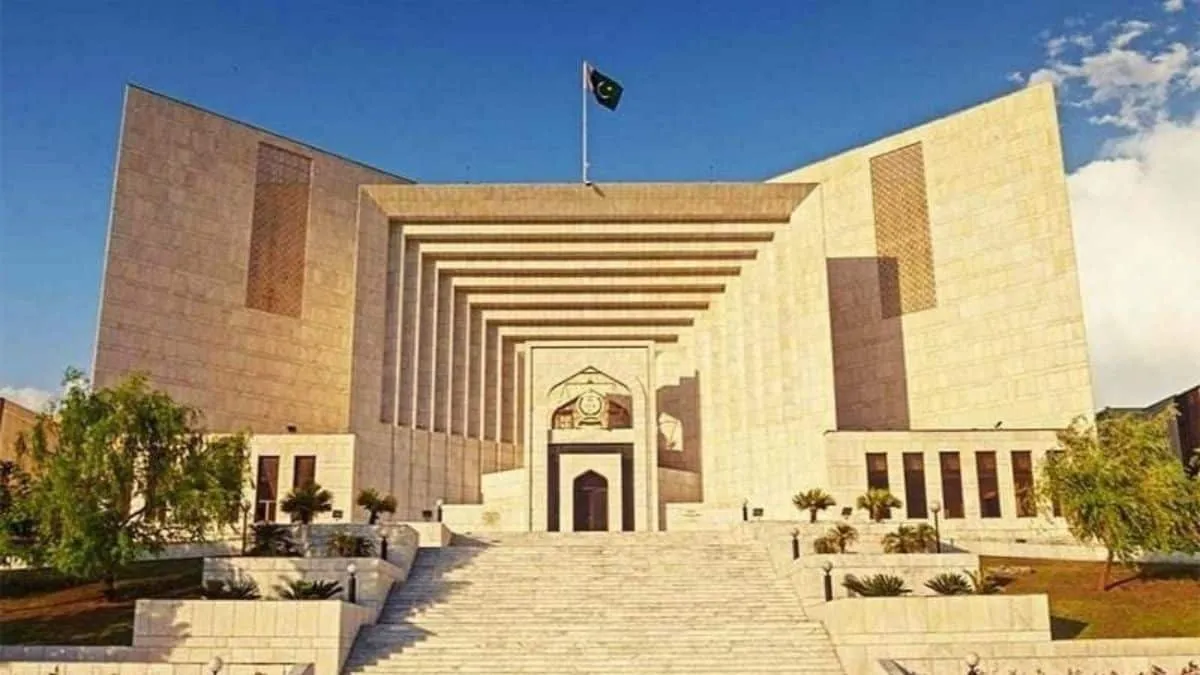
The Supreme Court of Pakistan has officially announced 32 government job vacancies spanning five distinct categories, creating employment opportunities for candidates holding qualifications from Matric and Intermediate levels up to university degrees. According to the recruitment advertisement published on November 27, 2026, applications are open for Judicial Assistants, Protocol Assistants, Junior Protocol Assistants, Caretakers, and Lower Division Clerks. These positions range from Basic Pay Scale 11 to Basic Pay Scale 16, offering both regular and contract-based appointments depending on the specific category.
To ensure a transparent screening process, the highest judicial institution of the country will conduct recruitment through the Higher Education Commission, using the services of the Education Testing Council. Eligible individuals from various regions across the nation can submit their candidacies according to prescribed domicile and regional quota requirements. Interested applicants must complete and submit their online applications by December 10, 2026.
Supreme Court of Pakistan Jobs 2026 Overview
The latest recruitment drive introduces openings across multiple administrative tiers within the judiciary. The available inventory features five positions for Judicial Assistants at Basic Pay Scale 16, with a maximum age limit of 33 years. For Basic Pay Scale 14, the administration has advertised two Protocol Assistant positions with an age ceiling of 30 years. Three positions exist for Junior Protocol Assistants at Basic Pay Scale 11, alongside two Caretaker slots also classified under Basic Pay Scale 11, each carrying a 30-year age limit. The bulk of the openings comprise 20 Lower Division Clerk roles at Basic Pay Scale 11, restricted to candidates aged 30 or younger.
Government hiring frameworks in the country generally follow structured pay scales to determine compensation, allowances, and career progression paths. Basic Pay Scale positions in federal departments attract applicants seeking stable career paths, job security, and standard government benefits. The inclusion of diverse pay grades ensures that both entry-level workers and university graduates find suitable avenues within the judicial system.
Eligibility Criteria for Supreme Court Jobs
Candidates must meet strict educational and skill prerequisites tailored to each specific role before applying through the designated portal. Applicants pursuing Judicial Assistant roles must hold a recognized law degree and demonstrate strong proficiency in Microsoft Office applications. Protocol Assistant applicants require a bachelor degree, effective communication skills, and similar computer literacy standards. Those seeking Junior Protocol Assistant work must have completed their Intermediate education alongside fundamental communication and computer competencies.
Candidates eyeing Caretaker positions need a Matriculation certificate coupled with a minimum of three years of relevant professional experience. Lower Division Clerk hopefuls must also possess a Matriculation certificate, paired with either a one-year diploma in Information Technology or verified proficiency in Microsoft Office. Furthermore, these clerical candidates must exhibit a typing speed of at least 40 words per minute, with preference granted to individuals familiar with Urdu word-processing software.
Supreme Court Jobs for Matric Pass Candidates
The current recruitment notification accommodates 22 vacancies specifically designated for candidates who have passed their Matriculation examination, though additional technical skills remain mandatory. Out of this total, 20 positions involve Lower Division Clerk duties, while two seats pertain to Caretaker responsibilities. LDC aspirants must clear the rigorous typing and computer proficiency evaluations administered during the recruitment sequence. Caretaker applicants must substantiate their claims of three-year professional tenure through verifiable employment records. The upper age ceiling for both groups sits at 30 years, though government provisions for age relaxation may apply according to established public sector guidelines.
Providing opportunities for secondary school graduates helps absorb a large segment of the domestic workforce into clerical and support roles. These administrative positions form the backbone of day-to-day office management within superior courts, handling file management, correspondence, and basic record-keeping tasks. Candidates securing these jobs enter a structured public service environment with defined avenues for departmental promotion over time.
Domicile Requirements and Reserved Quotas
Federal employment rules mandate strict adherence to regional quotas to maintain fair representation from every part of the country. The Supreme Court has distributed its 32 vacancies across open merit categories, regional allocations, and reserved quotas for specific groups. The five Judicial Assistant openings divide into two seats for Punjab and Islamabad, reserved under specific women and minority allocations. Individual seats go to Sindh Urban, Sindh Rural, and Azad Jammu and Kashmir respectively.
The 20 Lower Division Clerk posts distribute 12 seats to Punjab and Islamabad, four to Sindh Rural, two to Sindh Urban, one to Khyber Pakhtunkhwa, and one to Gilgit-Baltistan. These specific allocations integrate mandatory quotas for women, minority communities, and persons with disabilities. Meanwhile, the Protocol Assistant, Junior Protocol Assistant, and Caretaker roles are advertised strictly on an open-merit basis, requiring applicants to verify their regional eligibility before submitting paperwork.
How to Apply for Supreme Court Jobs 2026
All interested individuals must submit their paperwork digitally through the official Education Testing Council web portal located at https://etc.hec.gov.pk/. Prospective applicants must either register on the platform for the first time or log in using credentials from previous interactions with the testing body. Once inside the portal, users must navigate to the specific Supreme Court recruitment listing and fill out the online application form with precise personal, educational, and contact details. The administration requires all users to finalize their submissions by clicking the designated submit button before 4:00 PM on the closing date of December 10, 2026. Manual submissions delivered by hand, post, courier, or electronic mail will face immediate rejection by the department.
Selection Process for Supreme Court Jobs
The recruitment methodology relies on an initial administrative screening where authorities review candidates based on educational attainment, professional experience, and domicile compliance. Only those individuals who successfully pass this preliminary vetting receive official invitations to participate in written examinations or subsequent interviews. The Education Testing Council assumes responsibility for notifying candidates about examination dates, reporting times, and test venues through registered email addresses and SMS text messages. Applicants must bring their original Computerized National Identity Card or passport, alongside the roll number slip generated by the testing council, when reporting for any examination venue. Final document verification occurs during the interview phase, where successful candidates must present original academic certificates and supporting testimonials. Government servants currently employed in public sector organizations must route their applications through proper departmental channels. Additionally, the Supreme Court explicitly noted that no travel expenses or daily allowances will be disbursed to candidates traveling for tests or interviews.