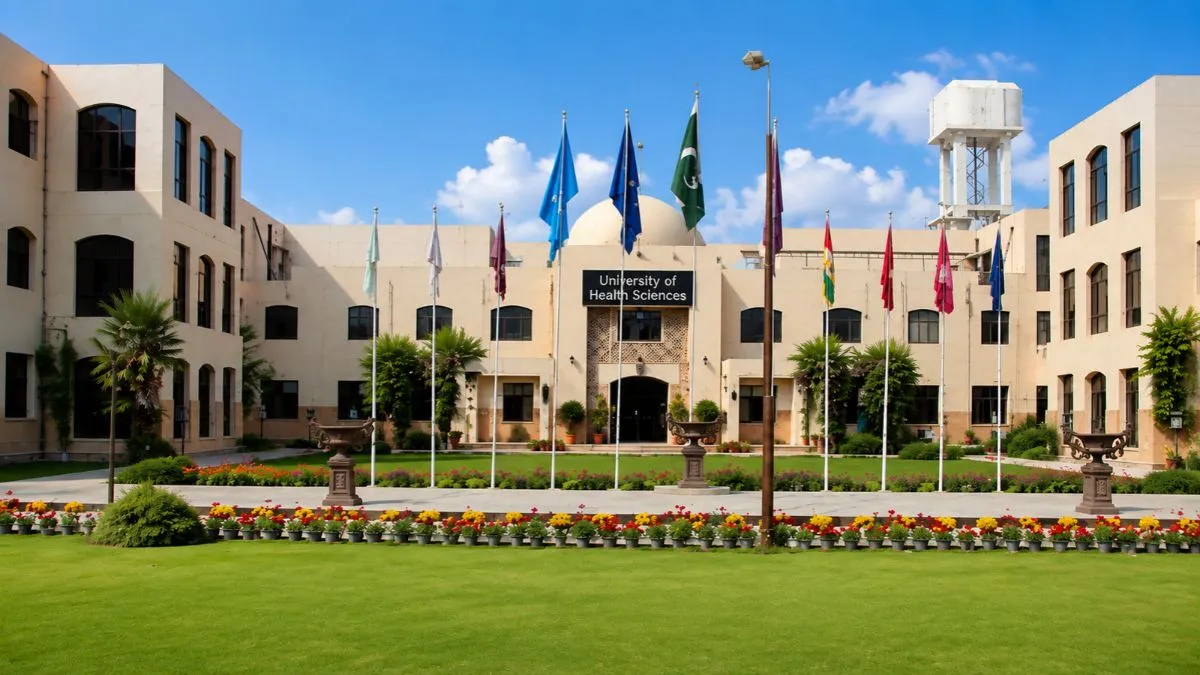
University of Health Sciences Introduces PRIME Digital Platform
The University of Health Sciences has introduced PRIME, a province-wide digital platform that will integrate the monitoring of medical education, clinical training and professional competency assessments across Punjab.
Provincial Minister for Specialized Healthcare and Medical Education Khawaja Salman Rafique inaugurated the system at UHS. The launch marks a major shift in how medical training is documented and evaluated within the region, moving away from traditional methods toward a centralized digital infrastructure.
Medical education experts and institutional administrators have long debated the need for better tracking mechanisms in clinical training. Paper-based systems often struggle with delays, lost records and a lack of real-time visibility into the actual day-to-day progress of medical residents. By moving these processes online, the University of Health Sciences aims to bring transparency and accountability to medical institutions throughout the province.
How the PRIME Platform Works for Postgraduate Trainees
Initially, PRIME will serve postgraduate medical and dental programs. Its first phase will cover approximately 3,300 MS, MD and MDS trainees at 33 training institutions across Punjab. UHS will also register around 1,100 supervisors on the portal.
The system will replace paper logbooks with digital records. These will document clinical cases, procedures, attendance, rotations, research work and workplace-based assessments.
Supervisors will verify trainees' clinical and academic work, share feedback and track their development. Meanwhile, institutional dashboards will allow UHS to assess training standards and identify shortcomings.
UHS Director Postgraduate Studies Prof. Muhammad Asif Naveed briefed attendees on the portal's functions and implementation framework. He said PRIME would incorporate quarterly continuous internal assessments and workplace-based evaluations. These will include Mini-CEX, Direct Observation of Procedural Skills and Case-Based Discussions.
The portal will also track research progress and maintain records of academic activities. Furthermore, PRIME will feature a learning management system and dashboards at both institutional and university levels.
Official Reactions and Expected Improvements in Healthcare Education
Speaking at the launch, Rafique praised UHS for creating a digital mechanism to monitor training. He also expressed hope that PRIME would significantly improve postgraduate education.
He added that PRIME's data would help pinpoint training gaps and guide evidence-based decisions. It would also support efforts to improve the performance of supervisors and institutions.
UHS Vice Chancellor Maj Gen Prof. Sohail Sabir (Retd) said PRIME would shift health professions education beyond routine record maintenance. Instead, the system would emphasize demonstrated clinical competence and verified professional skills.
The shift toward competency-based medical education aligns with international standards. Modern medical training relies heavily on continuous feedback and documented procedural competence rather than simply spending a required amount of time in a hospital ward.
Phased Expansion Plan for Undergraduate and Allied Health Programs
Outlining the expansion plan, Prof. Sohail Sabir said the second phase would cover undergraduate MBBS and BDS programs, along with house-job training. This stage would bring approximately 33,875 students and house officers from 60 medical and dental colleges onto the platform.
The third phase will incorporate Nursing, Pharmacy and Allied Health Sciences programs. It will cover around 31,734 students studying at 180 institutions.
This multi-phase rollout ensures that the infrastructure can handle growing volumes of data. Administrators plan to evaluate the performance of the first phase before rolling out the system to thousands of undergraduate students and allied health professionals across hundreds of campuses.
Background and Technical Framework of Medical Education in Punjab
Medical education in Punjab falls under the regulatory and academic oversight of institutions like the University of Health Sciences. Over the years, managing thousands of medical students, dental practitioners, nurses and postgraduate residents presented logistical challenges for centralized bodies.
Traditional paper logbooks required physical signatures and were prone to wear and tear. Archiving these records made it difficult for university administrators to run aggregate analyses on training quality or spot failing supervisory trends before they affected patient care.
Digital transformation initiatives in public sector institutions aim to solve these administrative bottlenecks. By centralizing records, the University of Health Sciences can review institutional performance metrics instantly. Supervisors can also provide feedback that trainees can access from any authorized device.
What PRIME Means for Medical Institutions and Patient Care
The integration of clinical training data affects not just students, but hospitals and patients as well. Well-monitored trainees receive better supervision, which translates to safer clinical practices and higher standards of care in teaching hospitals.
Institutional dashboards give deans and medical directors a clear view of departmental workloads. If a particular training unit lacks exposure to specific clinical procedures, administrators can spot the gap and adjust resident rotations accordingly.
As the University of Health Sciences rolls out subsequent phases, the cumulative data collected through PRIME will form a comprehensive repository of medical training metrics in Punjab. Observers will watch how effectively institutions adopt the digital platform as it expands from postgraduate doctors to undergraduate students and allied health professionals.