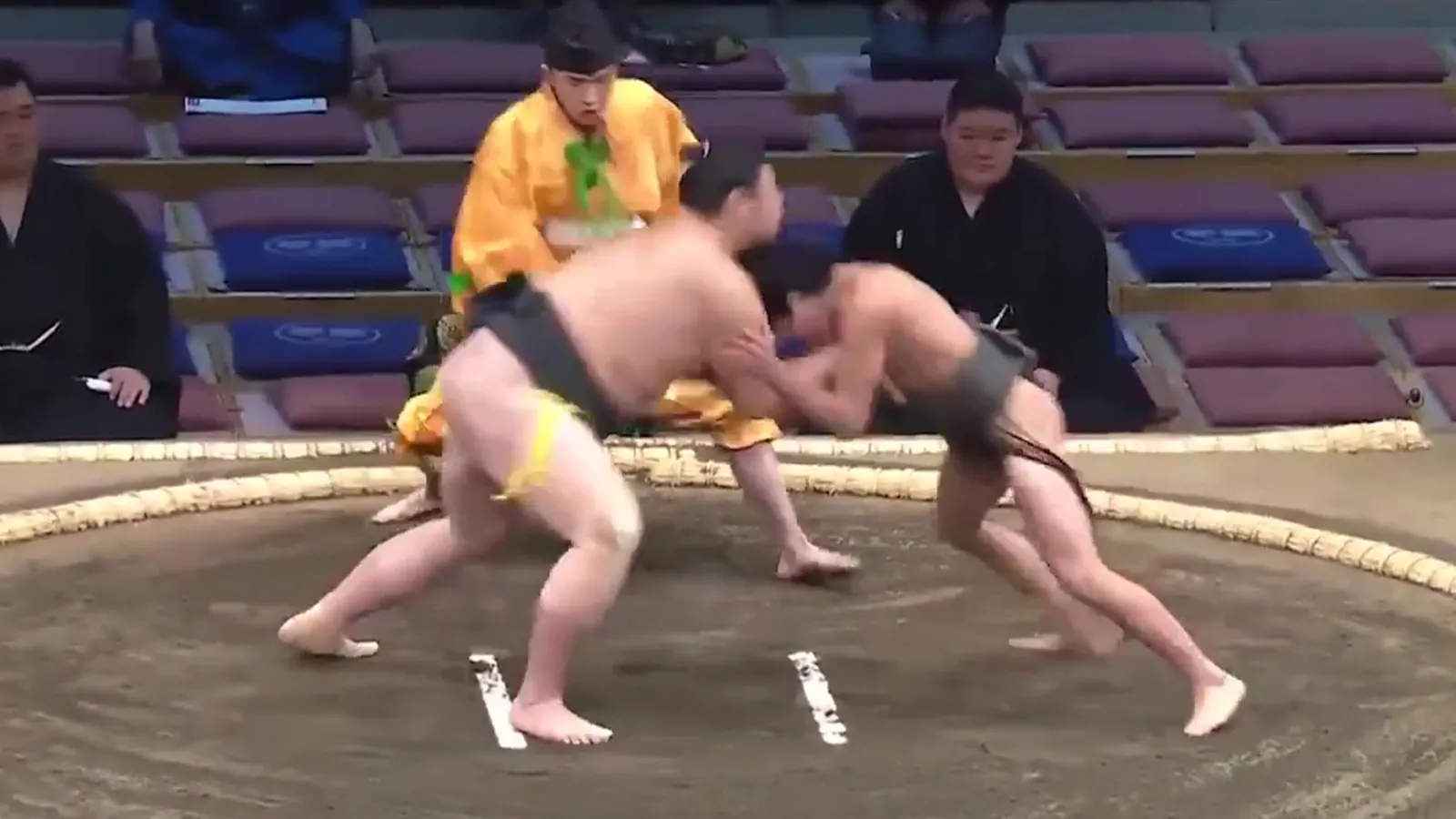
World Smallest Sumo Wrestler Shindo Makes Debut
Professional sports often provide mismatches that capture the public imagination, but few physical disparities match the stark reality of modern sumo wrestling. In a recent bout that quickly spread across social media platforms, the sporting world witnessed a dramatic collision of size and ambition. Fifteen-year-old Shindo stepped into the professional ring for his jonokuchi division debut at the Grand Sumo Kyushu Tournament. Standing as the sport's lightest active competitor, he weighed in at a mere nine stone.
His opponent for the match was Toramusashi, a twenty-one-year-old competitor weighing twenty-three stone. The sheer scale of the mismatch meant that Toramusashi carried more than fourteen stone of extra weight into the clay ring against the teenage newcomer. Despite the overwhelming difference in mass, Shindo appeared full of confidence as he faced up to his much larger rival during the pre-match preparations.
The encounter itself lasted only three seconds. In that brief window, Shindo was brushed aside by his opponent and lost the match by tsukidashi, a traditional technique where a wrestler pushes their opponent completely out of the ring. The viral clip of the bout drew millions of views and sparked widespread discussion among sports enthusiasts regarding the sheer physical realities of professional combat sports.
Understanding the Jonokuchi Division and Sumo Ranks
To understand the magnitude of Shindo entering the professional arena, it helps to examine how the sport structures its competitors. Sumo wrestling is governed by the Japan Sumo Association, operating a strict hierarchical ranking system known as banzuke. At the very bottom of this professional pyramid sits the jonokuchi division, which translates literally to the opening mouth.
Wrestlers who pass the physical and athletic examinations enter professional stables and start their careers in this introductory rank. Shindo had no previous professional experience before qualifying through an athletic ability test. Before stepping up to the Kyushu tournament, he competed in the Autumn Tournament, where he finished with a record of one win and three losses.
Entering the professional ranks at age fifteen places Shindo among the youngest athletes currently competing at this level. The jonokuchi division serves as the testing ground where novices learn the fundamental mechanics, ring craft, and mental discipline required to survive in a sport dominated by sheer physical power and technique. Competitors must learn to absorb immense impacts and execute rapid maneuvers against opponents who often possess decades of combined experience and vastly superior body weight.
The Reality of Weight Disparities in Professional Sumo
Sumo is unique among combat sports because it does not use weight classes. While boxing, mixed martial arts, and wrestling divide competitors strictly by pounds or kilograms, professional sumo allows a nine-stone fighter to face a twenty-three-stone opponent in official competition. This absence of weight brackets creates dramatic david versus goliath scenarios that regularly fascinate audiences around the globe.
Body mass provides several distinct advantages inside the traditional twenty-foot ring. Heavier wrestlers possess a lower center of gravity, greater inertia, and massive physical force that makes them exceptionally difficult to move or push backward. Lighter competitors must rely entirely on speed, agility, leverage, and perfect timing to overcome opponents who outweigh them by double or triple their own body mass.
During the post-match interviews, Shindo offered a candid assessment of the physical reality he encountered in the ring. He stated that the bout was more intense than he had imagined. He added that the difference in pressure was greater than anticipated and admitted that he should have moved a bit faster than his opponent.
Fan Reactions and Viral Social Media Response
The stark visual contrast between Shindo and Toramusashi generated immediate amusement and admiration across online platforms. Viewers flooded the comments section of the viral video to share their thoughts on the mismatch. One observer noted that Shindo looked so confident during the warmups that they actually started to buy into his chances of pulling off an upset.
Another viewer joked that if someone ignored the video evidence, the match actually looked close. A third commenter admitted to laughing out loud because they genuinely thought the smaller wrestler was going to pull off a victory. Amid the humor, many users offered thoughtful perspectives on the teenage competitor's future in the sport.
A positive viewer pointed out that Shindo displayed a level of confidence that made observers forget the obvious outcome. This fan suggested that taking his losses early in his career could help forge him into a formidable competitor by the time he reaches age twenty-five. Another person emphasized that despite the rough start, he is already competing in the big leagues at age fifteen and deserves credit for stepping into the ring with composure.
Shindo Analyzes the Defeat and Looks Ahead
Professional athletes must process setbacks quickly, and Shindo demonstrated remarkable maturity in evaluating his performance immediately following the match. He contrasted his emotional state during this tournament with his previous outing, explaining that he wanted to stay calmer than he had been previously. Although he admitted to feeling nervous, he confirmed that he successfully maintained his composure throughout the build-up.
Looking toward his upcoming bouts, Shindo outlined clear adjustments for his training and ring strategy. He stated an intention to stay active right from the tachiai, which is the initial simultaneous charge where both wrestlers collide at the start of the match. By engaging immediately upon contact, he hopes to prevent opponents from driving him backward as easily as occurred during his debut encounter.
The path forward for the young competitor will require rigorous physical conditioning, weight management, and technical refinement. Observers of the sport note that lighter wrestlers who survive the grueling lower divisions often develop exceptional technique to compensate for their lack of mass. As Shindo prepares for future tournaments on the professional calendar, followers of the sport will watch to see how his skills evolve against the heavyweights of the jonokuchi division.





