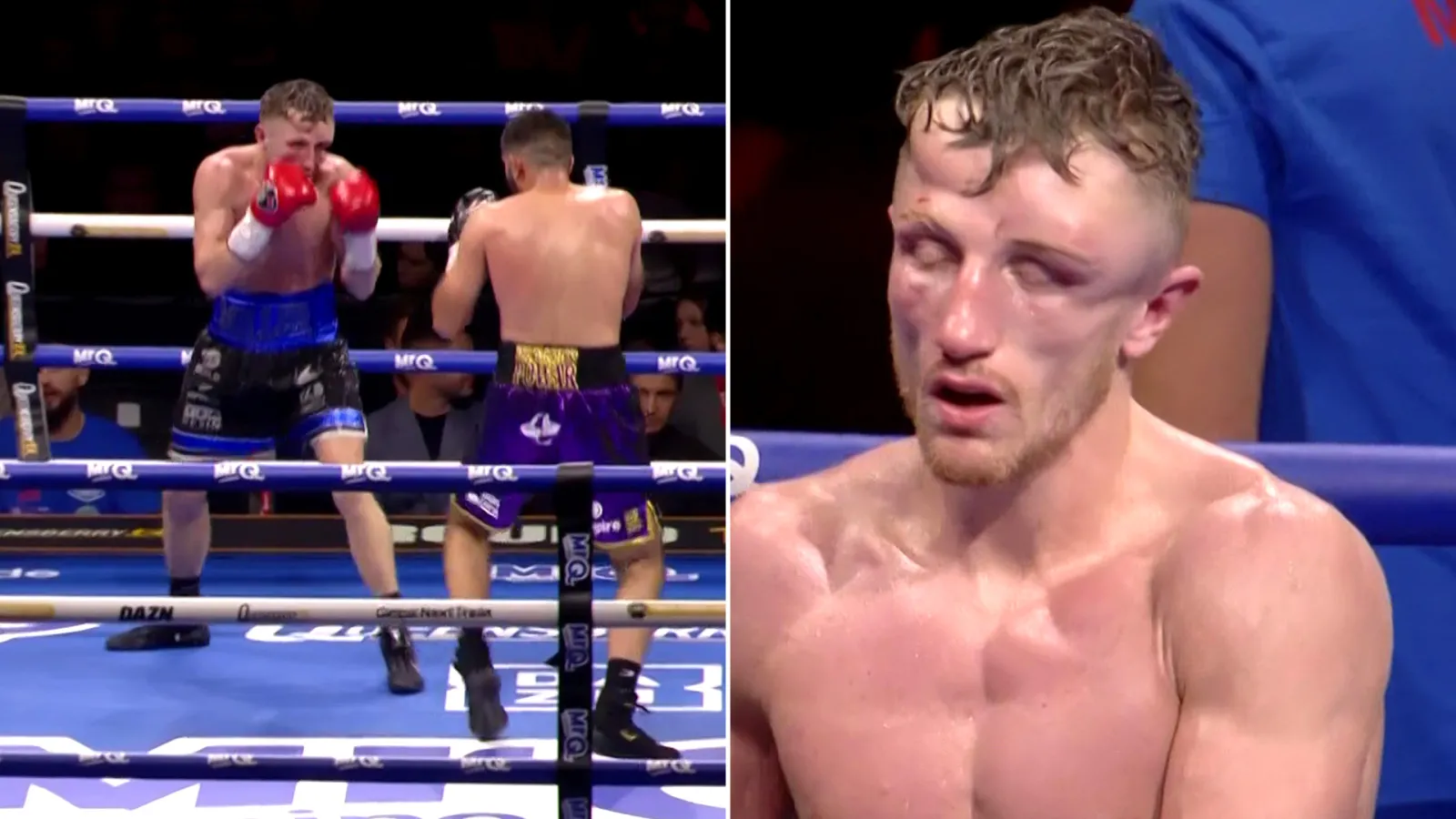
Zak Miller's bout on the Joshua Buatsi undercard was stopped after a severe hematoma caused massive swelling on his head, prompting immediate medical attention.
The stoppage came during a high-profile undercard that had attracted thousands of fans, and commentators began questioning what options Miller's corner had as the swelling spread from above his eye to cover most of his scalp.
What Happened in the Ring?
During the third round of the fight, Miller was struck with a clean left hook that landed near his left eye. Within moments, a noticeable puff appeared above the eye. By the end of the round, the swelling had expanded dramatically, covering a large portion of the left side of his head.
Ring doctors examined Miller and identified a hematoma - a collection of clotted blood that had pooled under the skin. The medical team determined that the swelling was not only a cosmetic issue but also a potential risk to Miller's brain and vision.
Because the hematoma was expanding, the referee halted the bout, and Miller was escorted to the ringside medical area for further assessment.
Understanding Hematomas in Combat Sports
A hematoma forms when blood vessels rupture and blood collects outside the normal circulatory system. In boxing, repeated blows to the head can cause blood vessels in the scalp or facial tissues to break, leading to a sub-cutaneous or sub-dural hematoma.
Sub-cutaneous hematomas appear as bruising and swelling on the skin surface, while sub-dural hematomas occur deeper, between the dura mater and the brain. Both can be dangerous, but sub-cutaneous hematomas are more common in boxing and usually resolve with rest and medical care.
Medical protocols for boxing events require that any visible swelling accompanied by pain, vision changes, or neurological symptoms be evaluated by a licensed physician. If the physician deems the fighter unfit to continue, the bout is stopped to protect the athlete's health.
Impact on the Joshua Buatsi Undercard
The undercard featuring Joshua Buatsi was slated to showcase several rising prospects, with Miller's fight positioned as a key attraction for fans of the heavyweight division. The stoppage disrupted the scheduled flow of the event, causing a brief pause while officials consulted with Miller's team.
Promoter representatives announced that the remainder of the undercard would proceed as planned, but the loss of Miller's bout meant one fewer fight for ticket holders and broadcasters. Fans expressed disappointment on social media, but most praised the decision to prioritize fighter safety.
What Options Does Miller's Corner Have?
Once a fight is halted due to a medical issue, the boxer's corner can request a formal medical assessment. If the doctor issues a clearance, the fight may be resumed; however, in Miller's case, the swelling was described as "huge" and the hematoma was still expanding, making a quick clearance unlikely.
The corner can:
- Request a detailed medical report and follow-up treatment plan.
- Appeal the decision if they believe the assessment was overly cautious, though appeals are rarely successful when a hematoma is involved.
- Focus on recovery, scheduling future bouts once cleared by a medical board.
Given the seriousness of the swelling, the most probable outcome is that Miller will be sidelined for several weeks to allow the hematoma to resolve fully.
Historical Context: Similar Incidents in Boxing
Boxing has a long history of fights being stopped because of facial swelling or hematomas. Notable examples include:
- Mike Tyson vs. Michael Spinks (1988) - Tyson suffered a severe cut that required medical attention but continued after clearance.\n
- Gennady Golovkin vs. Canelo Álvarez (2018) - Golovkin experienced significant swelling, yet the fight proceeded after doctors cleared him.
- James DeGale vs. Badou Jack (2015) - DeGale's bout was halted due to a large hematoma, leading to a technical knockout.
These cases illustrate that while some fighters can return after treatment, others are forced to withdraw, underscoring the unpredictable nature of head injuries in combat sports.
Medical Protocols and Safety Regulations
In the United Kingdom, where the Buatsi undercard took place, the British Boxing Board of Control (BBBoC) enforces strict medical standards. Fighters must undergo pre-fight medical examinations, including neurological assessments and blood tests.
During an event, a licensed ringside physician must be present at all times. The physician has the authority to stop a fight if they judge the fighter's health is at risk. The BBBoC also mandates a post-fight medical review for any boxer who suffers a cut, swelling, or concussion.
These regulations aim to reduce the incidence of long-term brain injury, a concern that has grown with increased scientific understanding of chronic traumatic encephalopathy (CTE) among contact-sport athletes.
What Comes Next for Zak Miller?
Following the stoppage, Miller was taken to a local hospital for imaging studies, including a CT scan, to rule out deeper brain injury. Doctors will monitor the hematoma for signs of infection or expansion.
If the scan shows only a superficial sub-cutaneous hematoma, treatment typically involves rest, ice, compression, and possibly a short course of anti-inflammatory medication. Recovery time can range from a few days to several weeks, depending on severity.
Should the hematoma be more serious, Miller could face a mandatory suspension from competition, as mandated by the BBBoC, until cleared by a specialist.
Fans and analysts will be watching for an official statement from Miller's management regarding his health status and future fight schedule.
Practical Takeaways for Boxing Fans and Participants
For spectators, the incident reinforces the importance of supporting fighter safety over entertainment value. For aspiring boxers, it highlights the need for proper protective gear during training and the value of early medical evaluation after any head impact.
Gyms are reminded to educate athletes about the signs of a hematoma - rapid swelling, pain, bruising, and visual disturbances - and to encourage prompt reporting of any such symptoms.
Event organizers should continue to enforce rigorous medical staffing and adhere to BBBoC guidelines to maintain the sport's integrity and protect its participants.