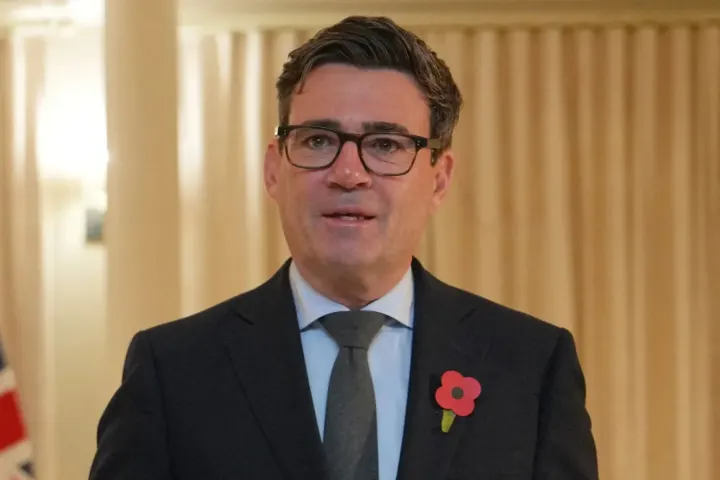
Prime Minister Andy Burnham announced his willingness to consider a formal apology for Britain's role in the trans-Atlantic slave trade, a move that has triggered fierce criticism from opposition leaders who warn it could lead to an £18 trillion reparations demand and further strain taxpayers already coping with high living costs.
Burnham's stance, first reported in The Guardian, follows a broader political conversation about historical accountability, yet opponents argue that the focus should remain on immediate economic pressures such as mortgage payments, food prices and an expanding welfare bill.
What Burnham's Proposal Entails
In a recent editorial, Burnham expressed openness to issuing a new official apology for Britain's involvement in the slave trade, a practice formally abolished by the Slavery Abolition Act of 1833. He also hinted at a "structured dialogue" with Caribbean nations to explore reparatory justice measures.
The proposal references a ten-point plan drafted by fifteen Caribbean states, which estimates a potential reparations invoice of up to £18 trillion. While Burnham has stated that direct financial reparations are not on the table, the mere discussion of such a figure has raised alarms among fiscal conservatives.
Why Critics Say It's Misplaced
Tory leadership, represented by Kemi Badenoch, argues that "there is no reason British taxpayers today should be held financially responsible for things that happened generations before any of us were born." The criticism highlights two main concerns:
- Current economic hardship for ordinary Britons, including rising mortgage costs and food bills.
- The precedent of allocating public funds to address historical injustices rather than present-day needs.
Opponents also point to the 1833 compensation paid to slave owners, £20 million at the time, roughly £16 billion in today's money, as a historical example of public money being used to reimburse former slaveholders rather than victims.
Historical Context of British Slavery and Compensation
The British Parliament passed the Slavery Abolition Act in 1833, ending legal slavery throughout the empire. However, the act included a compensation scheme that paid £20 million to 46,000 slave owners for the loss of their "property." Adjusted for inflation, that sum equals approximately £16 billion today.
Since then, successive governments have issued apologies or expressions of regret. Notably, former Prime Minister Tony Blair offered "deep sorrow and regret" for Britain's role in the slave trade nearly two decades ago. Burnham's call for a new apology raises the question of whether repeated statements add substantive value or merely serve symbolic purposes.
Potential Financial Implications
The Caribbean ten-point plan's £18 trillion estimate dwarfs the nation's annual budget. For perspective, the UK's total public sector borrowing requirement for the 2024-25 fiscal year stands at around £300 billion. An £18 trillion liability would be more than fifty times that amount, suggesting that any actual payment would require unprecedented fiscal restructuring.
Critics argue that such a burden would inevitably fall on ordinary citizens, despite assurances that "elites" would not be the payers. The concern is that indirect costs, higher taxes, reduced public services, or increased borrowing, could exacerbate existing economic pressures.
Political Reactions and Party Positions
Within the opposition, the Conservative Party has seized on the issue to critique the Labour government's priorities. Badenoch's remarks emphasize a focus on current economic challenges rather than "self-indulgent grand gestures." Labour supporters, however, argue that confronting historical injustices is a moral imperative that can coexist with economic stewardship.
The debate also reflects broader UK-Caribbean relations, as the Commonwealth nations have long sought acknowledgment and reparative measures for the legacy of slavery. Burnham's dialogue proposal could reopen diplomatic channels, but the financial scale remains a sticking point.
What This Means for British Taxpayers
For the average British household, the immediate impact is uncertain. While no concrete policy or levy has been announced, the public discourse suggests that any future reparations could affect fiscal policy decisions, potentially influencing tax rates, public spending priorities, or borrowing strategies.
Financial analysts advise citizens to monitor upcoming budget statements and parliamentary debates for any concrete proposals that might translate the dialogue into fiscal action.
Next Steps and What to Watch For
The government has not set a timeline for a formal apology or any reparations framework. The next likely milestones include:
- A parliamentary committee review of the Caribbean ten-point plan.
- Public consultations on the scope and nature of any apology.
- Potential negotiations with Caribbean governments to define non-financial forms of reparatory justice, such as educational programmes or development aid.
Observers recommend watching for statements from the Treasury, the Foreign Office, and the Department for International Development, as these bodies will shape any eventual policy.
Balancing Historical Accountability with Present-Day Needs
Experts in public policy stress that acknowledging past atrocities does not automatically require massive financial transfers. Alternative approaches include scholarships, cultural exchanges, and targeted investment in former colonies.
Such measures can address historical grievances while limiting direct fiscal impact on UK taxpayers. However, the political appetite for these alternatives remains to be seen.
Public Opinion and Social Media Response
Social media commentary reflects a split view. Some users praise Burnham for "confronting our history," while others echo Badenoch's sentiment that "taxpayers should not be held financially responsible for crimes committed centuries ago." The debate continues to trend under hashtags related to #SlaveryApology and #ReparationsUK.
Polling data specific to this issue is not yet available, but past surveys on reparations in the UK have shown mixed support, often correlating with respondents' age, education level, and political affiliation.
Conclusion
Andy Burnham's proposal to revisit Britain's historical responsibility for the trans-Atlantic slave trade has sparked a vigorous national conversation. While the moral case for an apology is clear to many, the financial implications, highlighted by an £18 trillion reparations estimate, raise serious concerns for taxpayers already facing economic strain. The coming weeks will reveal whether the dialogue leads to symbolic gestures, concrete policy, or a combination of both, and how the UK balances its past with the pressing needs of its present citizens.