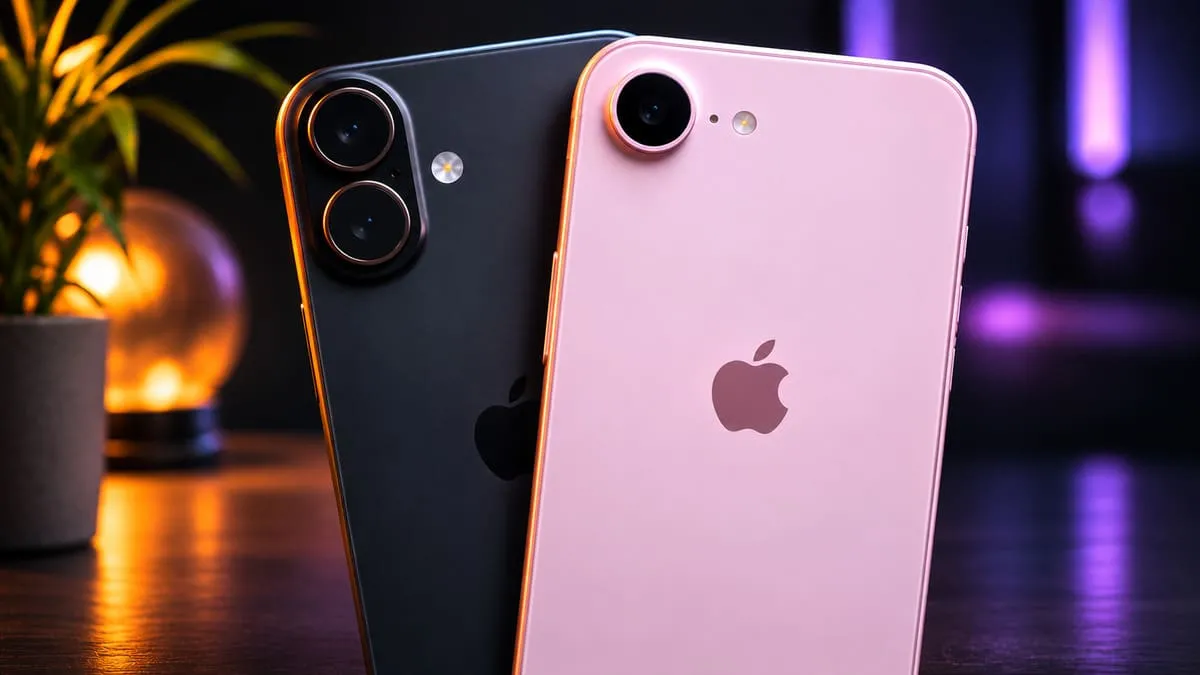
Apple's upcoming iPhone 18e could share several important hardware components with the standard iPhone 18, potentially narrowing the differences between the company's two lower-priced smartphones.
Leaked internal diagrams suggest both models may feature the same 4,430mAh battery, while separate reports point to a shared A20 processor and 9GB of RAM. The development comes as a new leak claims that mass production of both smartphones has been pushed back to January 2027.
Why the Leak Matters for Consumers
The iPhone 18e is positioned as Apple's entry-level flagship for 2027, following the iPhone 17e launched in March 2026 at $599 for 256 GB. If the 18e inherits the same battery capacity and chipset as the higher-priced iPhone 18, buyers may receive a stronger performance-to-price ratio than in previous cycles.
Understanding which components are shared helps consumers gauge whether the price premium for the standard iPhone 18 remains justified, especially when other differentiators such as camera modules, display refresh rates, and screen technology are still in flux.
Same Battery Across Both Models
Chinese tipster Fixed Focus Digital recently shared purported internal diagrams of the iPhone 18 and iPhone 18e. The images, labeled with the codenames Taycan and Nevera, reportedly show both devices using 4,430mAh batteries. For the iPhone 18e, that would represent an increase of approximately 11% over the 4,005mAh capacity attributed to its predecessor in the leaked comparison.
The standard iPhone 18 is also expected to receive a larger battery than the iPhone 17. The diagrams suggest that Apple has modified internal components, including the speaker and haptic engine, to accommodate the larger batteries. However, the images have not been authenticated by Apple, and regional hardware configurations could differ.
Shared Processor and Memory
The two smartphones are also expected to feature Apple's A20 chipset. According to analyst Ming-Chi Kuo, Apple's lower-priced 2027 iPhones will receive 9GB of RAM, compared with 8GB in the previous generation. Both models are also rumored to adopt Apple's C2 cellular modem. These changes could make the iPhone 18e more competitive with the standard iPhone 18 in processing performance and connectivity. Apple has not confirmed the processor or memory specifications of either device.
Display Uncertainty and Camera Differences
Fixed Focus Digital claims both smartphones will feature 6.3-inch displays. However, another established tipster, Digital Chat Station, previously suggested the iPhone 18e would retain a smaller 6.12-inch OLED screen with a 60Hz refresh rate. The standard iPhone 18 is expected to retain its 6.3-inch display with a refresh rate of up to 120Hz. Even if the two devices have identical screen sizes, they may still offer different display technologies and refresh rates.
Their camera configurations are also expected to differ. The standard iPhone 18 is rumored to retain a dual-camera system, while the iPhone 18e could feature a single 48MP rear camera. These differences could influence low-light performance, optical zoom capability, and video recording options.
Pricing Landscape and Market Position
Apple launched the iPhone 17e in March 2026 at a starting price of $599, with 256GB of storage. The company has not confirmed the iPhone 18e's price. If the next-generation models share major components, the cheaper device could offer a stronger hardware package than previous generations.
However, the expected differences in camera systems, display technology, and other features may continue to distinguish the two models. Both smartphones are expected to arrive in early 2027, although their launch dates remain unconfirmed.
Background: Apple's Tiered Flagship Strategy
Since the iPhone X series, Apple has pursued a tiered flagship approach: a premium model with the latest technology and a lower-priced sibling that trims certain features to hit a more affordable price point. The iPhone 13 mini, iPhone 14, and iPhone 14 Plus illustrated this pattern, with the "e" suffix introduced in 2025 to denote the entry-level flagship.
Historically, the lower-priced sibling receives a slightly older processor or a reduced camera array, while retaining the same chassis design and many core components. The current rumors suggest Apple may be narrowing that gap further by aligning battery size and chipset.
How Apple's Supply Chain Influences Leaks
Apple's supply chain is highly compartmentalised. Component manufacturers such as Foxconn, TSMC, and Samsung receive design specifications well before the public announcement. Leaks often emerge when engineers or suppliers share internal diagrams, bill-of-materials lists, or prototype photos with tipsters.
Fixed Focus Digital's recent diagrams appear to be sourced from a supplier that handles battery integration. The codenames Taycan and Nevera match Apple's internal naming convention, where each new iPhone generation receives a project name unrelated to the consumer-facing model name.
What the Shared A20 Chipset Means for Performance
The A20 chipset, expected to be fabricated on TSMC's 3nm process, promises a notable jump in CPU and GPU efficiency over the A19 used in 2026 models. With 9GB of RAM, both iPhone 18 and 18e should handle iOS 17's multitasking demands, high-resolution gaming, and AI-driven features without noticeable lag.
Apple's C2 modem, rumored to support sub-6GHz 5G and early mmWave bands, would give both devices similar connectivity speeds, a factor that previously differentiated the higher-priced model.
Potential Consumer Impact
For buyers who prioritize battery life and raw performance, the iPhone 18e could become a compelling alternative to the standard iPhone 18, especially if its price remains close to the $599 benchmark set by the 17e. Users who value higher refresh rates, dual-camera versatility, or premium display technology may still opt for the standard model.
Enterprise procurement teams, which often purchase devices in bulk for employee rollout, will need to assess whether the 18e meets their performance criteria, potentially reshaping corporate iPhone adoption strategies.
What to Watch for Next
The next credible milestone will be a formal Apple event, likely scheduled for the spring of 2027, where the company traditionally unveils new iPhone hardware. Confirmation of battery capacity, chipset, and pricing will come from Apple's official specifications sheet.
In the interim, watch for additional leaks from reputable tipsters such as DigiTimes, Bloomberg's supply-chain sources, or further internal diagrams that could verify or contradict the current rumors.
Consumers should also monitor carrier announcements for the rollout of the C2 modem, as network compatibility can affect real-world performance.
Until Apple releases an official statement, the information presented here reflects the best-available data from verified industry sources.