Renowned economist Atif Mian said Pakistan's policy of sending its workers abroad is designed to bring in foreign currency so the elite can "live off DHA better," and that this mindset must change.
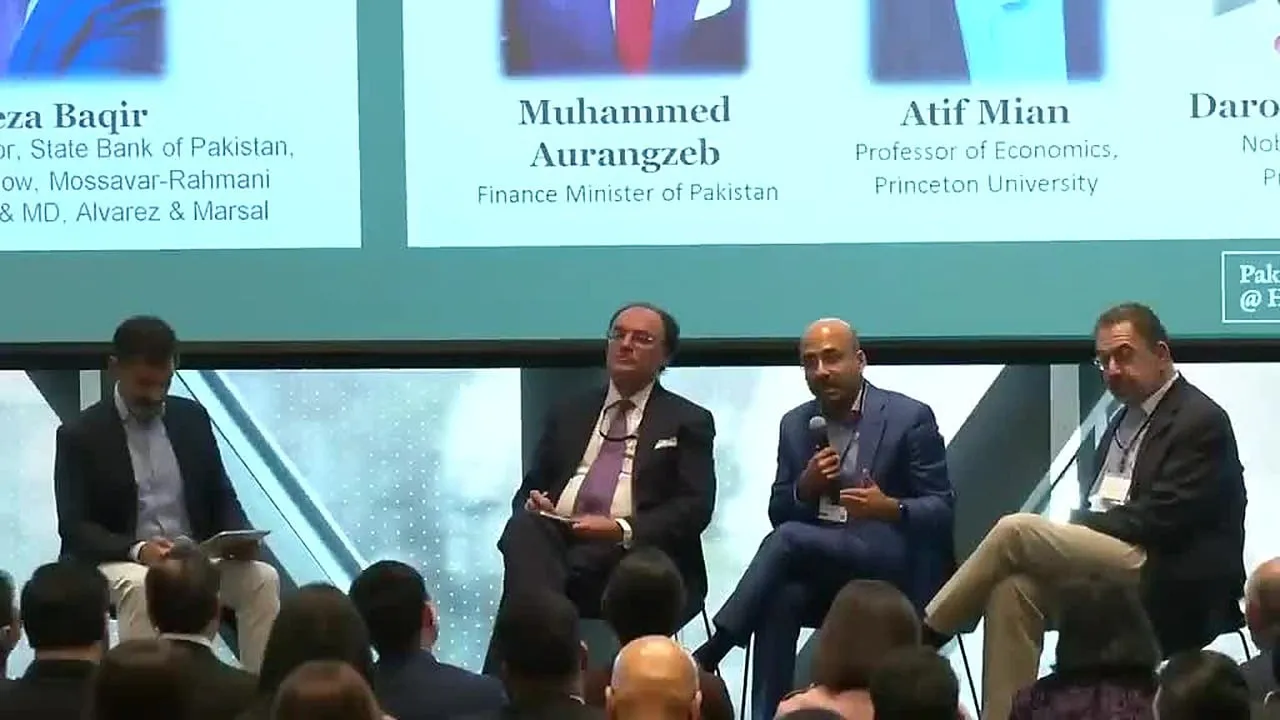
The Princeton professor voiced these remarks during a panel at the Pakistan Conference hosted by Harvard University, sharing the stage with Finance Minister Muhammad Aurangzeb, former State Bank of Pakistan Governor Reza Baqir, and Nobel laureate Daron Acemoglu.
A clip of his comments, posted on X, is now spreading widely.
Remittances Are a Danger, Not a Win
Mian described Pakistan's reliance on remittances as "particularly dangerous" from a political economy perspective, noting that exports and remittances are now almost equal, with remittances close to 10 percent of GDP.
"And we celebrate it. I have seen policy papers saying our goal is to increase remittances even further," he said.
He argued that in a properly growing country, remittances should shrink as a share of the economy because people would prefer to stay at home rather than leave.
"That incentive is structural. They will send back money, and so we can live off DHA better as a result of that. That thinking has to change," he added, drawing applause.
Elites Benefit From a Strong Rupee
Mian explained that Pakistan's difficulty in boosting exports stems from keeping the exchange rate overvalued, which effectively taxes exporters, while elites earn from non-tradable sectors such as land.
A strong rupee gives them greater purchasing power for overseas travel and imported goods. He suggested Pakistan should alter these incentives, as China did, so the elite profit from expanding export capacity.
Mian has long warned about structural problems, previously stating Pakistan needs 5 percent annual growth to recover 50 years of economic loss.
The country's weak export base has also kept the trade deficit under pressure.