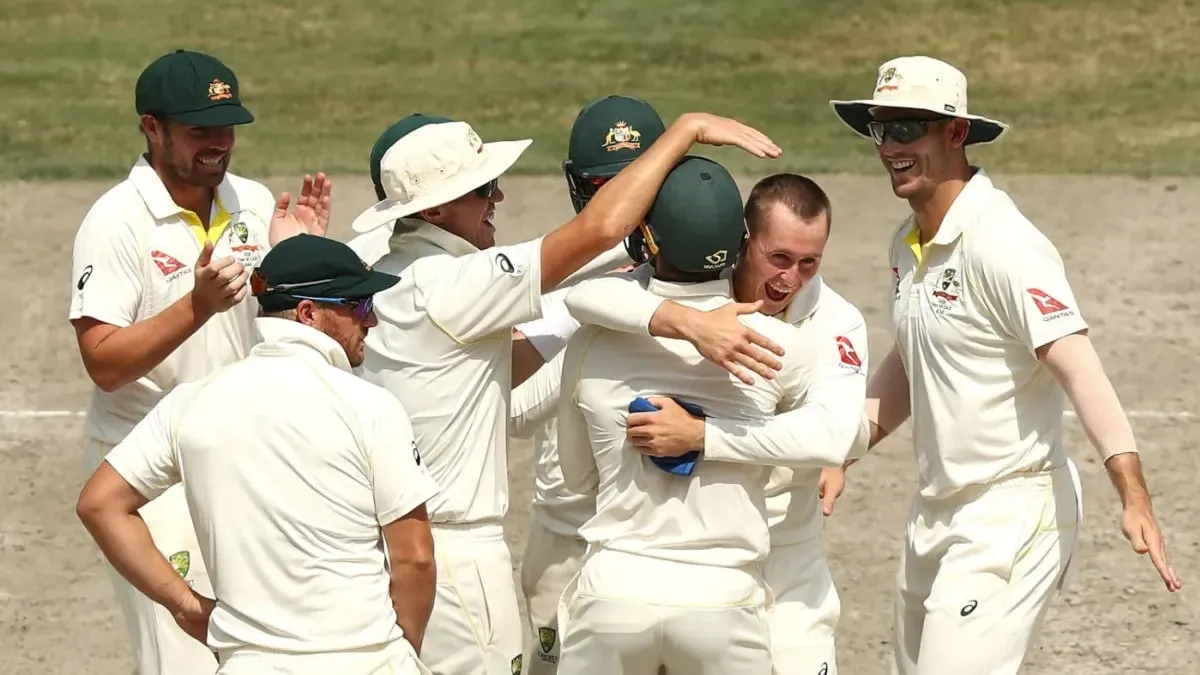
New Ball-Tampering Claims Emerge From 2018 Pakistan Test
Fresh allegations have emerged that Australian players discussed tampering with the ball during a Test against Pakistan in Dubai in October 2018, just six months after the infamous Sandpapergate scandal in Cape Town. According to an investigation by sports broadcaster Gerard Whateley, published by SEN, then Australia captain Tim Paine and head coach Justin Langer intervened to prevent players from using mints to alter the ball's condition. The alleged discussion took place during Pakistan's first innings as Australian bowlers struggled to generate movement from the ball.
One player reportedly asked, "Who's got the mints? Who's doing the ball today?" However, a new member of the squad strongly opposed the suggestion, warning against repeating the Cape Town incident. Following Sandpapergate, Australian players had reportedly been prohibited from taking candy onto the field, while Paine had assured support staff that he would not allow such practices under his captaincy. The investigation claims the Dubai incident was the last time Australian players discussed manipulating the ball during a match.
Background on the 2018 Cape Town Sandpapergate Scandal
The controversy dates back to March 2018, when Cameron Bancroft was caught using sandpaper to alter the ball during a Test against South Africa in Cape Town. The incident resulted in suspensions for Bancroft, David Warner, and then captain Steve Smith. This event shook international cricket and triggered a massive review into the culture of the Australian men's cricket team, leading to sweeping changes in how the side was managed and coached.
The scandal has recently returned to the spotlight after Bancroft claimed the entire Australian team knew about the plan. Usman Khawaja also discussed the extent of players' knowledge in his memoir. Meanwhile, current Australia captain Pat Cummins has repeatedly denied having prior knowledge of the incident, with Josh Hazlewood also defending him. The latest claims remain allegations reported in Whateley's investigation.
Dressing Room Tensions and Internal Disagreements
The report also highlighted tensions within the Australian dressing room following the Cape Town scandal. Mitchell Marsh reportedly confronted David Warner at the team hotel, urging him to take responsibility for his role rather than allowing Cameron Bancroft to shoulder the blame. Disagreements also emerged over whether the entire squad should accept collective responsibility, with some players reportedly opposing the suggestion.
These internal divisions demonstrated the profound stress placed on the squad in the months following the sanctions handed down by Cricket Australia. Players wrestled with public scrutiny, media pressure, and the rebuilding of trust with fans and administrators. The leadership group, including Paine and Langer, faced the difficult task of uniting a fractured team culture while touring internationally.
How Ball-Tampering Rules Work in International Cricket
Under the laws of cricket governed by the International Cricket Council, altering the condition of the ball is strictly prohibited. Umpires inspect the ball regularly during matches, and if they find evidence of artificial alteration, batting sides are awarded penalty runs, and the ball can be replaced. Subsequent disciplinary hearings by the governing body can result in heavy fines and match bans for players found guilty of changing the seam or surface of the ball.
Historically, teams have experimented with various methods to gain an unfair advantage with reverse swing. The use of foreign substances, bottle caps, fingernails, or sandpaper has led to some of the most severe scandals in the history of the sport. The 2018 events involving the Australian team remain among the most thoroughly investigated and penalized integrity breaches in modern cricket history.
Understanding the Investigation and Current Status
The latest disclosures come from an investigative report by sports broadcaster Gerard Whateley, published through SEN. Whateley examined the period following the Cape Town fallout to understand how the team managed its on-field behavior during overseas tours. The report details the specific intervention by team leaders in Dubai to shut down any attempts to use mints on the cricket ball.
As the sport continues to monitor integrity and fair play, historical retrospectives shed light on the pressure faced by players during a turbulent era. Cricket Australia has previously maintained that cultural reforms implemented after 2018 successfully shifted the team standards. The latest claims add further complexity to the ongoing public discussion surrounding the team's past conduct.