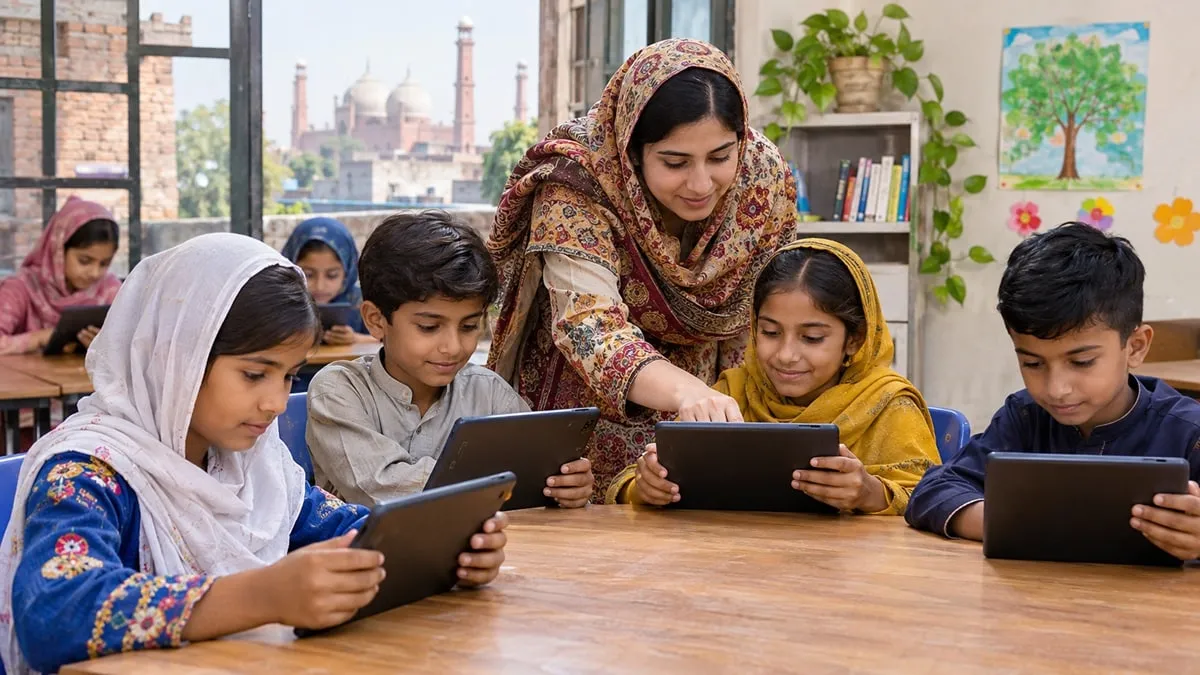
Lahore to Get Five New Digital MicroSchools Under New Agreement
Lahore is set to get five new Digital MicroSchools under an agreement between the Federal Education Foundation (FEF) and Teach the World Foundation (TTWF) to provide technology-based education to children in underserved communities. The two organizations have signed a Memorandum of Understanding (MoU) to launch the initiative, with plans to expand the network to other districts across Pakistan after the initial phase.
This partnership brings together government oversight and specialized educational technology to address gaps in basic schooling. Urban centers often experience disparities in educational access, particularly in marginalized neighborhoods where traditional schools face resource constraints. By introducing community-based digital learning centers, the project aims to reach children who might otherwise miss out on foundational instruction.
How Digital MicroSchools Work in Underserved Areas
The community-based learning centers will use tablets and interactive, game-based applications to help children develop basic reading, writing, and math skills at their own pace. Trained facilitators will guide students throughout the learning process. This model allows young learners to progress individually through digital modules designed to make core subjects engaging and accessible.
Interactive software helps maintain student interest while building literacy and numeracy from an early stage. Facilitators support the children by answering questions, managing the learning space, and ensuring steady progress through the curriculum. This blended approach combines self-directed software tools with human mentorship.
Responsibilities of the Federal Education Foundation and Teach the World Foundation
Under the partnership, FEF will oversee the organizational framework and governance through a board representing all four provinces, while TTWF will manage the educational strategy, digital learning model, and implementation. This division of labor assigns institutional administration and broad representation to the federal body, while the specialized partner handles the daily technical execution of the learning model.
The initiative will also involve private-sector and community leaders to improve access to education in underserved areas. Local participation ensures that the learning centers remain rooted in the specific needs of the neighborhoods they serve, drawing on local support for long-term viability.
Next Steps and Future Expansion Across Pakistan
Both organizations will finalize operational arrangements in the coming weeks before opening the first five Digital MicroSchools in Lahore. Once the initial phase in Lahore is established and evaluated, the network is planned for expansion to other districts across Pakistan.
Families in the targeted neighborhoods should watch for announcements regarding facility locations and enrollment procedures as operational details are confirmed. The rollout marks a new phase in alternative education delivery models within the country, relying on digital tools to reach students outside traditional classrooms.