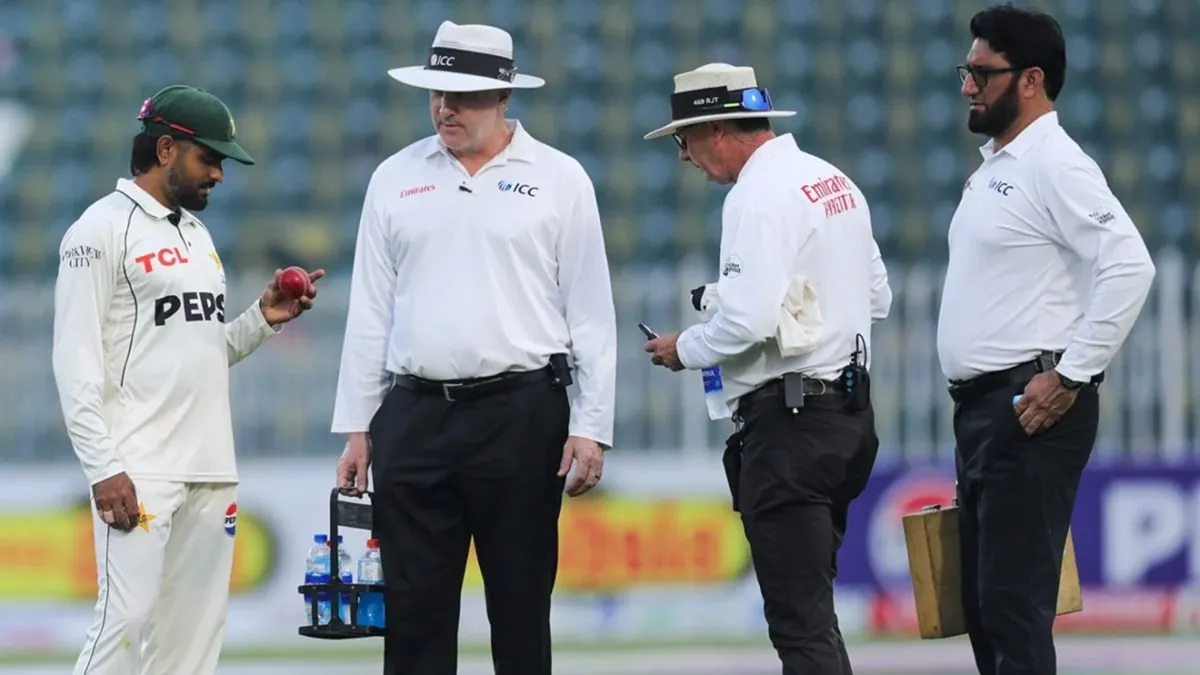
Babar Azam Opens Up on Pink-Ball Tests in Pakistan
Pakistan captain Babar Azam has expressed his willingness to play pink-ball Tests at home following the rain-affected draw against Sri Lanka in the opening match of the two-Test series. Speaking at the post-season presentation on Friday, the skipper addressed the ongoing challenges of weather and visibility that continue to disrupt red-ball fixtures in the region. While acknowledging the potential benefits of the alternative equipment, he highlighted practical hurdles that teams face when shifting formats without adequate practice periods.
The first Test suffered major setbacks due to persistent rain and bad light, resulting in approximately 141 overs lost across five days of play. Poor visibility repeatedly forced early finishes to daily sessions, while heavy downpours further disrupted proceedings on the fourth day. These disruptions reignited discussions surrounding how cricket boards can mitigate lost time and keep matches moving forward.
Why Weather and Visibility Disrupt Test Matches in Pakistan
The International Cricket Council had earlier approved the use of pink balls in day Tests to reduce interruptions caused by poor light and unfavorable weather conditions. Traditional red balls often become difficult to sight as evening approaches under overcast skies or poor floodlights, forcing umpires to halt matches for safety reasons. Day-night fixtures using pink balls offer a potential solution by maintaining visibility during transitional light phases.
Despite this regulatory approval, Babar stated that switching to the pink ball for the second Test against Sri Lanka, scheduled to begin on November 17 at the same venue, would not be practical due to limited preparation time. Teams spend months conditioning their techniques for red-ball cricket, making a sudden shift difficult for players who rely on visual cues and red-ball seam behavior.
What Preparation Is Needed for Pink-Ball Cricket?
Transitioning from traditional red-ball cricket to day-night pink-ball fixtures requires specialized training camps and warm-up matches. The pink ball behaves differently through the air and off the pitch, often offering more movement under lights as temperatures drop and dew sets in. Batters and bowlers must adapt their strategies to account for these environmental factors.
"You will have to prepare differently for the pink ball and two-three days are not enough because we play with the red ball throughout," Babar said.
"If we get a chance to prepare with the pink ball for longer then it is certainly something we would be open for to play a day Test with the pink ball," he added.
Reviewing the Rain-Affected Match Against Sri Lanka
Reflecting on the drawn Test, Babar praised Pakistan opening batters for providing a solid start on a pitch that was expected to be difficult. Opening partnerships set the tone for the entire innings, especially on surfaces designed to test defensive techniques and patience against the new ball.
"Everyone was expecting the pitch to be difficult and I give credit to my openers the way they assessed the pitch and gave us a start on the first day," he said.
Pakistan declared their first innings at 434/9, with Mohammad Taha, Tayyab Arif, Babar Azam, Saud Shakeel, and Arafat Minhas scoring half-centuries. This strong total put the hosts in a commanding position before the visiting side mounted a significant response.
Sri Lanka Fightback and Saqib Khan Impact
Sri Lanka recovered from early setbacks through a 249-run partnership between Dhananjaya de Silva and captain Kusal Mendis, both of whom scored centuries. The visiting batters capitalized on flat periods in the pitch and punished loose deliveries to shift momentum away from the bowling team.
The visitors eventually reached 446 despite an impressive seven-wicket haul from debutant fast bowler Saqib Khan, who helped Pakistan fight back after Sri Lanka had reached 404/4. Babar praised the young pacer for his confidence and determination under pressure.
"It is very good to see how Saqib Khan played. He had a lot of confidence because of the first-class cricket he has played. He had hunger to get wickets and was outstanding," he said.
Batting Struggles and Saud Shakeel Form
Pakistan then struggled in their second innings, slipping to 125/5 before Saud Shakeel helped stabilize the innings with another half-century. Middle-order stability remains essential when top-order wickets fall cheaply in bowler-friendly conditions.
Shakeel, who scored 93 in the first innings, once again fell in the nineties. It was the third consecutive Test in which he narrowly missed a century, having also suffered a similar dismissal against England at Lord's in August.
Babar acknowledged Shakeel's struggles to convert his scores into centuries but backed him as a key member of Pakistan batting lineup.
"We are trying to figure out why Saud is getting out in the nineties. Saud knows very well how to churn longer innings in crunch moments and he is the backbone of our team," he said.
Pakistan finished their second innings at 248/8 on the final day, during which only 63.3 overs were possible, as the match ended in a draw.





