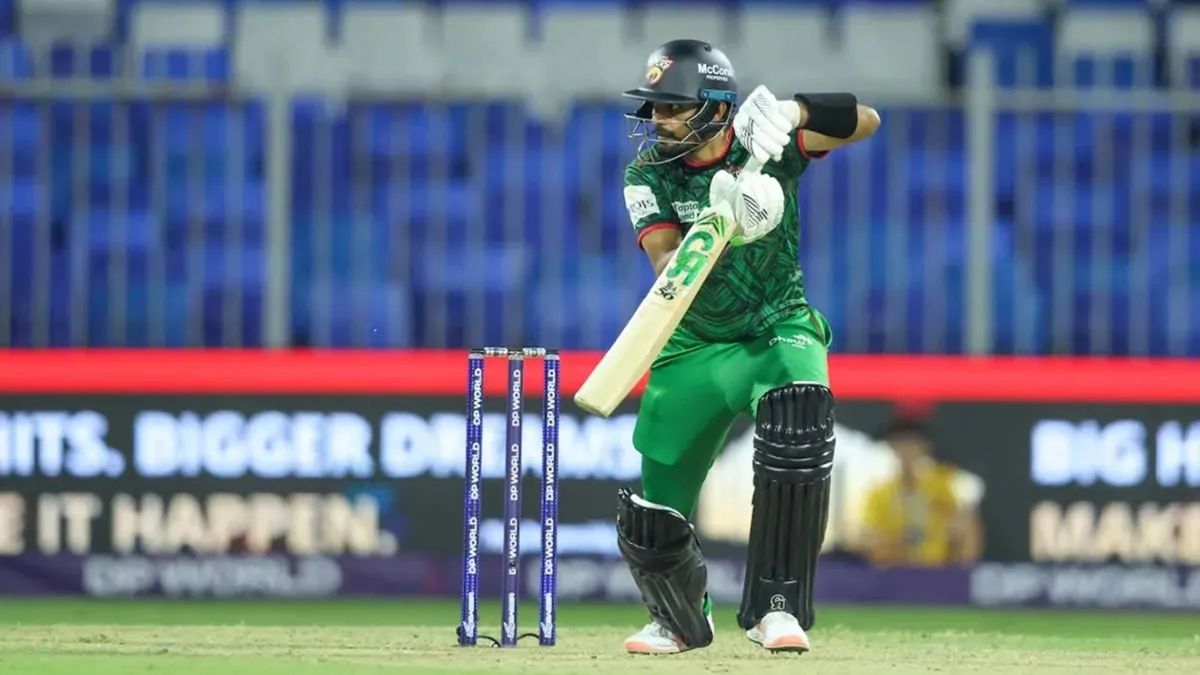
Babar Azam Faces Backlash Over Media Interviews at ILT20
Pakistan star batter Babar Azam has found himself at the center of a fresh controversy during the International League T20 in the United Arab Emirates after reportedly declining an interview with Pakistani journalists. The incident has triggered widespread discussions across sports media networks and social platforms, putting the spotlight on player media relations during high-profile franchise tournaments.
According to reports, two Pakistani journalists were scheduled to interview Babar in Dubai on November 22. However, upon their arrival, the Desert Vipers media manager reportedly informed them that Babar had declined the interview. Instead of the scheduled session, the journalists were offered an opportunity to interview Shadab Khan or Fakhar Zaman.
The situation escalated the following morning when Babar reportedly gave separate interviews to five international journalists, including four from India. This disparity in media access drew immediate reactions from domestic reporters who had traveled to cover the tournament and support regional representation in international franchise cricket leagues.
Reactions From Pakistani Journalists and the PCB
Pakistani journalists Qadir Khawaja and Imran Siddique were among those who expressed disappointment over the reported incident, questioning Babar decision to speak with Indian journalists while declining interviews with local media representatives. The decision to prioritize foreign press outlets over domestic reporters caused friction and prompted discussions about professional courtesy and media access standards.
In response to the development, Pakistani journalists have also called on the Pakistan Cricket Board to take notice of the matter. While the board has not issued an official statement regarding the franchise-level media scheduling, the public appeal highlights ongoing tensions between prominent cricketers and the domestic sports press.
The incident has sparked widespread debate on social media, with some users defending Babar and pointing to years of alleged biased and negative coverage by sections of the Pakistani media. Supporters argue that players retain the autonomy to manage their schedules and select media partners, while critics maintain that national representatives owe a level of accessibility to their home country journalists.
As of now, neither Babar nor his management had responded to the allegations. The silence from the player camp leaves several questions unanswered regarding the scheduling conflicts or editorial decisions that led to the cancellation of the domestic interview slots.
Babar Azam Performance in the International League T20
Away from the off-field discussions, Babar Azam is currently representing the Desert Vipers in the ILT20, where he made an impressive debut, guiding his side to a six-wicket victory over the Sharjah Warriors at the Sharjah Cricket Stadium. His integration into the Desert Vipers lineup has brought considerable attention to the franchise, drawing large crowds of expatriate fans to the venues across the United Arab Emirates.
During that standout opening match, the star batter scored 86 runs off 51 balls, hitting 13 fours and two sixes. His aggressive stroke play and steady anchoring of the innings demonstrated his adaptability to the fast-paced Twenty20 franchise format, reassuring team management of his value to the squad.
His performance earned him the Player of the Match award, while his 13 fours set a new record for the most fours hit in a single ILT20 innings. This athletic milestone cemented his immediate impact on the league, even as media debates continued to surround his interactions outside the boundary ropes.
Understanding the ILT20 and Franchise Press Obligations
The International League T20 is a major Twenty20 cricket tournament held annually in the United Arab Emirates, sanctioned by the Emirates Cricket Board. Attracting top-tier international talent from across the globe, the league operates under strict commercial and media guidelines that dictate player appearances, press conferences, and promotional activities.
Franchise teams such as the Desert Vipers employ dedicated media managers to handle interview requests, coordinate broadcast schedules, and manage interactions between players and the press corps. These logistical frameworks often balance commercial obligations to international broadcasters against the traditional demands of national and regional sports journalists.
Media access protocols during such leagues typically require players to fulfill specific quotas for host broadcasters and accredited print or digital media. Disputes over access frequently arise when high-profile individuals attract more interview requests than available time slots can accommodate during a busy tournament calendar.
What Lies Ahead for the Desert Vipers and Media Relations
As the tournament progresses through its fixtures in the United Arab Emirates, attention will remain on both Babar performance on the field and how team management handles subsequent media requests. Sports analysts note that transparent communication between player representatives and journalists remains essential for maintaining harmonious working relationships throughout demanding global seasons.
Followers of the Desert Vipers will be watching to see if future post-match media sessions feature a more balanced roster of local and international interviewers. Meanwhile, the Pakistan Cricket Board and player management teams will likely monitor how franchise-level controversies influence public perception of national team representatives competing abroad.