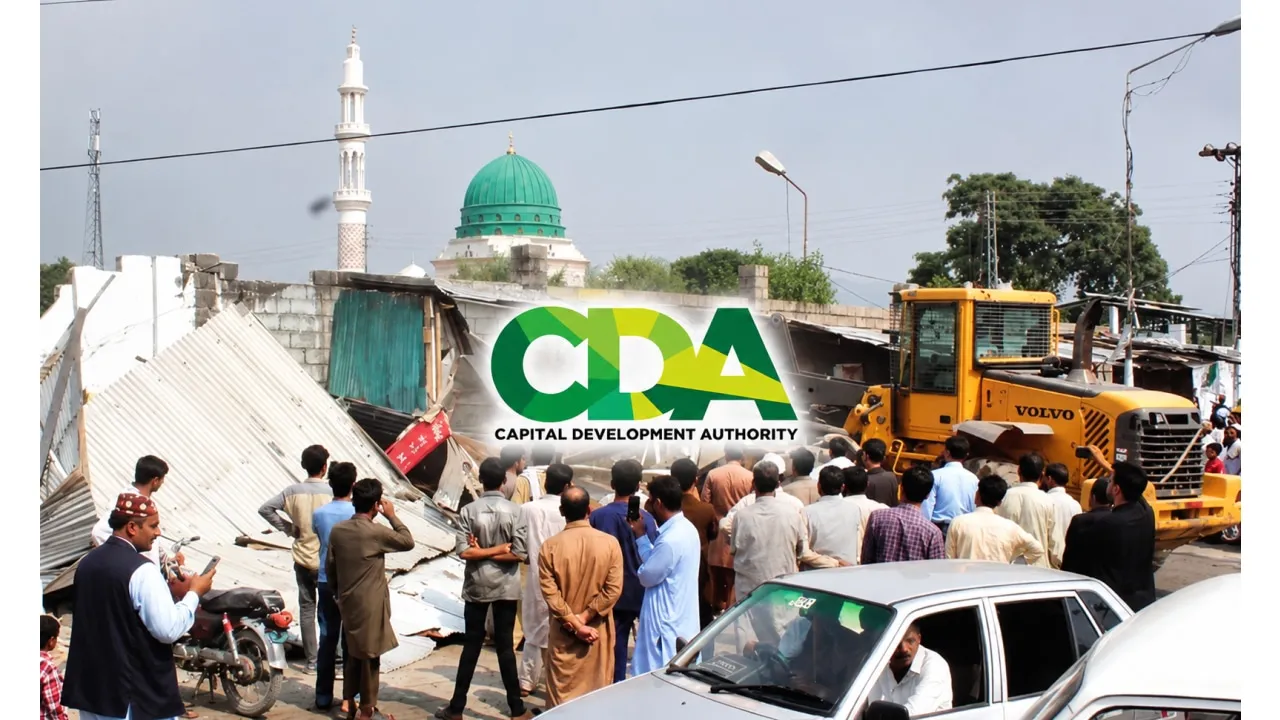
The Capital Development Authority has told the Islamabad High Court that the building known as Bari Imam House is an unauthorized occupation of land acquired by the authority in 1963, arguing that the premises have no legal connection with the shrine of Hazrat Bari Imam.
In its written response submitted through counsel Kashif Ali Malik, the Capital Development Authority said the disputed property does not appear in its official land acquisition or revenue records. It maintained that the petitioner has no lawful ownership, title, or permission to occupy or use the premises. This legal filing brings renewed focus to long-standing property disputes involving state-acquired land in the federal capital.
CDA Says Land Was Acquired in 1963
According to the authority's response, the disputed property comprises Khasra Nos. 435, 582, 591, 592, and 593 in Mauza Noorpur Shahan. The land was acquired under Award No. 4/DC CDA/1963, and compensation along with other admissible benefits was paid to the respective landowners.
The Capital Development Authority said the acquisition records contain no reference to any building or establishment named Bari Imam House. It therefore considers the occupation an encroachment on its acquired land. Understanding the history of land acquisition in Islamabad requires looking back at the formation of the capital city and the legal instruments used to transfer rural tracts to state control.
History of Land Acquisition in Islamabad
When the government designated Islamabad as the new capital in the late 1950s and early 1960s, extensive tracts of land were acquired from local villages. The Capital Development Authority was established to oversee the master planning, development, and municipal administration of the city. Under various awards issued by district collectors and land acquisition collectors, the state compensated traditional landowners and took legal possession of designated sectors and rural peripheries.
Mauza Noorpur Shahan, where the disputed property sits, is one of the older historic settlements absorbed into the broader federal capital territory. Over the decades, rapid urban expansion and population growth around traditional shrines and settlements have frequently led to overlapping claims between local residents, religious administrators, and municipal authorities.
CDA Separates Disputed Property From Bari Imam Shrine
The authority further clarified that the actual shrine, or Darbar, of Hazrat Bari Imam is located on separate land comprising Khasra Nos. 277, 665, 677, 678, 679, and 680.
According to the Capital Development Authority, this land is recorded in the name of Darbar Aalia Hazrat Bari Abdul Latif Shah (R.A.) and is situated across the road from the disputed premises. The authority argued that the two properties are legally and geographically distinct and that associating Bari Imam House with the shrine does not establish ownership or any legal entitlement over the disputed land.
The Legacy and Importance of Hazrat Bari Imam
Hazrat Bari Imam, whose real name is Shah Abdul Latif Kazmi, is a revered Sufi saint who lived in the 17th century. His shrine in Noorpur Shahan attracts thousands of devotees every year, particularly during the annual urs festival. The surrounding area has historically been managed by local caretakers, district administration committees, and religious endowments.
Because of the profound religious and cultural significance of the shrine, various residential and commercial structures have emerged in its vicinity over generations. Municipal regulators frequently scrutinize these buildings to determine whether they occupy state land or hold legitimate historical land grants.
CDA Challenges Petitioner's Legal Standing
The Capital Development Authority has also challenged the maintainability of the constitutional petition, raising objections over the petitioner's legal standing and entitlement to occupy the premises.
The response follows an Islamabad High Court order dated November 3, 2026, directing the relevant authorities to de-seal the building and restraining its demolition until the next hearing. The court's interim relief temporarily protected the structure while allowing both sides to submit formal legal arguments.
Next Steps in the Islamabad High Court Proceedings
The Capital Development Authority has requested an early hearing, preferably during the week beginning November 9, 2026, instead of the previously scheduled date of January 18, 2027, to present its legal and factual position before the court.
Legal observers note that the court will evaluate the land revenue records from 1963, the exact demarcation of Khasra numbers, and the arguments regarding the petitioner's locus standi. The outcome of these proceedings will determine whether the structure remains protected or faces further municipal enforcement action.





