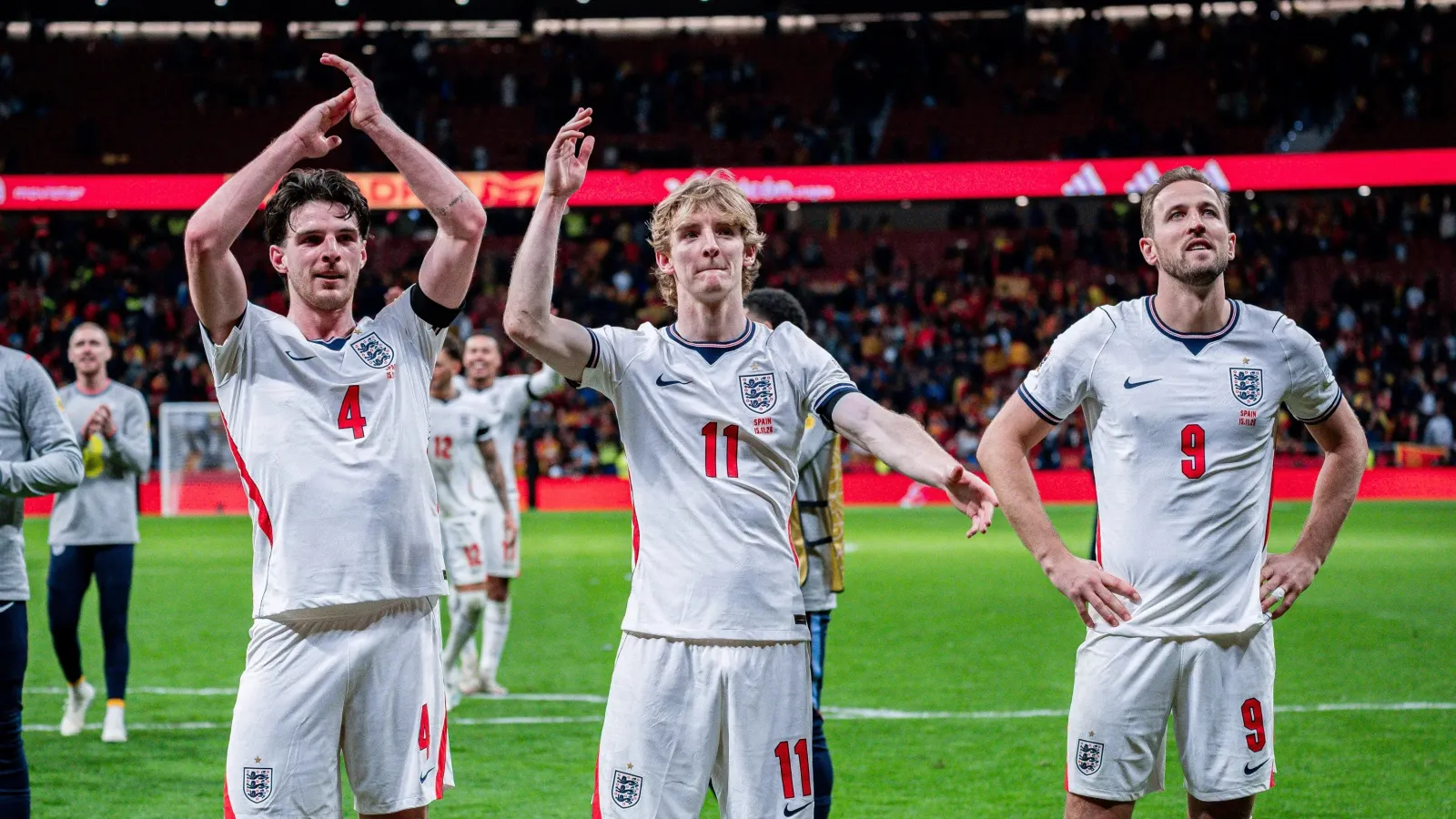
England secured a 3-2 victory over Spain in Madrid on Sunday, finishing top of Group C in UEFA Nations League A and booking a place in the quarter-finals.
The win, achieved despite Elliot Anderson's red card, means the Three Lions will avoid Spain in the knockout stage and could be drawn against Belgium, the Netherlands or a runner-up from Group D.
How the Nations League Draw Works
UEFA's Nations League groups are split into Leagues A, B, C and D, with each league containing four groups. The four group winners from League A are each paired with a runner-up from a different group for the quarter-finals. The draw ensures that a group winner never faces the runner-up from its own group, and that teams from the same league but different groups can meet.
Because England finished first in Group C, they will be matched with a runner-up from either Group A, B or D. The draw is scheduled for Friday, 20 November at 11 am GMT, and the quarter-final ties will be played over two legs in March.
Potential Opponents for England
Based on the current standings, the most likely opponents are:
- Belgium - second-placed in Group A behind France.
- Netherlands - second-placed in Group B behind Germany.
- A runner-up from Group D - the group that includes Portugal, Denmark and Norway.
Portugal currently sit on 12 points, Denmark on 9 and Norway on 6 after five matches. As of the latest fixtures, Denmark occupy second place in Group D, but the final rankings will be confirmed after the last round of games on the night of the Spain-England match.
Why England Will Not Face Spain or France
UEFA's draw rules prevent a group winner from meeting the runner-up of its own group, so England cannot be paired with Spain, the runner-up of Group C. Likewise, the three other group winners - France (Group A), Germany (Group B) and Portugal (Group D) - are already set to face runners-up from other groups, meaning England will also avoid France, Germany and Portugal in the quarter-finals.
Quarter-Final Schedule and Format
The quarter-final stage consists of two-legged ties. The first leg will be played between 25 March and 27 March 2024, and the return leg will follow from 28 March to 30 March. The aggregate score over the two matches decides which side progresses to the semi-finals.
If the aggregate score is level after the second leg, the tie proceeds to extra time and, if necessary, a penalty shoot-out, as per UEFA competition regulations.
Implications for England's Campaign
England entered the Nations League with the aim of reaching the final and securing a place in the 2025 UEFA European Championship play-offs. A quarter-final victory would keep those ambitions alive. The potential opponents each present distinct challenges:
- Belgium - a side with a mix of experienced internationals and emerging talent, known for tactical flexibility.
- Netherlands - a team that relies on fluid attacking play and a strong midfield partnership.
- Group D runner-up - could be Denmark, a disciplined side with a solid defensive record, or Portugal, a team boasting world-class attacking options.
England's manager will need to adjust tactics depending on the opponent, especially considering the loss of Elliot Anderson to suspension for the next match.
What Fans Should Watch For
Key dates to mark on the calendar:
- 20 November 2023 - Nations League quarter-final draw (11 am GMT).
- 25-27 March 2024 - First leg of the quarter-finals.
- 28-30 March 2024 - Second leg of the quarter-finals.
Supporters will also be keen to see which Group D runner-up ultimately qualifies, as that will determine England's exact opponent. The final group-stage matches for Portugal, Denmark and Norway are set for the same night as the England-Spain game, so the outcome will be known shortly after the final whistle.
Historical Context: England vs Spain in Madrid
The 3-2 win marks Spain's first defeat in Madrid in 39 years, a streak that began in 1985. England's early goals came from Harry Kane, Ezri Konsa and Ben White, giving them a comfortable lead before Elliot Anderson's dismissal. Despite the red card, England held on, with Mikel Oyarzabal and Nico Williams scoring for La Roja.
England's 15 points and +13 goal difference place them clearly ahead of Spain's 15 points and +8 goal difference, the tie-breaker being head-to-head results - England won the direct encounter.
Understanding the Nations League Structure
The Nations League was introduced in 2018 to replace friendlies with competitive matches. It features promotion and relegation between leagues, with the top league (League A) containing the strongest national teams. The competition runs concurrently with FIFA international windows, and its final four teams earn a berth in the European Championship play-offs if they have not already qualified.
Each league's groups play a double-round-robin format, meaning each team faces its group opponents twice - home and away. Points are awarded in the standard fashion: three for a win, one for a draw, none for a loss. Goal difference and goals scored are used as tiebreakers when points are equal.
Next Steps for England
After the draw, England's coaching staff will analyse the opponent's recent performances, squad availability and tactical tendencies. They will also address the suspension of Elliot Anderson, who will miss the first leg of the quarter-finals. Squad depth, especially in midfield and defense, will be crucial.
Fans can expect a press conference from the England manager in the days following the draw, outlining preparation plans and potential line-ups. The team will also use the March international break for final training sessions before the first leg.





