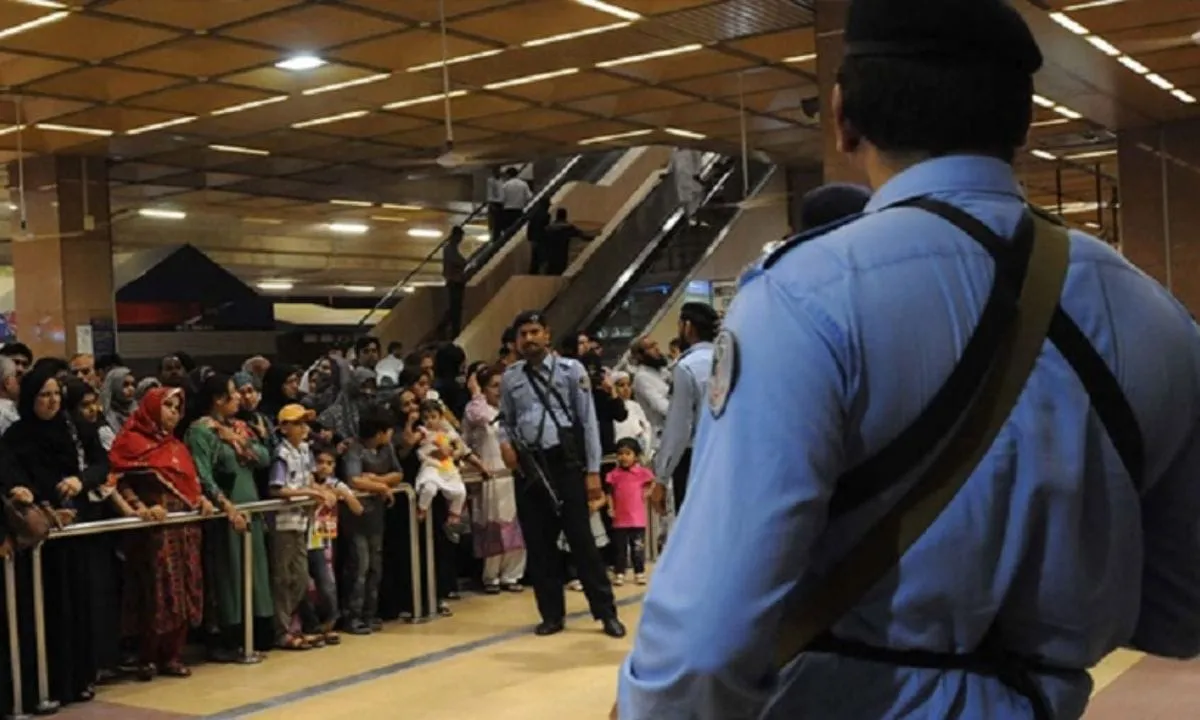
The Federal Investigation Agency (FIA) offloaded a passenger at Jinnah International Airport in Karachi on Wednesday after immigration officials detected passport tampering that allegedly concealed a previous deportation from the Turkish Republic of Northern Cyprus (TRNC).
What Happened at Karachi Airport?
An FIA spokesperson identified the passenger as Saifullah, a resident of Sanghar, who was travelling to the TRNC via Istanbul on a study visa. During routine clearance, immigration officers noticed discrepancies in his travel documents and stopped him from boarding the flight.
Further scrutiny revealed that Saifullah had attempted to enter North Cyprus in March 2026 on an earlier passport. He was refused entry and deported to Pakistan. The same passport was later used at Lahore airport in June 2026, where he was again offloaded.
How the Passport Was Allegedly Altered
According to the FIA, investigators found that the Turkish visa and the stamp indicating the earlier offloading had been removed from the original passport. Saifullah then obtained a new passport that showed no record of either incident.
Preliminary information points to a document-processing agent named Harmeen, based in Cyprus, who allegedly arranged the new travel documents. The FIA has seized the passenger's passport, the new passport, and related paperwork for further examination.
Why the Case Was Sent to the Anti-Human Trafficking Circle
The FIA transferred Saifullah and the documents to its Anti-Human Trafficking Circle (AHTC). The AHTC handles cases where forged or altered documents are used to facilitate illegal migration, smuggling, or trafficking. By moving the case to this specialized unit, authorities signal that the alleged tampering may be part of a broader network that assists individuals in circumventing immigration controls.
Background on Passport Fraud and Human Trafficking in Pakistan
Passport fraud has been a persistent challenge for Pakistani authorities. The FIA regularly conducts raids on agents who produce counterfeit passports or alter genuine ones to hide prior immigration violations. Such activities often intersect with human-trafficking operations, as traffickers rely on falsified documents to move victims across borders.
Pakistan's Anti-Human Trafficking Act of 2012 established the AHTC within the FIA to coordinate investigations, prosecute traffickers, and provide victim support. The circle works closely with the Ministry of Interior, the Ministry of Foreign Affairs, and international partners, including the European Union and the United Nations Office on Drugs and Crime.
Related FIA Operation in Islamabad
In a separate development, the FIA Islamabad Zone announced the arrest of Syed Majid Hussain in connection with case No. 330/2026, a UK work-visa fraud scheme. The complainant alleged that Hussain collected £34,000 and Rs465,000 on the promise of sending his nephew, Noman Ali, to the United Kingdom as a mason.
Hussain later returned £25,500 but allegedly failed to refund the remaining £8,500 and Rs465,000. The FIA said the suspect is now in custody and the case is being processed by the Anti-Human Trafficking Circle Islamabad.
Legal Framework Governing Passport and Visa Fraud
Under the Pakistan Passport Act 1974, any alteration, forgery, or misuse of a passport is a criminal offence punishable by up to ten years imprisonment and a fine. The FIA, as the premier investigative body for federal crimes, has jurisdiction over offenses that cross provincial boundaries or involve foreign nationals.
Visa fraud, especially when linked to human-trafficking networks, falls under the Prevention and Suppression of Human Trafficking Ordinance 2007. Convictions can lead to life imprisonment, asset seizure, and deportation of foreign victims.
Impact on Travelers and Travel Agencies
Travel agencies that rely on third-party document providers must now verify the authenticity of passports and visas more rigorously. The FIA's actions serve as a warning that agencies complicit in document tampering will face prosecution.
For ordinary travelers, the incident underscores the importance of maintaining a transparent travel history. Any prior deportation or visa refusal must be disclosed to avoid legal complications at immigration checkpoints.
What to Watch for Next
The AHTC will continue its investigation into Saifullah's case, including tracing the role of the agent Harmeen and any possible links to larger trafficking rings. The FIA is expected to file a formal charge sheet once forensic analysis of the passports is complete.
Authorities have advised the public to report suspicious document-processing activities to the nearest FIA office or the Ministry of Interior's hotline. Ongoing monitoring of passport issuance and visa processing will likely intensify in the coming months.
While the FIA has not disclosed a timeline for trial, the case highlights the agency's commitment to cracking down on passport fraud and its intersection with human-trafficking operations.





