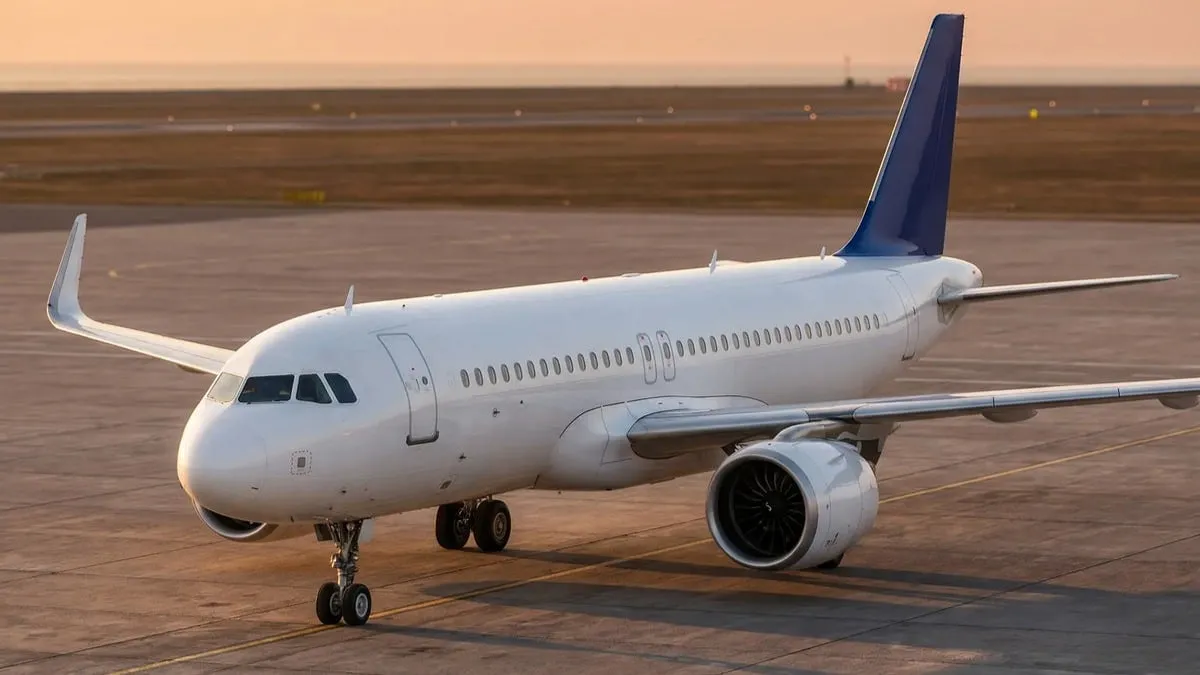
Fly Jinnah has added a brand-new Airbus A320neo aircraft to its fleet after the plane arrived at Karachi Airport from France. The Pakistan Airports Authority (PAA) welcomed the aircraft with a traditional water salute following its landing at Karachi Airport.
What Is the New Airbus A320neo and How Did It Arrive?
The aircraft that landed on November 10 carries the Pakistani registration number AP-BQA and manufacturer serial number 13606. According to sources, the plane flew directly from Airbus headquarters in Toulouse, France, on a delivery flight. The flight was the final leg after the aircraft completed its first successful test flight in Toulouse on November 2.
The test flight lasted two hours and two minutes, a standard duration for a new-type-rating sortie. After the test, officials completed various formalities on November 10, cleared the aircraft for export, and prepared it for the journey to Pakistan. The delivery flight concluded at Karachi Airport, where the Pakistan Airports Authority greeted the aircraft with a water salute, a customary welcome for new arrivals.
Technical Details of the A320neo Delivered to Fly Jinnah
The new Airbus A320neo is powered by CFM International LEAP-1A26 engines. The LEAP-1A series is the latest generation of high-bypass turbofan engines designed for narrow-body aircraft. These engines provide higher thrust while delivering lower fuel burn and emissions compared with older engine families.
According to the provided information, the aircraft consumes at least 20% less fuel per seat than previous A320 models. This improvement stems from a combination of aerodynamic refinements, lighter airframe structures, and the efficiency of the LEAP-1A26 engines. The fuel-savings translate into lower operating costs for Fly Jinnah and a smaller carbon footprint per passenger kilometre.
Why the A320neo Matters for Fly Jinnah and Pakistani Aviation
Fly Jinnah, a growing carrier in Pakistan's domestic and regional market, has been expanding its fleet to meet rising passenger demand. Adding the A320neo aligns with the airline's strategy to modernise its fleet, improve reliability, and offer a more comfortable cabin experience.
The A320neo's lower fuel consumption directly impacts ticket pricing and route economics. With fuel typically representing the largest single cost for airlines, a 20% reduction per seat can enable Fly Jinnah to keep fares competitive while preserving margins.
Beyond economics, the aircraft's modern systems enhance safety and operational efficiency. The cockpit features the latest Airbus flight-deck technology, including fly-by-wire controls, advanced navigation displays, and automated performance management, which reduce pilot workload and improve situational awareness.
Background: Pakistan's Fleet Modernisation Efforts
Pakistan's aviation sector has seen a gradual shift toward newer aircraft over the past decade. Legacy fleets of Boeing 737-300/400 and older Airbus A320-200 models have been supplemented with newer variants that meet stricter noise and emission standards.
The Pakistan Airports Authority, which oversees airport operations and safety, has supported airlines in acquiring modern aircraft through streamlined customs and landing-fee incentives. The water salute given to the A320neo reflects both a ceremonial welcome and an acknowledgement of the airline's contribution to national connectivity.
Impact on Passengers and Routes
Passengers on Fly Jinnah will notice a quieter cabin, improved air quality, and more efficient boarding procedures thanks to the A320neo's wider doors and updated interior layout. The aircraft typically seats between 150 and 180 passengers, depending on the airline's chosen configuration.
With the new aircraft, Fly Jinnah can consider adding frequency to existing high-traffic routes such as Karachi-Lahore and Karachi-Islamabad, or launching new services to secondary cities. The increased range and payload capability of the A320neo also open possibilities for short-haul international flights to neighbouring countries.
Operationally, the aircraft's reduced turnaround time, thanks to modern ground-handling equipment and faster engine start sequences, means more flight cycles per day, supporting higher utilization rates.
What Comes Next for Fly Jinnah and the A320neo
After the delivery, the aircraft will undergo a series of acceptance checks by Fly Jinnah's technical team, followed by crew training on the new type. The airline's pilots will complete a type-rating course at an Airbus-approved training centre, ensuring they are fully qualified to operate the A320neo in commercial service.
Regulatory approval from the Pakistan Civil Aviation Authority (PCAA) is required before the aircraft can enter scheduled service. The PCAA will review the aircraft's airworthiness certificate, maintenance program, and operational manuals before issuing a certificate of release to service.
Once cleared, Fly Jinnah is expected to schedule the A320neo on its busiest routes within a few weeks, aligning with its summer timetable. The airline has indicated that the aircraft will be part of a broader fleet renewal plan that may include additional A320neo or A321neo deliveries in the coming years.
Practical Takeaways for Readers
- Fly Jinnah's new A320neo, registration AP-BQA, arrived at Karachi Airport on November 10 after a delivery flight from Toulouse.
- The aircraft is powered by CFM LEAP-1A26 engines and promises at least 20% lower fuel consumption per seat.
- Passengers can expect a quieter, more comfortable cabin and potentially more frequent flights on popular domestic routes.
- Regulatory clearance from the PCAA will be the final step before the aircraft enters commercial service.





