Gerwyn Price Wins Grand Slam of Darts Leg Despite Busting Checkout
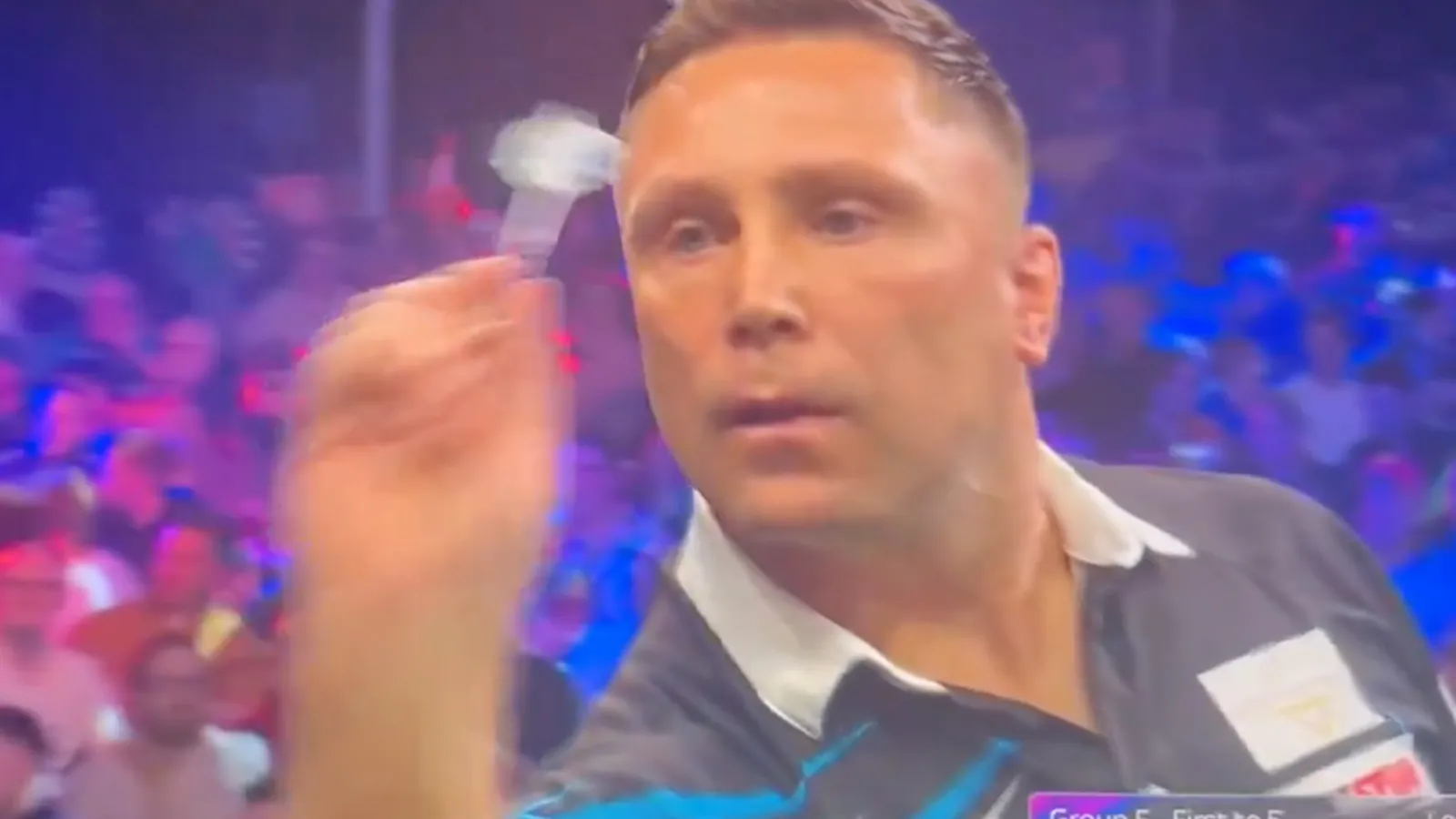
Darts fans were left befuddled by Gerwyn Price's busting of a leg in his Grand Slam of Darts victory over Sebastian Bialecki on Monday night. The former world champion booked his place in the knockout stages with a routine victory over the Pole, whom he defeated 5-2. However, the match will be remembered primarily for a bizarre scoring error in the fourth leg that left both spectators and viewers at home questioning the rules of the sport.
During the fourth leg of the encounter, Price checked out with a 145 finish when he actually required 135. Known on the professional circuit as 'The Iceman', the Welsh player thought he had successfully taken out the 135 after hitting treble 19, treble 16, and double 20. In reality, that sequence of shots took him over his required finish, which should have resulted in a bust and a turn over to his opponent.
How the Referee Error Occurred in the Match
The error was not the fault of the Welshman, but rather a miscalculation by the match official. Referee Charlie Corstorphine incorrectly told Price after he hit treble 19 that he needed 88 instead of 78. Trusting the official's arithmetic, Price proceeded to throw his darts based on the wrong target.
Price explained the confusion after the match during his press conference. He stated that he did not know about the mistake until he walked into the media room after the fixture concluded. He noted that he hit the first treble, asked what he had left, and was told 88. He then went treble 16 and double top, after which the referee called game shot.
Fan Reaction and Social Media Confusion
Viewers watching the broadcast back at home could not believe their eyes as the strange sequence unfolded on television screens. Social media platforms quickly lit up with comments from bewildered supporters questioning the validity of the leg. One fan remarked online asking if Gerwyn Price was the first person ever to win a leg of 501 by taking out 511. Another viewer asked if they were going mad or if Price had busted his score on the wrong double and still been awarded the leg, noting the confusion on the scoreboard. A third fan asked to see the 135 finish again to make sure they were not losing their mind.
Other spectators expressed frustration at the oversight by the officials and the broadcast team. One person remarked that while mistakes happen, failing to notice such a glaring mathematical error is unacceptable. They questioned how none of the officials or the commentary team noticed the blunder as it happened live.
Price's Response to the Viral Incident
Despite the uproar on social media and among live spectators, Price remained unfazed once he learned of the mistake away from the oche. He admitted that he was glad he remained oblivious to the scoring error while the match was still ongoing. He noted that realizing he had busted the checkout would have played on his mind and potentially affected the rest of his performance in the encounter.
The victory ultimately secured Price his progression to the knockout stages of the tournament. The 5-2 scoreline against Sebastian Bialecki was overshadowed by the unusual statistics of the fourth leg, but the result stood as official. The incident remains a rare talking point in professional darts regarding the reliance on match officials for score verification during high-pressure matches.
Understanding Checkout Rules and Busts in Professional Darts
In standard games of 501, a player must reduce their score from a starting total down to exactly zero. The final dart thrown must land in a double segment or the bullseye to win the leg. If a player scores more than the remaining total, or scores a number that leaves them with a score of one, the turn ends immediately. This occurrence is known as busting, and the player's score reverts to what it was at the start of that visit to the board.
Professional players usually keep track of their own remaining totals and potential checkout combinations in their heads. However, they frequently rely on the referee's verbal calls and the arena scoreboard, especially during intense moments of tournament play. Because referees calculate remaining scores rapidly under pressure, rare human errors can occasionally occur on the televised stage.