Global DRAM Revenue Surges in Q3 2026
Global DRAM revenue jumped 369% year-over-year as demand for memory chips continues to rise. Artificial intelligence accelerators and data centers are driving much of this growth across the technology sector. The average selling price, known as ASP, has also reached $1.9 per gigabit during this period.
This massive financial expansion reflects a fundamental shift in how computing hardware is valued and produced. Corporations around the world are upgrading their server farms to handle intensive computational workloads. Memory components, once subject to severe price drops during market downturns, now command high premiums due to persistent shortages.
Market analysts note that the rapid adoption of specialized machine learning models requires unprecedented amounts of fast memory. Without these components, modern computing clusters cannot process the vast datasets required for modern software applications. Consequently, manufacturers are seeing record financial returns across their quarterly earnings reports.
Market Share of Leading DRAM Manufacturers
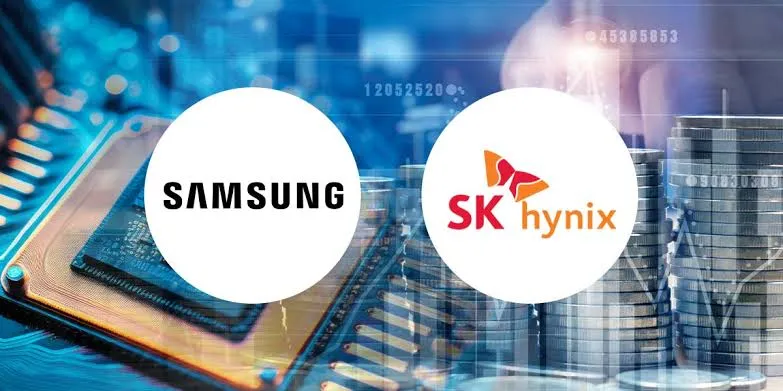
South Korean manufacturers are leading the market, with Samsung holding the largest share. The company controls 38% of global DRAM revenue, followed by SK hynix at 29%. SK hynix recorded revenue growth of more than 40% quarter-over-quarter. However, Samsung currently holds a stronger overall position in the sector.
US-based Micron ranks third globally with a 21% market share. Meanwhile, China-based CXMT holds fourth place with 9% of the market. Although CXMT grew compared to Q3 last year, its share fell by one percentage point from Q2 this year.
The dominance of South Korean firms stems from decades of capital investment in fabrication plants and research facilities. Both Samsung and SK hynix secured early advantages in specialized manufacturing processes. These advantages allow them to supply high-volume, high-margin products to major technology conglomerates without severe production bottlenecks.
The Shift in the High-Bandwidth Memory Market
The competition is changing in the high-bandwidth memory market, commonly referred to as HBM. SK hynix previously dominated HBM3E sales, according to Counterpoint Research data. Now, the market is shifting towards HBM4, where Samsung has taken the lead.
This technological evolution requires extreme precision in stacking multiple DRAM dies vertically. Such packaging techniques allow data to transfer between processors and memory at incredible speeds. Companies that fail to master these advanced packaging methods risk losing lucrative contracts with artificial intelligence developers.
This shift could create challenges for CXMT as well. The Chinese manufacturer plans to begin mass-producing HBM3E next year. As a result, it risks falling behind competitors in the latest memory segment as global standards evolve toward HBM4.
Growth in DDR and LPDDR Memory Demand
However, high-bandwidth memory is not the only memory type benefiting from artificial intelligence demand. The growing use of agentic AI is also increasing demand for DDR and LPDDR memory. Both technologies are commonly used as system RAM, unlike HBM, which mainly powers artificial intelligence accelerator cards.
Demand for DDR and LPDDR has increased by 500% and 400% year-over-year, respectively. CXMT has also made progress in this segment of the industry. The company became the first manufacturer to begin mass production of LPDDR6 memory.
Interestingly, the Xiaomi 18 Fold uses LPDDR6 in its 16GB RAM variant. However, the 12GB model uses the older LPDDR5X memory standard, illustrating the transition phase current mobile devices are experiencing.
Profitability and Price Trends for Consumers
Despite the faster growth in DDR and LPDDR units, high-bandwidth memory remains the more profitable DRAM segment. Revenue from high-bandwidth memory sales nearly doubled compared to the same quarter last year. However, DDR and LPDDR revenue is growing at a faster rate overall.
Memory prices also continued to rise during 2026. However, the pace of increases slowed in Q3 compared to the first half of the year. Prices are still expected to remain high in the near term.
This could create problems for consumers planning personal computer upgrades. MS Hwang, Research Director at Counterpoint Research, expects memory prices to remain strong next year.
"Memory prices should stay strong next year. HBM prices, which lagged commodity DRAM this year, are now catching up. Long-term agreements are supporting prices and supply will stay tight because major new fabs will not start production until 2028," Hwang said.
What Comes Next for Memory Supply and Prices
As a result, consumers may have to wait longer for more affordable memory components. With major new manufacturing facilities not expected before 2028, supply constraints could continue affecting the market.
Fab construction requires billions of dollars and several years of careful engineering before commercial wafers emerge. Current semiconductor fabrication plants are operating near full capacity to satisfy server and data center orders. Until new factories open their cleanrooms, consumer electronics and desktop hardware will face tight inventory levels.
Industry observers will monitor long-term agreements between chip suppliers and major device manufacturers closely. These contracts dictate pricing stability and allocation volumes across the entire technology supply chain. For everyday buyers, careful budgeting will remain necessary when purchasing new computing equipment.