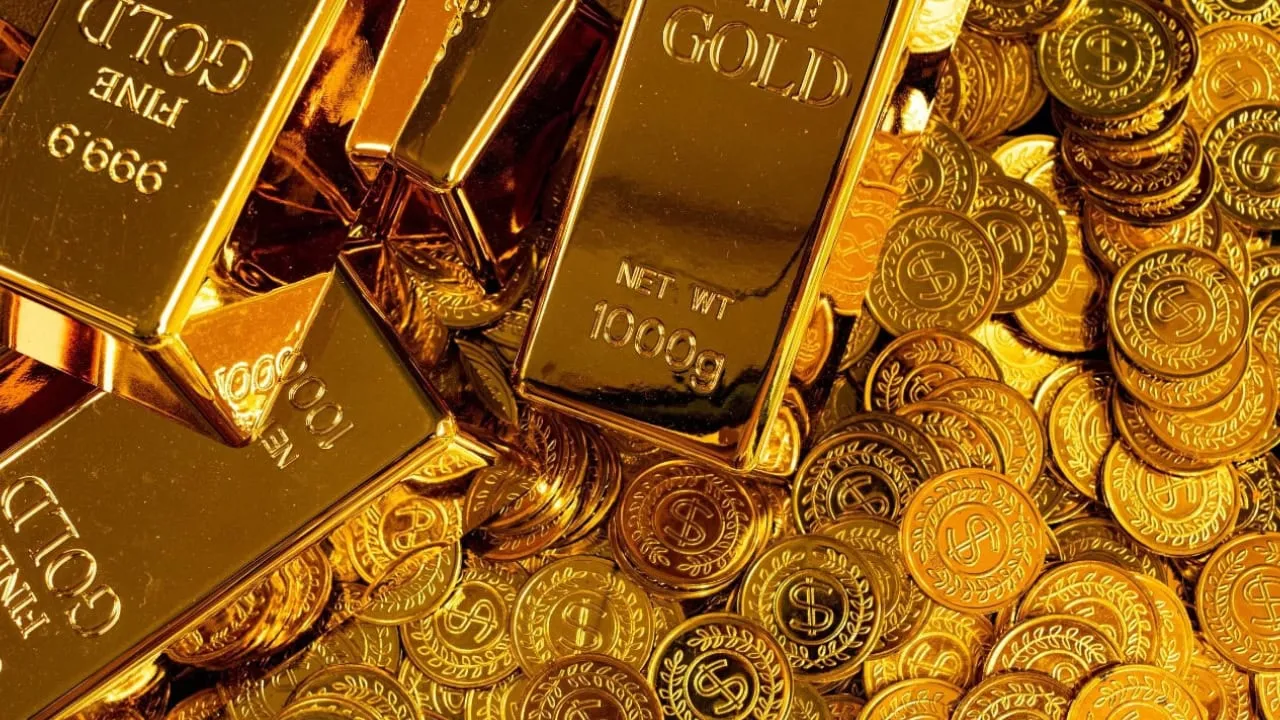
Precious metals, gold and silver, are facing heavy selling pressure across global markets. After peaking near $5,600 per ounce in January 2026, gold has slid to around $3,500-$3,580 per ounce in mid-to-late November. Consequently, the yellow metal has hit its lowest levels in over a year. Similarly, silver has suffered a steep downturn after surging to record highs around $120 per ounce early in the year. Today, silver trades at roughly $45-$50 per ounce, marking its lowest level in over a year as well.
Market participants and everyday investors are closely watching these fluctuations as values retreat from historic peaks. The rapid shift from record highs to multi-month lows reflects a fast-moving economic environment. Understanding these shifts requires looking closely at local rates in Pakistan as well as international spot prices driving the trend.
Current Gold and Silver Rates in Pakistan Today
Local bullion markets in Pakistan reflect the broader international downturn. For 24K gold, the current rate stands at Rs. 378,412 per tola. Buyers looking at smaller quantities will find 10 grams priced at Rs. 324,432.90, while a single gram of 24K gold costs Rs. 32,443.29.
Silver rates within the country have experienced a parallel decline. The local price for silver is currently Rs. 4,570.95 per tola. For alternative measurements, 10 grams of silver trade at Rs. 3,918.92, and one gram costs Rs. 391.892.
International Spot Prices for Precious Metals
Global benchmark figures set the tone for domestic trading desks around the world. Spot gold is currently changing hands at $3,654.45 per troy ounce in international trading sessions. Spot silver is trading at $44.113 per troy ounce.
These international benchmarks illustrate the depth of the correction from earlier highs. Traders monitor these spot figures continuously to gauge market sentiment and calculate domestic pricing formulas. The gap between international spot rates and local rates accounts for taxes, transport, and local market dynamics.
Why Gold and Silver Prices Are Falling Globally
Several macroeconomic forces are pushing gold prices downward right now. First, sticky inflation has forced markets to price in further U.S. Federal Reserve interest rate increases, including expectations around the December meeting. As a result, higher rates and rising Treasury yields increase the opportunity cost of holding gold, which pays no interest or dividends.
Furthermore, a stronger U.S. dollar is weighing heavily on bullion. Rising rate expectations and higher bond yields have lifted the greenback. Because global markets price gold in U.S. dollars, a stronger currency makes bullion costlier for buyers using other currencies. Therefore, international demand has softened.
Meanwhile, stock market losses are triggering forced selling. Steep sell-offs in equities, particularly tech and AI stocks, have pushed investors and funds to sell liquid assets like gold. In short, traders are cashing out bullion to cover equity losses, meet margin calls, or raise cash.
In addition, profit-taking and weaker retail buying have added to the decline. Following steep gains in 2025 and early 2026, traders have actively locked in their profits. At the same time, elevated prices and persistent inflation pressures have curbed discretionary jewelry purchases.
Understanding the Specific Pressures on Silver
Just like gold, silver faces intense pressure from U.S. monetary policy and currency strength. Inflation concerns and hawkish Federal Reserve signals have fueled expectations of additional rate hikes. Consequently, higher yields make interest-bearing assets far more attractive than silver. Moreover, a stronger U.S. dollar makes dollar-priced silver more expensive for overseas buyers.
However, silver also suffers from weaker industrial and solar demand. Slower factory and manufacturing activity, especially in major consuming nations like China, has reduced industrial usage. On top of that, high prices earlier in the year pushed manufacturers toward thrifting and material substitution, particularly in solar applications.
Additionally, market positioning has accelerated the downturn. Heavy profit-booking after the sharp early-2026 rally, alongside position liquidations and investor outflows, has dragged prices lower. Finally, silver carries higher volatility than gold. Because silver operates in a smaller market with heavy industrial exposure, its price swings much more sharply during broad commodity pullbacks.
Historical Context and Market Background
The journey of precious metals through 2025 and 2026 has been exceptionally turbulent. Earlier in the year, safe-haven demand and strong central bank buying pushed gold toward an extraordinary peak of $5,600 per ounce in January 2026. Silver enjoyed an even more dramatic run, climbing to record highs near $120 per ounce during the same period.
These historic highs were driven by geopolitical tensions, economic uncertainty, and robust retail interest. Investors rushed into physical bullion as a hedge against currency devaluation and inflation. However, as macroeconomic indicators shifted, the momentum reversed rapidly. The current slide brings both metals back to levels not witnessed in over twelve months, surprising many retail investors who entered the market near the peak.
Impact on Investors, Industries, and Consumers
The sharp correction affects multiple segments of the economy differently. Retail investors who bought gold and silver at higher valuations are currently sitting on paper losses. Institutional investors and hedge funds are rebalancing portfolios to account for higher yields in fixed-income assets, reducing their allocations to precious metals.
On the industrial side, manufacturers relying on silver for electronics and photovoltaic cells experienced severe cost pressures earlier in the year. The recent price drop offers some relief, though weaker global manufacturing demand dampens the overall benefit. Meanwhile, ordinary consumers looking to purchase traditional jewelry find that while prices remain high compared to historical averages, the recent pullback offers a more accessible entry point than the January highs.
What to Watch Next in Precious Metals
Market analysts are keeping a close eye on upcoming U.S. economic data releases and central bank announcements. The upcoming Federal Reserve meeting in December remains a crucial focal point for interest rate decisions. Any unexpected shifts in inflation reports or employment figures could trigger rapid reversals or further declines in bullion prices.
Investors should monitor currency exchange rates, Treasury yields, and equity market performance for signals on the next market direction. Because commodity markets react instantly to incoming data, maintaining caution and staying updated on daily spot prices remains essential for anyone holding or trading precious metals.





