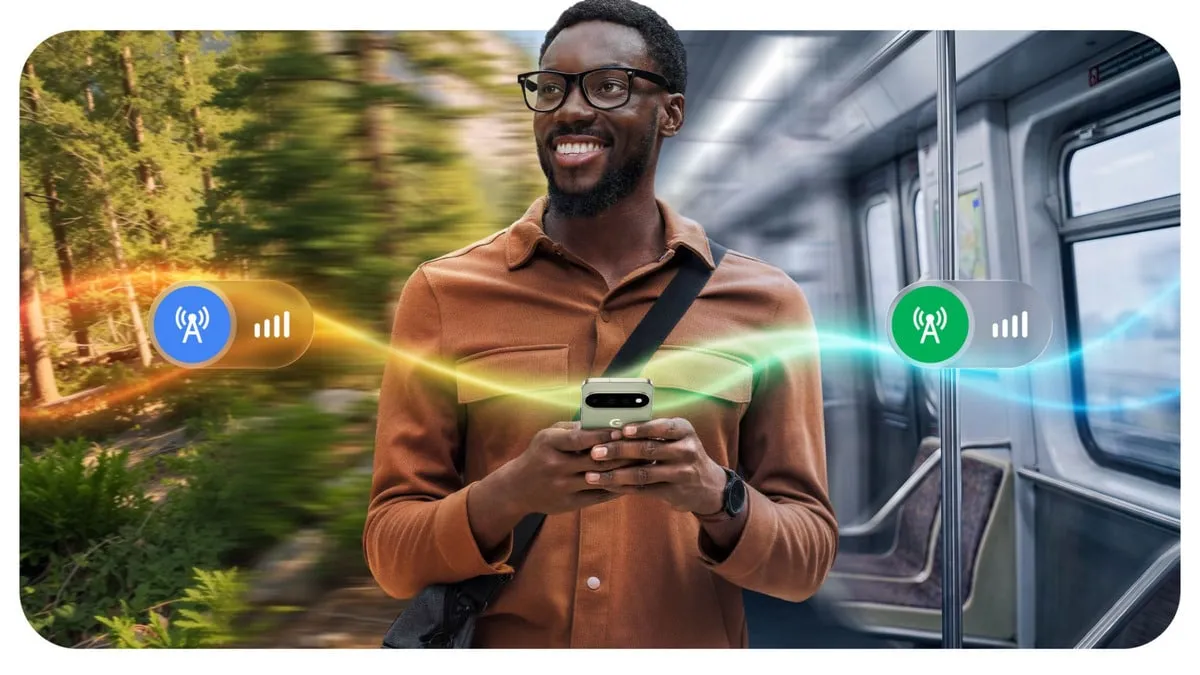
Google Fi Launches Super Network With Automatic Dual 5G Switching
Google has announced a major upgrade to its Google Fi Wireless service, introducing a new network system that automatically switches between two 5G cellular networks to maintain connectivity when signal strength drops. The company calls the technology its new super network, which combines access to two US 5G networks with millions of Wi-Fi hotspots. The feature is rolling out to Google Pixel 9 and newer smartphones starting November 10, with support included across all Google Fi plans on eligible devices. Google claims the system will provide faster speeds and wider coverage, particularly in areas where mobile signals are unreliable.
The telecommunications industry has long struggled with dead zones, dropped calls, and slow data speeds in rural and congested regions. Mobile users often experience frustration when moving between coverage areas because traditional carriers rely on a single primary network infrastructure. Google aims to address this problem by creating a redundant system that taps into multiple provider networks simultaneously. This background of technological convergence reflects years of development in eSIM capabilities and virtual network routing.
How Automatic Dual 5G Switching Works on Google Fi
The main change is Google's ability to automatically move supported phones between two cellular networks in real time. When a phone loses its primary data connection, Google Fi switches to a secondary connection to maintain network access. According to Google, this should reduce connectivity problems on highways, rural roads, and other areas where coverage can be inconsistent. The feature uses Multiple Enabled Profiles technology, which allows a single eSIM to support multiple active SIM profiles.
Google says its implementation differs from those of other major US carriers because it automatically switches between the networks without requiring users to change settings. The feature requires a Pixel 9 or newer device with Google Fi enabled through eSIM and other non-Fi SIMs disabled. However, network switching and 5G connectivity will not be available everywhere. Actual performance will depend on coverage, device settings, signal strength, and battery level.
Automatic Access to Millions of Wi-Fi Networks
Google is also expanding its Wi-Fi Auto Connect+ feature, allowing supported smartphones to connect automatically to millions of Wi-Fi locations. The feature is intended for areas where cellular networks may become congested, including airports, shopping malls, and other crowded indoor locations. Instead of manually selecting a Wi-Fi network or entering login details, the phone can establish a connection automatically. Google says connections made through Wi-Fi Auto Connect+ are encrypted using its Fi Virtual Carrier Network, providing additional protection for users' online activity.
The feature is available on Pixel 5a and newer devices in supported locations across North America, Europe, Asia, and Brazil. Google is also rolling it out to Samsung phones running One UI 9 or later and selected Motorola smartphones. According to the company, Wi-Fi Auto Connect+ provides twice the reliability and 30% lower latency compared with nearby Google Fi cellular connections, based on its stated performance measurements.
International Connectivity Without Additional Charges
Google says the new network features will also work internationally, allowing eligible subscribers to access supported cellular and Wi-Fi connections while traveling. International access is included in the Unlimited Premium and Flexible plans without an additional feature charge. However, the plans have different high-speed data limits.
For subscribers using the Unlimited Premium plan, international high-speed data is available up to 50GB per person. Those using the Flexible plan receive up to 15GB per person of high-speed international data. After reaching these limits, speeds drop to 256kbps. Google also states that its international service is not intended for use outside the United States for more than 90 consecutive days.
Google Introduces AI-Powered Customer Support
Alongside the network changes, Google has introduced Ask Fi, a new AI-powered support assistant integrated into the Google Fi application. The assistant uses Google AI to respond to customer questions and help resolve account-related problems. Users can ask Ask Fi about billing, account services, and connectivity issues without going through the usual support process.
Google Announces Discounts for Pixel Users
Google has also announced limited-time promotions alongside the network upgrade. New Google Fi subscribers purchasing the Pixel 11 Pro can receive a $500 instant discount and another $599 through 24 monthly billing credits. The company is also offering a $10 monthly service credit for two years with its Unlimited Premium plan. This promotion ends on November 18, 2026. Existing Pixel owners who are not currently Google Fi subscribers can receive 50% off selected unlimited plans for 12 months. That offer will remain available until December 1, 2026. Both promotions are subject to eligibility requirements and additional terms.
Availability and Future Outlook
The automatic dual-network switching feature began rolling out on November 10, 2026, for Pixel 9 and newer phones using Google Fi Wireless in the United States. Wi-Fi Auto Connect+ is available on a wider range of Pixel devices, with support expanding to selected Samsung and Motorola phones. Google has not announced that the dual-5G switching feature will be available to subscribers of other mobile carriers. The company says the new system will improve connectivity by moving supported devices between available cellular and Wi-Fi networks automatically, although actual speeds and coverage will vary by location and device.