The federal government on Tuesday approved new board appointments at three state-owned organisations: National Engineering Services Pakistan (NESPAK), Hyderabad Electric Supply Company (HESCO) and Sukkur Electric Power Company (SEPCO).
What decisions were taken at the Cabinet Committee on State-Owned Enterprises?
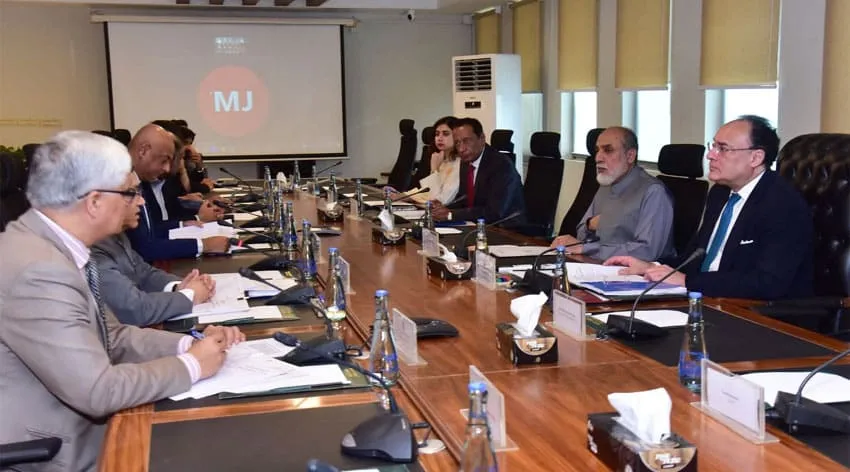
The Cabinet Committee on State-Owned Enterprises (CCoSOEs) met under the chairmanship of Finance Minister Muhammad Aurangzeb at the Finance Division. The committee cleared three specific actions:
- Appointment of a Chairman/Independent Director at NESPAK.
- Reconstitution of the Board of Directors of HESCO.
- Appointment of an independent director to SEPCO's board.
Who attended the meeting and why their presence matters
Federal Minister for Science and Technology Khalid Hussain Magsi was present, alongside federal secretaries and senior officials from the ministries, divisions and regulatory bodies that oversee the three enterprises. Their attendance signals inter-ministerial coordination, as each organisation falls under a different sector - engineering services, electricity distribution and power generation.
Background on the three state-owned companies
National Engineering Services Pakistan (NESPAK)
NESPAK is a premier engineering consultancy owned by the government. Established in 1973, it provides design, consultancy and project management services for infrastructure, energy and water projects across Pakistan and abroad. Its board traditionally includes a mix of government officials, independent experts and senior engineers.
Hyderabad Electric Supply Company (HESCO)
HESCO supplies electricity to Hyderabad district and surrounding areas. Formed in 2005, it operates under the oversight of the Ministry of Energy. The board of directors governs tariff setting, investment planning and compliance with the National Electric Power Regulatory Authority (NEPRA).
Sukkur Electric Power Company (SEPCO)
SEPCO manages power generation and transmission in the Sukkur region. Created in 2007, it runs several thermal and hydro plants and is a key player in the national grid. Its board includes representatives from the Ministry of Energy, the Finance Division and independent members.
Why the appointments are significant
Finance Minister Aurangzeb emphasised that ex-officio directors - government officials who sit on company boards by virtue of their positions - must possess the qualifications, experience and institutional understanding required to contribute effectively. This guidance aims to improve governance, reduce political interference and align board decisions with sectoral policy.
For NESPAK, the appointment of a Chairman who also serves as an independent director is intended to bring professional oversight while preserving government ownership. At HESCO, reconstituting the board may introduce fresh expertise in power distribution, grid reliability and customer service. The addition of an independent director to SEPCO's board seeks to strengthen independent oversight of power generation projects.
How board composition influences corporate governance
In Pakistan, state-owned enterprises are required by the Companies Act and the State-Owned Enterprises (SOE) Governance Code to have a balanced board. The code mandates that at least one-third of board members be independent, and that ex-officio directors hold relevant technical or managerial qualifications. This structure is meant to ensure strategic alignment with national priorities while safeguarding commercial integrity.
When board members lack sector-specific knowledge, decisions on capital investment, procurement and risk management can become inefficient. The government's recent statements suggest a corrective approach: vetting directors for technical competence and sector experience.
Impact on stakeholders
Employees of NESPAK, HESCO and SEPCO can expect clearer strategic direction and potentially smoother internal processes. Contractors and consultants working with NESPAK may encounter more predictable project approvals. Electricity consumers in Hyderabad and Sukkur could see improvements in service reliability if the new boards implement effective operational reforms.
Investors and lenders monitoring Pakistan's power sector will watch the board changes as an indicator of the government's commitment to reforming state-owned utilities, which could affect credit ratings and financing terms.
What comes next for the three companies
Following the cabinet approval, each organisation must formally notify its board of the new appointments, update its corporate register and inform the Securities and Exchange Commission of Pakistan (SECP). The newly appointed chairman at NESPAK is expected to assume duties within the next two weeks, while HESCO's reconstituted board will convene its first meeting within a month to set the agenda for the upcoming fiscal year.
SEPCO's independent director will receive a letter of appointment and will be required to attend the next board meeting, where the company plans to review its power generation schedule and upcoming maintenance projects.
Practical takeaways for readers
- Government officials serving on SOE boards must now demonstrate sector-specific qualifications.
- NESPAK, HESCO and SEPCO are each undergoing board changes that could affect project timelines and service delivery.
- Stakeholders should monitor official notices from the three companies for updates on board meetings and policy shifts.
These steps reflect a broader effort by the federal cabinet to tighten oversight of state-owned enterprises and align them with national development goals.





