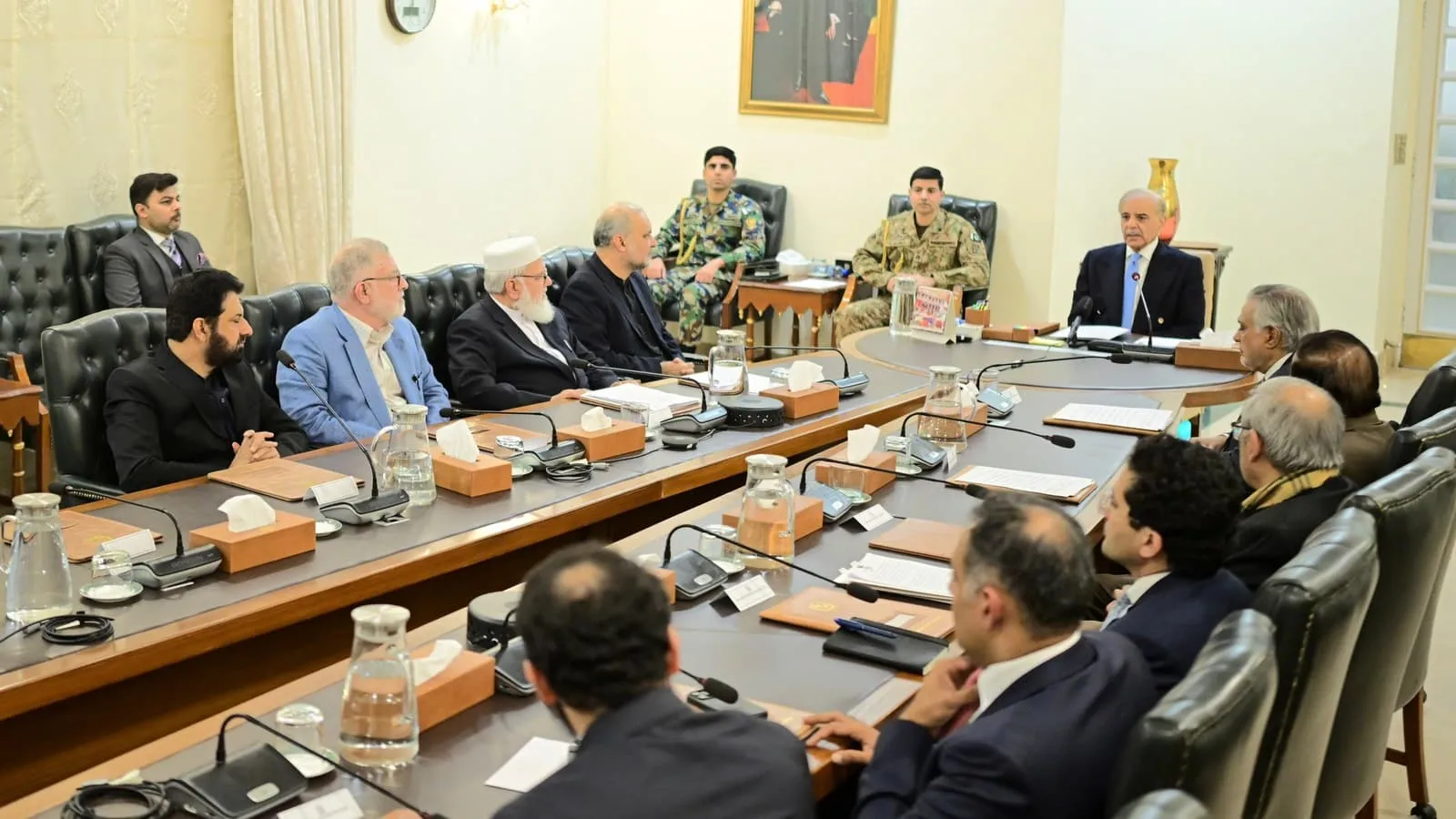
Federal Government and Jamaat-e-Islami Form Committee for Economic Reform
The federal government and Jamaat-e-Islami have agreed to form a joint committee to take forward and implement economic proposals put forward by Jamaat-e-Islami chief Hafiz Naeem ur Rehman. This development comes as the administration seeks broader political alignment to manage pressing financial pressures and navigate complex structural reforms required by international lenders. The decision was finalized during high-level discussions in the capital, marking a notable shift in how executive leadership engages with opposition voices on matters of national fiscal policy.
The formal agreement materialized on Thursday when a Jamaat-e-Islami delegation, led directly by Hafiz Naeem ur Rehman, called on Prime Minister Shehbaz Sharif in Islamabad. Several key figures participated in the high-stakes meeting, including Jamaat-e-Islami Vice Emir Liaqat Baloch, Deputy Prime Minister Ishaq Dar, Petroleum Minister Ali Pervaiz Malik, Information Minister Attaullah Tarar, and the Prime Minister's political adviser Rana Sanaullah. The presence of senior economic ministers underscored the seriousness with which the administration is treating the proposals presented by the religious-political party.
Prime Minister Promises Speedy Implementation of Recommendations
Following the formal discussions, Prime Minister Shehbaz Sharif addressed the media and meeting participants regarding the path forward for the country. For the betterment of the economy, it has been decided that a committee will be formed to further deliberate on and implement the recommendations by the Jamaat-i-Islami, the Prime Minister said. This joint body will review the technical aspects of the proposals and map out a practical timeline for executive action.
The Prime Minister stated that the recommendations would be implemented "speedily, with sincerity and honesty" and thanked Jamaat-e-Islami for pushing for relief for ordinary citizens as fuel prices soared due to the Middle East crisis. Global energy market volatility has placed immense pressure on domestic utility and petroleum costs, compounding inflationary burdens on wage earners and fixed-income households across the country. By acknowledging these external shocks, the administration signaled a willingness to consider targeted interventions proposed by political critics.
Government Financial Relief Measures and Development Budget Allocation
During the meetings in Islamabad, executive officials detailed past fiscal interventions designed to cushion vulnerable demographics from external economic shocks. The Prime Minister recalled that the government allocated over Rs. 128 billion from the development budget soon after the US-Iran war erupted. This substantial diversion of public funds aimed to stabilize local energy markets and absorb the sudden spikes in imported crude oil prices before they reached catastrophic levels for retail consumers.
Furthermore, the administration highlighted the rollout of targeted assistance programs intended to protect lower-income vehicle owners. Its Prime Minister's Fuel Relief Scheme, launched in September for two-wheelers and vehicles up to 800cc, has benefitted 20 million people. This initiative specifically targets motorcycle riders and owners of small displacement cars, who represent the backbone of daily commuter traffic and low-income commercial transport in urban and rural centers.
Jamaat-e-Islami Demands Tougher Steps on Inflation
Despite the government's outlined relief efforts, Jamaat-e-Islami leadership maintained that current measures fall short of what is required to alleviate widespread financial distress. Hafiz Naeem called the talks a "positive development" and said his party had held more than 10 meetings with the government team. However, he termed the fuel relief scheme insufficient, called for drastic measures to tackle rising inflation, and said Jamaat-e-Islami retained the right to protest for further relief if structural grievances are left unaddressed.
Inflationary pressures remain a primary grievance for households, driven by continuous adjustments in electricity tariffs, gas utility rates, and petroleum levies. Opposition groups argue that indirect taxation on fuel disproportionately harms the working class while failing to address the root causes of fiscal deficits. The ongoing dialogue represents an attempt to bridge the gap between state austerity commitments and the immediate survival needs of ordinary citizens.
Background of the Negotiations and Postponed Protests
The path to this committee formation involved months of sustained political pressure and backchannel negotiations between executive leadership and the religious party. Jamaat-e-Islami has been demanding the abolition of petroleum levies for about three months, arguing that these taxes are unjustifiable given existing cost-of-living crises. The standoff previously threatened to bring major urban centers to a standstill as party organizers prepared massive street demonstrations.
To avert potential civil unrest, political de-escalation efforts succeeded when the party postponed its long march on Islamabad in September at the Prime Minister's request. Following that postponement, the two sides engaged in sustained dialogue, culminating in an agreement on the basic outlines of a deal on November 11 during their 10th round of talks. The newly formed committee is the direct institutional outcome of those protracted negotiations.
What the Joint Committee Means for Economic Policy
The creation of a dedicated implementation committee sets a formal mechanism for opposition input into state economic planning, a rare occurrence in contemporary legislative environments. The committee is expected to review proposals concerning energy pricing structures, taxation reforms, and administrative expenditures. Business owners, labor unions, and civil society organizations will be watching the committee outputs closely to determine whether the deliberations translate into meaningful legislative relief or remain rhetorical.
As the joint body begins its work, the administration faces the dual challenge of satisfying domestic political demands while adhering to fiscal benchmarks established by international financial institutions. How the government balances these competing priorities will shape the economic outlook and political stability in the months ahead. Both the executive branch and Jamaat-e-Islami have staked political capital on the success of this committee, raising the stakes for transparent and effective policy delivery.





