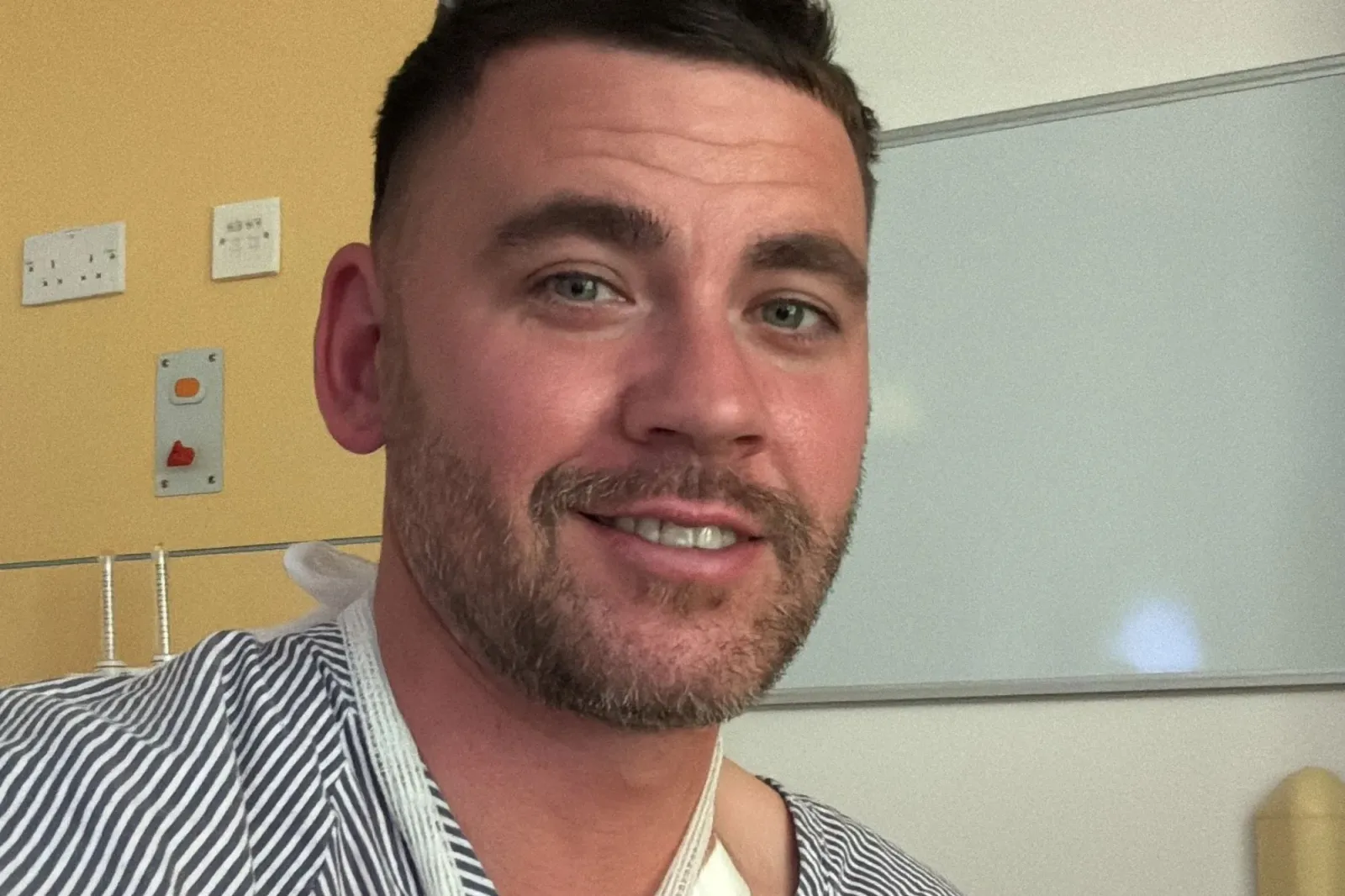
When he was 31, Matthew Spicer enjoyed good health and prepared to marry his fiancée Beth. Yet five weeks before the ceremony, Matthew noticed strange lumps on the tip of his penis. Medical staff initially thought the bumps were simply swollen glands.
However, once Matthew developed additional symptoms such as intense fatigue and severe migraines, he suspected a graver issue. Initial tests for penile cancer came back negative, but doctors soon diagnosed him with blood cancer instead.
Now 34, Matthew works as a youth worker and personal trainer in Weymouth. Reflecting on the news, he says, "I was in complete shock. I didn't know how to feel, and I froze. I felt a new level of panic unlock."
He adds, "I didn't ask any questions that may have been useful because all I could think about was, 'Am I going to die?' and, 'What impact does this have on my wife and family?' I felt like I'd let everyone down."
Medical professionals informed him that he had stage four non-Hodgkin lymphoma. This specific blood cancer attacks lymphocytes, which are white blood cells that help the body fight infections. Specifically, he suffered from a fast-moving variant named diffuse large B-cell lymphoma. Around 5,000 people in the UK receive this diagnosis annually. While swollen lymph nodes in the groin, armpit, or neck represent the most frequent signs, growths can also appear in the chest or stomach, according to Cancer Research UK.
Scheduled to marry Beth in a matter of weeks, Matthew began chemotherapy immediately the following week. He notes, "I made jokes that at least it got me out of having to do a speech, when inside I was hurting."
Non-Hodgkin lymphoma symptoms
Common symptoms of non-Hodgkin lymphoma include:
- Swollen glands in the neck, armpit or groin area, or anywhere you have glands (lymph nodes) - usually these aren't painful
- Extreme tiredness - tiredness that doesn't go away even after rest or sleep (fatigue)
- Chest pain, cough or breathlessness if there's a swelling in your chest
- Feeling uncomfortably full or feeling sick caused by a swelling in your stomach area
- Itching either widespread or in one place
- Bone pain if the lymphoma affects the bone marrow inside your bones
- Skin rashes or lumps
- Infections that are frequent or last a long time
- Unusual bleeding or bruising caused by a low number of platelets - the blood cells that cause the blood to clot.
These three symptoms, called B symptoms, are also symptoms of non-Hodgkin lymphoma:
- High fever (38°C or higher)
- Weight loss of a tenth or more of your previous weight over the past 6 months, when you haven't been trying to lose weight
- Night sweats which drench your nightclothes and bedding.
Whether or not someone has B symptoms is a guide to how much the lymphoma has developed. This helps doctors assess the stage of the lymphoma and decide on the best treatment.
He continues, "I felt like I'd ruined one of the most special days for the person I cared about most."
Because his immune system suffered from the treatment, the pair postponed their large celebration and held a small ceremony with immediate family members. Matthew remarks, "We thought, 'That's OK, we can have the big day to celebrate next year' - having no idea of further surprises we would have to face."
He underwent six cycles of R-CHOP, which is a combination of chemotherapy drugs administered every three weeks across six months, followed by two additional treatments of methotrexate.
In January 2024, doctors told Matthew he was in remission, bringing him immense relief. Unfortunately, that relief proved temporary. After spending six months readapting to normal routines, Matthew found another suspicious mass, this time located on his shoulder.
He recalls, "I somehow came across the smallest of lumps located on my trapezius, which I tried to convince myself was a muscle knot, and exercise-related."
When he mentioned the discovery to his consultant, further testing revealed the cancer had relapsed, once again appearing shortly before their rescheduled wedding date. The couple postponed the celebration once more as Matthew began chemotherapy alongside CAR-T cell therapy, a specialized form of immunotherapy.
Although he achieved a brief remission, a routine scan revealed more cancer activity in April 2025. Matthew shares, "I started to wonder whether I was running out of options, and whether the end was closer than I thought."
Medical experts agreed that an allogeneic stem cell transplant offered him the highest probability of remaining cancer-free. This procedure uses healthy donor stem cells to replace blood cells destroyed by intensive chemotherapy. He received the transplant on September 2025, which marked the day after his second wedding anniversary.
The therapy proved grueling, testing Matthew heavily on both physical and mental levels. He states, "There were moments where I felt overwhelmed by anxiety and uncertain about the future. Then there were moments where I lay in my bed experiencing numbness, whilst staring at the walls, feeling so wiped out that I literally couldn't feel anything."
Following the operation, doctors declared Matthew cancer-free once again. He continues to undergo treatments like intravenous immunoglobulin infusions and recently marked one year of clean scans confirming his remission.
Matthew notes, "At one point, I was really doubting as to whether it was something I'd ever hear. I finally feel that I can begin to move on - only, this time, with a new perspective on life."
Ongoing medical oversight requires him to receive top-up infusions of donor cells every six to eight weeks, complemented by regular PET and CT scans.
Looking ahead, Matthew views his future with renewed optimism. He explains, "I've learned to hold on tightly to hope. Today, I'm hopeful for a long, healthy life - one where I can fully appreciate the present and use the lessons this journey has taught me. Cancer has reshaped the way I see the world. It's reminded me that everything can be taken from us in a second, and we should go after the things we want in life. This journey has taught me to pursue the things that matter most. When the time is right, Beth and I look forward to making new memories together and exploring more of the world, and often consider starting a family of our own."
By sharing his story, Matthew aims to raise blood cancer awareness. He supports the "Let's talk lymphoma" campaign run by Lymphoma Action to encourage open conversations about personal health.
He concludes, "After the hardship and chaos of cancer, I'm aware of how lucky I am for the life I live today and for what I have around me. One of the most important lessons my diagnosis has taught me is this: don't ignore the signs your body is giving you. It's better to be cautious than wishing you had acted sooner. Catching it at an early stage could literally be the difference between life and death."