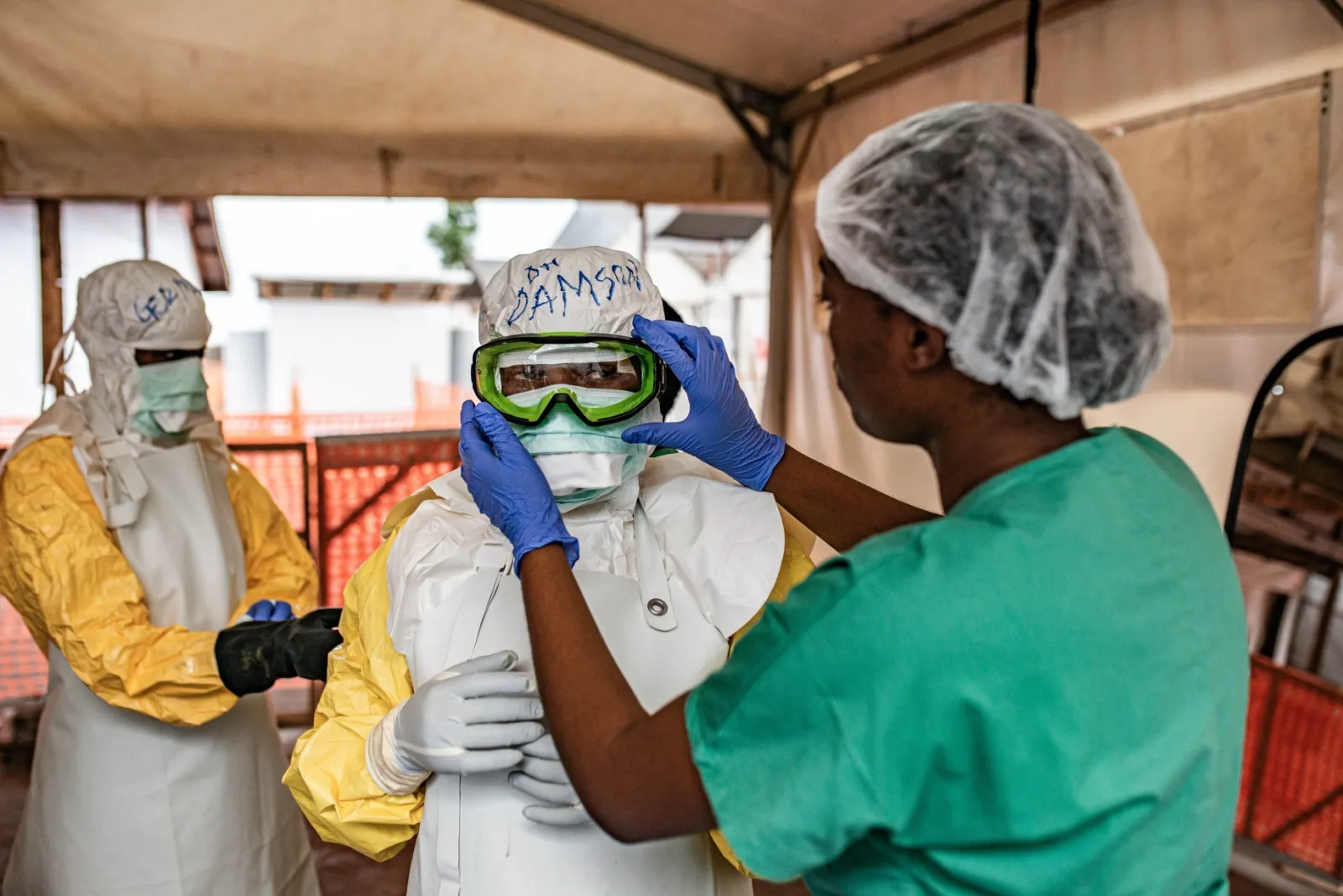
Medical professionals have cautioned that the active Ebola crisis presents a danger to nations everywhere, with half of all infected individuals succumbing to the illness. More than 10,000 people have contracted the highly contagious disease in the Democratic Republic of Congo, and nearly 5,000 have died from it.
Additional infections have appeared recently in Kenya and Nigeria, while Uganda reported cases during the summer months. The detection of the virus in other African nations has sparked fears among specialists that transmission will persist.
Appearing on BBC Radio 4, Dr Catherine Smallwood, who leads the World Health Organisation response in the Democratic Republic of Congo, stated that until the outbreak is stopped locally and provided with proper resources, it will remain a danger to neighboring countries and the wider world.
She noted that containment efforts face serious obstacles due to conflict, hard to reach areas, the rainy season, and widespread rumors, mistrust, and misinformation. Dr Smallwood urged the African Centres for Disease Control and Prevention to secure a renewed continental commitment to halt the transmission at its source.
Data from the public health institute in Congo shows 10,060 confirmed Ebola cases, with 4,887 fatalities. This represents the fastest-growing outbreak in history and the second-largest worldwide, surpassed only by the 2014 to 2016 West African epidemic across Guinea, Liberia, and Sierra Leone, which caused 28,616 cases and over 11,000 deaths according to the World Health Organization.
Initiated in mid-May, the current emergency stems from the Bundibugyo strain, which carries a mortality rate between 30 and 50 per cent and currently lacks any approved vaccine or treatment.
Alongside ongoing transmission in the Democratic Republic of Congo, Kenya documented nine cases and two deaths as of October 23. Nigeria confirmed its initial case on October 20, which the Centres for Disease Control and Prevention verified as the same strain.
How does Ebola spread and what are the symptoms?
The virus passes through direct contact with blood, body fluids, and contaminated objects, as well as sick or dead wild animals. Symptoms emerge within two to 21 days, beginning with a high fever, severe muscle and joint pain, headaches, and a sore throat. These signs often give way to vomiting, diarrhoea, skin rashes, kidney and liver failure, and occasional internal and external bleeding. Survivors may experience arthritis, along with vision and hearing impairments.
Dr Smallwood highlighted the vast geographic spread, noting that eight provinces in the Democratic Republic of Congo are affected across an area larger than Spain. She added that young children under five account for 25 per cent of cases and up to one third of all deaths.
Transmission often occurs during traditional burial practices that involve touching deceased loved ones. Meanwhile, a nurse treating an Ebola patient in the Democratic Republic of Congo was killed by a machete-wielding crowd after facing accusations of spreading the virus.