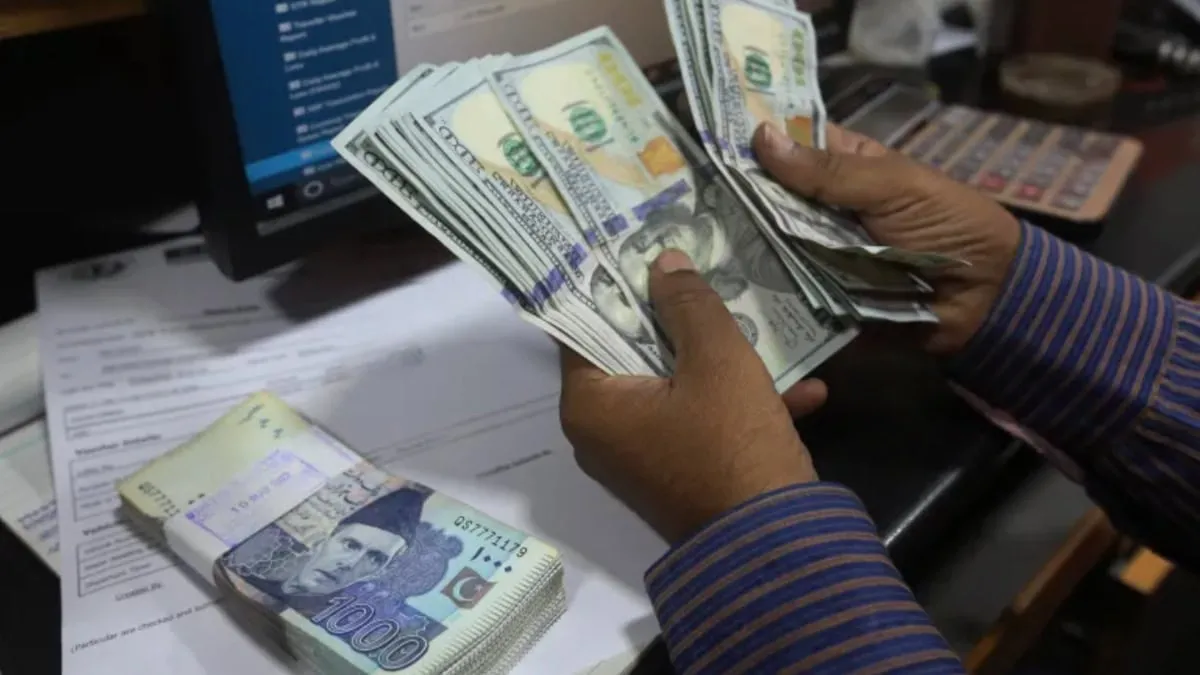
How Overseas Pakistanis Averted a Financial Crisis
Remittances sent by the global diaspora have become the primary financial lifeline for Pakistan, successfully covering 100 percent of the external deficits of the country and contributing roughly 10 percent of the gross domestic product, according to financial experts. This massive influx of capital from citizens living abroad has pulled the national economy back from the brink of a foreign debt default and stabilized macroeconomic indicators over recent months.
Emre Akcakmak, who serves as the Head of Frontier Markets and portfolio advisor at East Capital, shared these insights on Tuesday. He noted that financial transfers from workers abroad have hit $44 billion on a trailing 12-month basis, positioning the country among the top nations globally for remittance-to-GDP ratios. In a public statement posted on X, Akcakmak emphasized that the domestic financial system would be in a completely different shape without the continuous monetary support provided by an estimated 10 million Pakistanis living abroad.
🇵🇰 #Pakistan almost defaulted on its foreign currency bonds in 2023 after external deficits skyrocketed and CB reserves had only 1.5 months of import cover.
— Emre Akcakmak (@akcakmak) November 10, 2026
Since then, gross FX reserves went up almost 5x, inflation declined from 38% to single digits (lowest: 0.2%, latest: 9.6%)… pic.twitter.com/yX2J0zFjVB
Latest State Bank of Pakistan Data on Remittance Growth
Official figures released by the State Bank of Pakistan on the same day confirm this upward trajectory. Remittances sent specifically by workers reached $3.9 billion in October, representing a 14 percent increase compared to the $3.42 billion recorded during the same month a year earlier. This October figure also reflects an 8.5 percent expansion when compared to the $3.6 billion registered in September.
Looking at the broader fiscal timeline, cumulative inflows for the July-October period of FY27 rose by 14 percent to hit $14.8 billion. This is a notable increase from the $13 billion recorded during the corresponding months of the previous year. Driven by these strong figures, the central bank recently revised its full-year remittance forecast for FY27 upward to $45 billion, increasing it from the previous projection of $44 billion due to resilient inflows during the opening quarter.
Comparing Current Economic Stability to the 2003 Near-Default
Akcakmak drew a sharp contrast between current financial conditions and the precarious situation faced in 2023, when Pakistan came close to defaulting on its foreign currency bonds. During that turbulent period, external deficits widened significantly, and the foreign exchange reserves held by the central bank fell to levels that could cover only 1.5 months of essential imports.
The turnaround since that crisis has been substantial across multiple financial metrics. Gross foreign exchange reserves managed by the central bank have increased almost fivefold. At the same time, domestic inflation dropped from a peak of 38 percent down to single digits, registering a low of 0.2 percent before moving to a latest reading of 9.6 percent. Performance in the capital markets has also reflected this stability, with equities gaining 318 percent in US dollar terms, translating to a 53 percent annualized return.
The Role of the Diaspora, Government, and International Monetary Fund
In his market assessment, Akcakmak attributed the broader national economic recovery primarily to the consistent financial support from the diaspora, while also acknowledging the contributions of a stable government and an effective International Monetary Fund program. He famously described these vital financial flows from foreign workers as being essentially "Pakistan's oil."
These financial inflows bypass traditional domestic tax structures and industrial hurdles, injecting direct liquidity into households. Families use these funds for daily consumption, healthcare, education, and housing construction. This direct support maintains domestic demand even when formal sector job growth slows down or when fiscal austerity measures restrict public spending.
Understanding Remittances and Their Impact on External Deficits
For decades, developing nations with trade imbalances have relied on money sent home by citizens working in foreign labor markets. In the case of Pakistan, millions of workers migrated to Gulf Cooperation Council nations, Europe, and North America, maintaining close financial ties with their families back home. These transfers are classified as unrequited transfers in the balance of payments, meaning they do not create foreign debt liabilities.
When external deficits widen, a country struggles to pay for imported goods such as petroleum, machinery, and food items. By covering 100 percent of these external deficits, remittances eliminate the need for the central bank to borrow heavily from commercial international lenders or deplete its own reserves. This dynamic preserves national sovereignty over monetary policy and reduces vulnerability to external shocks in global commodity markets.
What Lies Ahead for Pakistan and Worker Inflows
As the fiscal year progresses toward the targets set by monetary authorities, market watchers continue to monitor monthly data releases from the central bank. The projected $45 billion target for FY27 depends heavily on employment stability in destination countries, particularly in the Middle East where a large share of the diaspora resides.
Observers will watch whether inflation remains within single-digit bounds and if foreign exchange reserves continue their upward trend. The sustained commitment of the 10 million overseas workers remains the central pillar supporting the currency and stabilizing the external account balances against future economic pressures.