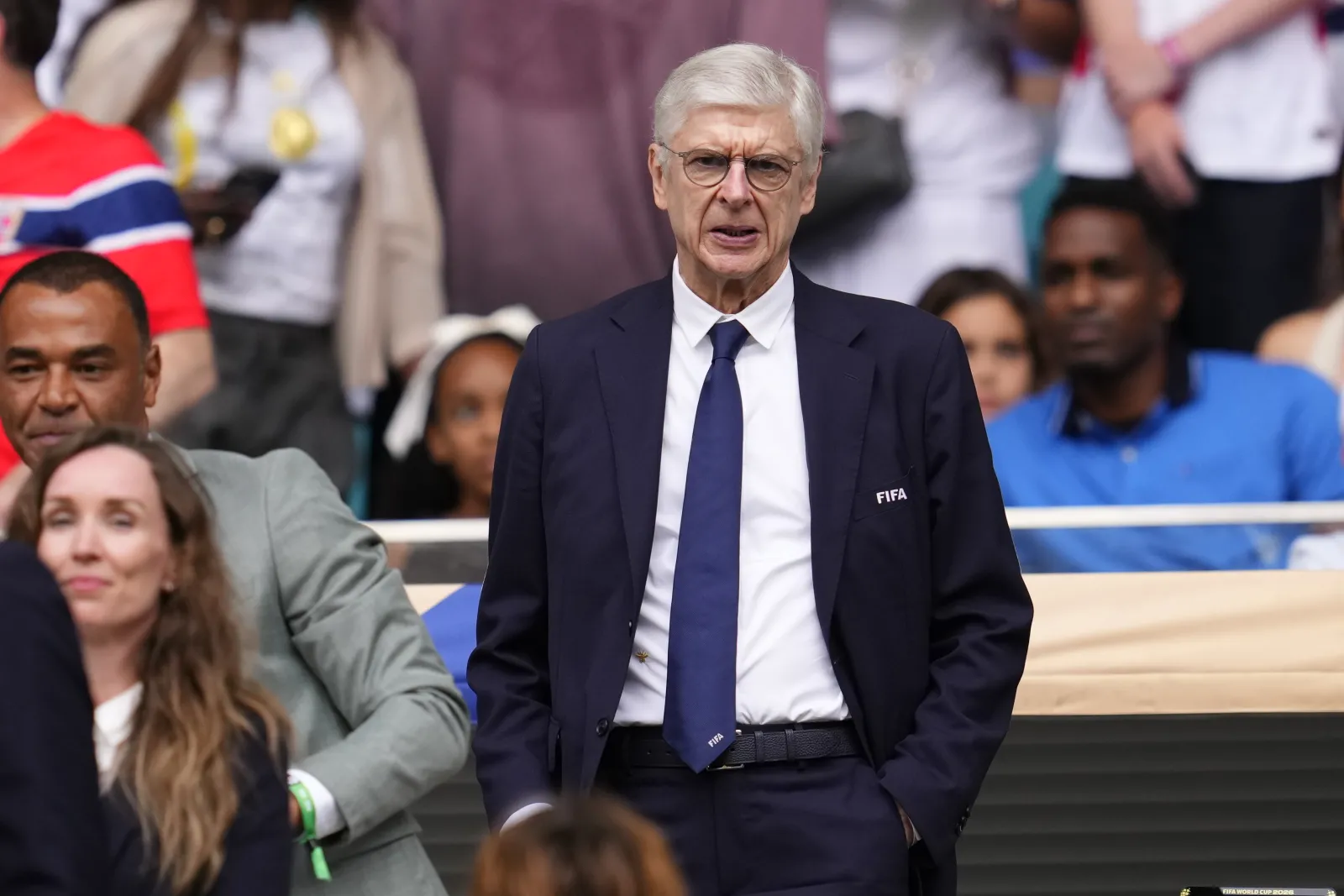
Lawmakers will draw a veil over Arsène Wenger's "daylight" offside idea after a trial in Canada's top flight showed teams defending deeper and a 54 per cent drop in off-side calls.
What Was the 'Daylight' Offside Rule?
The proposal, first floated by former Arsenal manager Arsène Wenger, would deem an attacker on-side if any part of the body overlapped the last defender, rather than the traditional requirement that the whole body be behind the defender's line.
Wenger suggested the change could open up space for attackers and reduce marginal off-side decisions that often hinge on millimetre-scale judgments.
How the Trial Was Conducted in the Canadian Premier League
During the 2023-24 season the Canadian Premier League (CPL) ran a controlled experiment in 108 matches. In each game referees applied the daylight rule for every off-side situation.
All other laws remained unchanged, allowing a direct comparison between the new rule and the standard off-side law.
Key Findings from the IFAB Report
The International Football Association Board (IFAB) advisory panels received a detailed report after the trial. The report highlighted three main outcomes:
- Teams adjusted their defensive line between one and three metres deeper to neutralise the perceived advantage for attackers.
- Only 13 goals were scored that would have been disallowed under the traditional off-side law, indicating a negligible impact on scoring.
- Off-side flag calls fell by more than half, representing a 54 per cent reduction.
The report quoted the panels: "while some minor trends are visible, none are comparable in magnitude to the 54 per cent change in off-side calls." It concluded that the daylight rule did not benefit attacking football.
Wenger's Reaction and the Emerging 'Torso' Concept
Wenger, who had previously hinted at doubts about his own idea, said after a meeting at Heathrow in January: "We have to try the radical solution first and see if we need to come back from that." He later suggested a "torso" standard, where an attacker would be on-side if any part of the upper body overlapped the defender.
The torso concept may re-enter discussions, but the IFAB panels noted that semi-automatic off-side technology is already reducing the need for rule tinkering.
Why the Trial Matters for Global Football Law
The off-side law is one of the most debated aspects of the game. Changes can alter tactical approaches, affect goal-mouth opportunities, and influence the flow of matches. A rule that pushes defenders deeper could lead to more compact, low-scoring games, contrary to the sport's entertainment goals.
IFAB's reluctance to adopt radical changes aligns with recent reforms introduced for the 2022 World Cup, such as five-second countdowns for goal kicks and throw-ins, VAR for wrongly awarded corners, and stricter set-piece enforcement.
What Comes Next for Off-Side Law Reform
The next IFAB Annual Business Meeting is scheduled for Cairo in March. At that session, members are expected to review the daylight trial data alongside proposals for semi-automatic technology integration.
Given the trial's results, the likelihood of adopting the daylight rule is low. The torso idea may be revisited, but any amendment will have to demonstrate a clear benefit to attacking play without compromising defensive balance.
Practical Takeaways for Coaches, Players and Fans
Coaches should continue training defenders to maintain their traditional line, as deeper positioning may no longer be advantageous under current law.
Players can expect off-side decisions to remain based on the whole body line, with technology assisting rather than redefining the rule.
Fans should anticipate that any future off-side reforms will be incremental, focusing on clarity and speed rather than sweeping changes.
Meanwhile, FIFA is reportedly reconsidering TV adverts during hydration breaks for the 2030 World Cup, though the exact conditions for such breaks remain unclear.