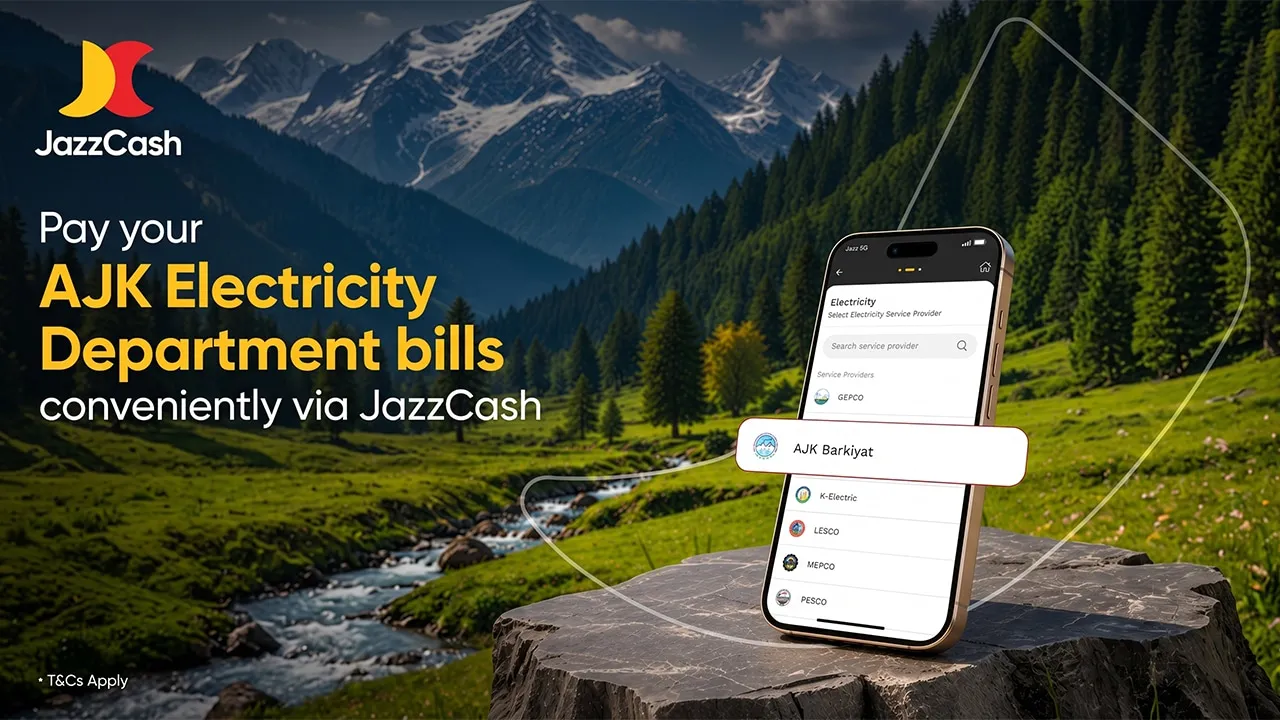
JazzCash, operating as Pakistan's biggest digital financial services platform, now permits customers of the Azad Jammu and Kashmir (AJK) Electricity Department to settle their power bills using the JazzCash application and through local agents spanning the territory.
This new offering eliminates requirements for residents to visit banking locations or payment counters. Previously, numerous families residing in distant and mountainous regions of AJK faced extended travel times and missed work hours. Individuals can presently clear bills directly via cellular devices or physically at nearby JazzCash representatives without possessing a mobile phone or financial institution account. This rollout joins examination fee settlements for the Board of Intermediate and Secondary Education (BISE) AJK already accessible via JazzCash, consolidating vital public transactions onto a single network.
Arif Chaudhary, holding the position of Head of Public Sector Partnerships at JazzCash, stated regarding the rollout: "For families across AJK, paying an electricity bill has often meant a long journey to a bank branch or collection centre. By bringing these payments onto JazzCash, through both the app and our agent network, we are making essential public services accessible to people wherever they live. Working with the Government of AJK, we will continue to digitise more of the payments that citizens rely on every day."
Muhammad Tayyab, who serves as Secretary for Energy and Water Resources within the Government of AJK, noted: "This collaboration makes it easier for citizens across Azad Jammu and Kashmir to pay their bills, particularly in areas where banking services are limited. Digital payments save residents time and travel, and improve the efficiency of public service delivery."
The release aligns with efforts by JazzCash to back the Prime Minister's goal for a cashless economy. By moving public service payments to electronic platforms and broadening reach via a countrywide agent network, JazzCash collaborates with federal and provincial administrations to decrease cash dependency, enhance clarity in public financial transactions, and integrate additional Pakistanis into formal banking frameworks.