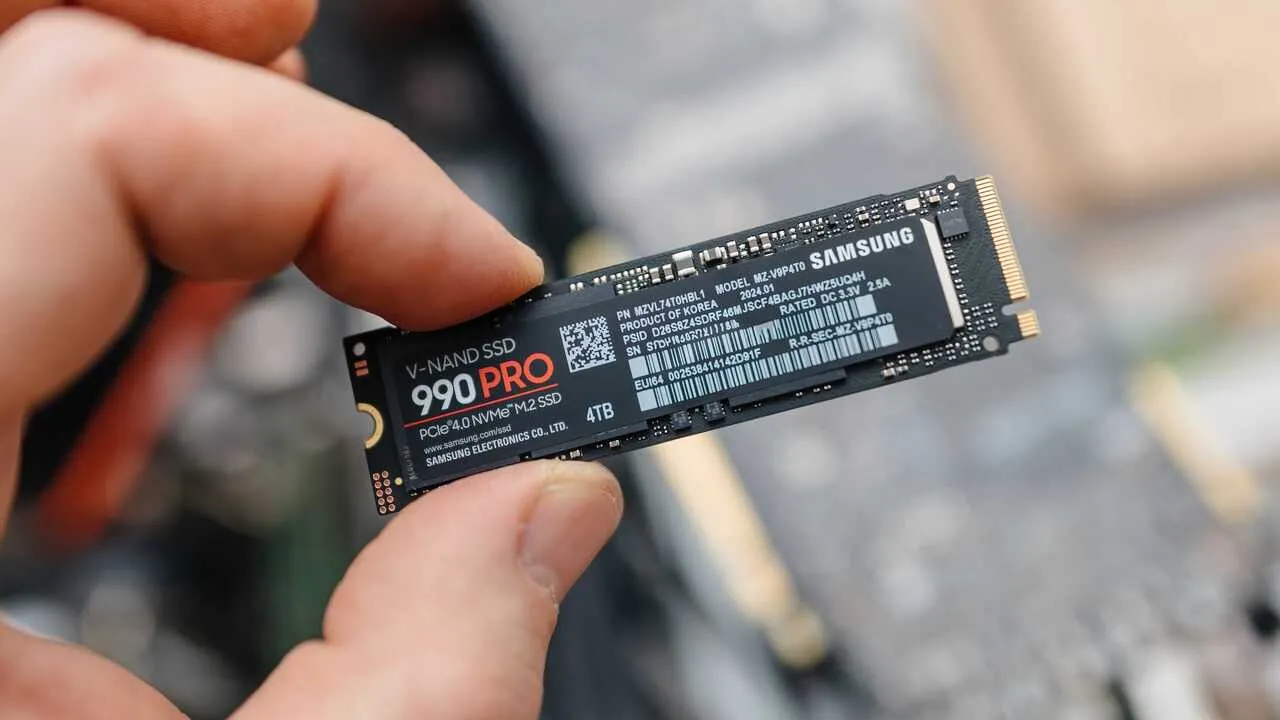
Chinese memory chipmaker Yangtze Memory Technologies, known as YMTC, surpassed Samsung and SK Hynix to secure the position of China's largest producer of NAND flash chips in 2026, taking a 38.5 percent share of the market.
During this period, YMTC grew its portion from 28 percent the prior year, while Samsung fell from 36 percent to 33.5 percent. SK Hynix stayed in the third position, seeing its share drop from 20 percent to 17 percent.
This market shift has pushed Samsung and SK Hynix to modernize their semiconductor plants in China to boost their manufacturing powers and rival the expanding domestic producer.
Samsung's Production Upgrade
The NAND production plant operated by Samsung in Xian, China, is responsible for roughly 40 percent of its total global NAND manufacturing capacity.
At present, the plant builds older NAND chips featuring about 200 layers. Greater layer counts permit makers to pack more storage space inside individual chips.
Reuters reported that Samsung is currently upgrading this plant to build ninth-generation V-NAND, or V9, chips containing 286 layers.
The firm intends to kick off manufacturing with 5,000 wafers by the close of 2026 before dramatically scaling output to 40,000 wafers by the end of 2027.
Samsung's Newer NAND Technology
Even with this upcoming upgrade, the V9 technology is no longer the most advanced generation offered by Samsung.
Earlier in the year, the enterprise rolled out its tenth-generation V-NAND, or V10, technology, which boasts more than 400 layers.
These newer chips deliver faster speeds, enhanced power efficiency, and higher storage density when stacked against V9 products.
Samsung's choice to upgrade its Chinese facility to V9 means the factory will keep using older technology than the firm's state-of-the-art NAND line.
SK Hynix Upgrades China Factory
SK Hynix is similarly upgrading its NAND plant located in Dalian, China, a site previously owned by Intel before its NAND division was bought and shifted to Solidigm.
The factory currently builds 192-layer NAND chips, but according to Reuters, SK Hynix has gained clearance from American officials to fabricate chips packing up to 240 layers.
The company also has plans for research and development on NAND chips exceeding 300 layers, though it will require extra US authorization.
Meanwhile, Solidigm is readying for a potential listing on the Nasdaq stock exchange, though it encounters pushback from regulators and shareholders. SK Hynix is also holding talks regarding plans to set up NAND production sites inside the United States, potentially with backing from Intel.
US Export Restrictions
Both Samsung and SK Hynix encounter limits on upgrading their Chinese plants because the United States regulates exports of sophisticated semiconductor manufacturing tools.
Firms are required to secure licenses from the Bureau of Industry and Security within the US Commerce Department to set up American-made semiconductor machinery inside China.
The agency announced in 2025 that it would not grant licenses for expanding production capacity or upgrading technology at Chinese factories belonging to foreign chipmakers.
Even so, Samsung and SK Hynix are moving forward with their scheduled upgrades while consulting with American authorities.
Reuters stated that it could not independently verify the full scope of US export approvals for the required machinery.
China's Growing NAND Market Share
The rising market share held by YMTC points to intensifying competition for South Korean chip manufacturers operating within China.
Data from research firm Omdia shows YMTC held 38.5 percent of the Chinese NAND market during the second quarter of 2026, compared to 28 percent through all of 2025. Samsung's share dropped from 36 percent to 33.5 percent, and SK Hynix dropped from 20 percent to 17 percent.
YMTC primarily builds 160-layer and 232-layer NAND chips while also turning out limited amounts of 294-layer goods. The company is reportedly getting ready to manufacture chips featuring over 300 layers.
Both Samsung and SK Hynix are now striving to modernize their Chinese production sites while managing American export rules and mounting rivalry from local makers.