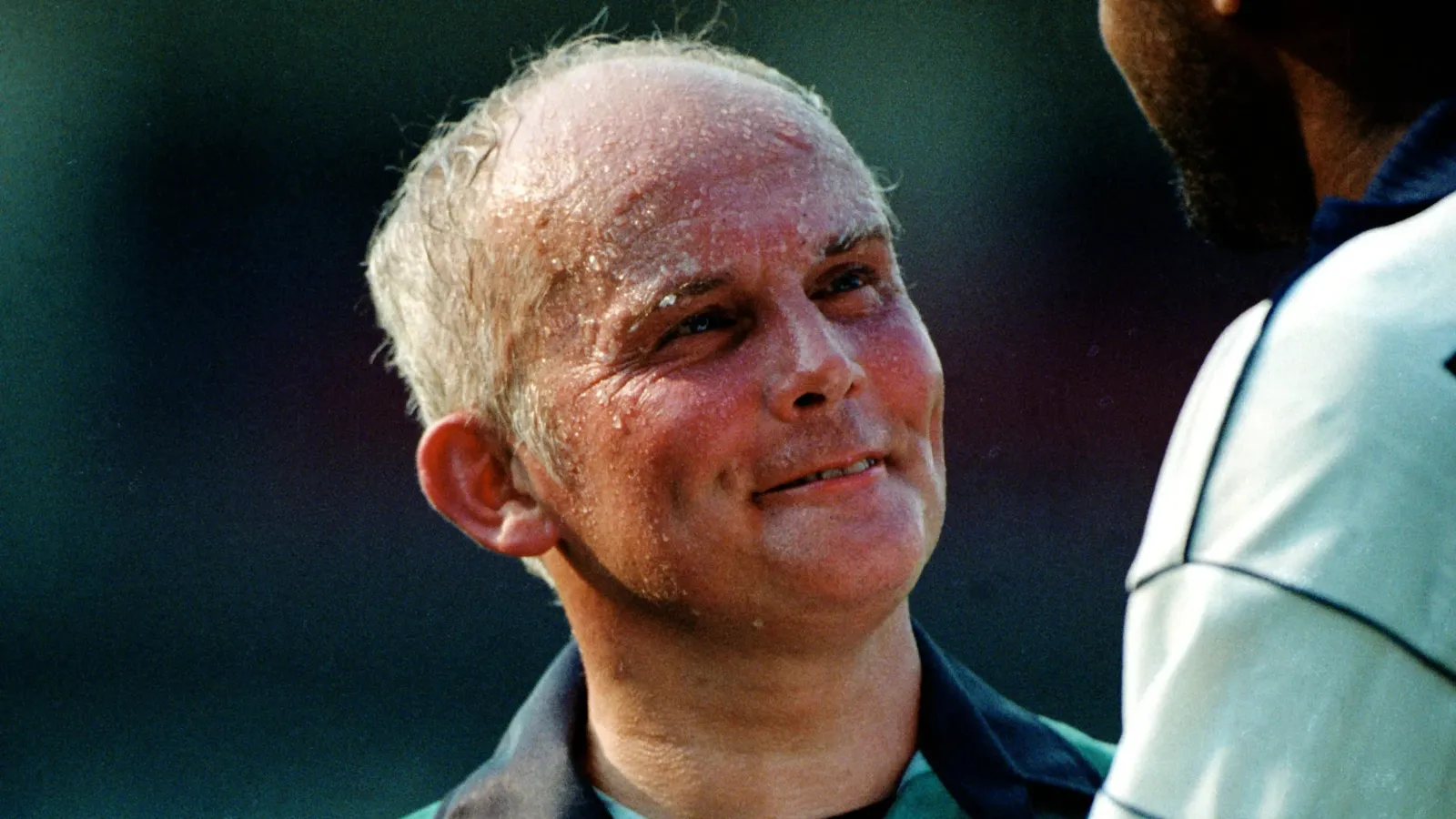
Former Premier League referee Keith Cooper, 78, has broken his silence after the Welsh FA and Wiltshire FA mistakenly announced his death on Tuesday.
Cooper, who lives in Pontypridd, said he was shocked to hear staff at a local sports centre tell him, "You were dead!" and immediately responded, "Well, I'm not dead, I'm here and I'm OK!"
The error stemmed from a mix-up with another referee of the same name from Wiltshire, who did indeed pass away last week. The Welsh FA's premature notice was therefore a case of mistaken identity.
What Led to the False Announcement?
On Tuesday, both the Welsh Football Association and the Wiltshire Football Association released statements that the 78-year-old former referee had died. The statements were based on information received about a "Keith Cooper" who had recently died in Wiltshire. Because the two referees share a name, the notice was mistakenly applied to the former Premier League official.
Cooper recounted the moment he learned of the claim while receiving a COVID-19 vaccine jab at a sports centre. A staff member, apparently confused by the recent obituary, announced his death to the waiting crowd. Cooper's quick verbal correction prevented further spread of the misinformation.
Who Is Keith Cooper?
Keith Cooper enjoyed a lengthy career officiating top-flight football. He began refereeing when the Premier League was formed and continued until his retirement in 1996. Among his most memorable assignments was the 1994 League Cup final at the old Wembley Stadium, where Manchester United faced Aston Villa. Villa won 3-1, with Dean Saunders scoring twice.
Although Cooper is no longer a household name among younger fans, his legacy endures through his son, Steve Cooper, a well-known manager in the Premier League and Championship. Steve, 46, currently manages Danish Superliga side Brøndby and has previously managed Nottingham Forest, Swansea City, and Leicester City.
How the Welsh FA Responded
Following Cooper's public clarification, the Welsh FA issued an apology, stating that the announcement was made in error and that they had confused the two individuals. The association confirmed that the deceased referee was a different Keith Cooper, who was active in the Wiltshire football scene.
The Welsh FA's statement emphasized their commitment to accurate communication and expressed regret for any distress caused to Cooper and his family.
Impact on the Football Community
The incident sparked a brief wave of concern across social media, with fans and former colleagues sharing tributes before learning of the mistake. It also highlighted the importance of verifying information before public release, especially in the age of instant digital news.
For Cooper's family and friends, the false report was unsettling but ultimately harmless, as the former referee was able to confirm his wellbeing in person. The episode serves as a reminder that even reputable organisations can make clerical errors.
What Does This Mean for Future Announcements?
Football associations are likely to review their internal procedures for confirming deaths or other sensitive news. Standard practice usually involves cross-checking with next-of-kin and official records before issuing a public statement.
While no formal policy change has been announced, the Welsh FA indicated that it will implement stricter verification steps to avoid similar incidents.
Practical Takeaways for Readers
- If you encounter a sudden announcement of a public figure's death, look for confirmation from multiple reliable sources before accepting it as fact.
- Organizations should always double-check identity details, especially when names are common, to prevent misinformation.
- Fans of former referees and football officials can follow official club or association channels for accurate updates.
Keith Cooper's experience underscores the need for careful communication in sports administration and the value of personal verification.