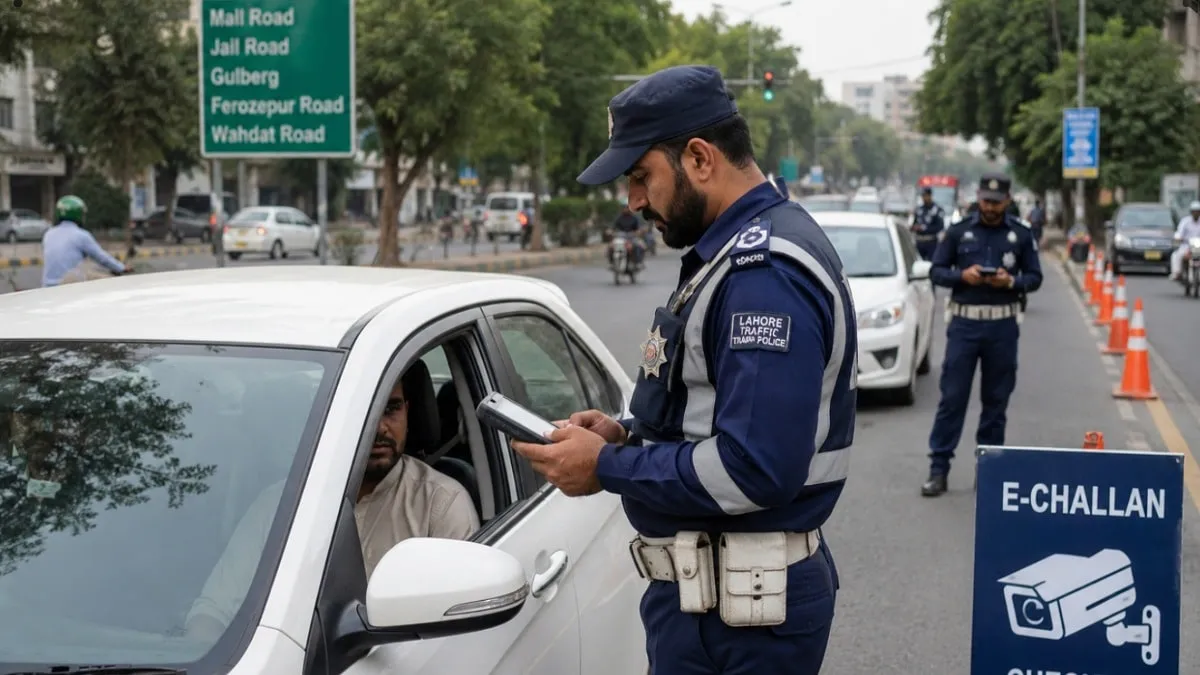
Motorists in Lahore who leave their digital traffic challans unpaid for more than 10 days could face double the original fine and court summons as traffic police pursue outstanding payments. This strict enforcement measure targets a massive backlog of unpaid penalties across the city, aiming to compel drivers to clear their dues before legal action escalates. Authorities are tightening collection rules to ensure accountability on city roads, leaving traffic violators with limited time to settle accounts before facing severe judicial consequences.
Lahore Traffic Police have started legal proceedings against drivers who ignore payment notices. Authorities have also stationed traffic wardens at courts across the city to assist judicial officials in recovering unpaid fines. The presence of wardens inside judicial complexes marks an operational shift to bridge the gap between traffic enforcement agencies and the court system, streamlining the recovery of long-overdue state revenues from traffic infractions.
What Happens If You Miss the Payment Deadline?
Under the Punjab Traffic Police's existing challan procedure, drivers must clear their fines within 10 days. This timeline begins immediately when the automated system generates the notice for a recorded traffic violation.
After that period, the penalty can double. Authorities also refer cases involving confiscated documents to the relevant court, adding administrative hurdles to the financial penalty.
Motorists who continue to ignore payment notices may receive court summons. Traffic officials have urged drivers to settle their dues before their cases proceed to court, warning that judicial intervention brings formal legal records and mandatory court appearances.
Pending Challans and Seized Documents Near 800,000
Officials cited in media reports said the combined number of pending digital challans and confiscated documents in Lahore had approached 800,000. This staggering volume highlights the widespread habit of ignoring automated traffic tickets issued across major intersections monitored by surveillance cameras.
Some motorists have reportedly avoided recovering their seized driving licenses and identity documents because of the increased penalties. Rather than facing accumulated fines, these drivers leave essential personal credentials in police custody.
Officials also alleged that certain drivers obtained duplicate documents instead of clearing their fines. However, getting replacement documents does not cancel the outstanding challan or associated legal proceedings, meaning the original debt and legal liability remain active against the vehicle owner.
The latest action follows an earlier crackdown on vehicles with unpaid e-challans, including repeat offenders with hundreds of outstanding violations. Traffic management directorates have increasingly used automated tracking to identify persistent rule breakers who accumulate massive totals of unpaid tickets without facing immediate roadside interception.
How to Check Your E-Challans
Drivers can review camera-based traffic fines through the Punjab Safe Cities Authority's official e-challan portal. The digital platform allows vehicle owners to monitor their violation history from any internet-connected device.
To check your record:
- Open the PSCA E-Challan Portal.
- Enter your vehicle registration number.
- Provide your CNIC or vehicle chassis number.
- Review the outstanding challans linked to your vehicle.
- Follow the official payment instructions to clear valid fines.
If authorities have already sent your documents to court, you must follow the prescribed judicial process to pay the fine and recover them. Bypassing the portal becomes necessary once a case moves from administrative traffic police handling to the jurisdiction of local courts, requiring formal clearance through legal channels.
Understanding the Punjab Traffic Police Penalty System
The transition from manual ticketing to digital enforcement relies on high-resolution cameras installed at major junctions throughout Lahore. These systems capture speed violations, red-light infractions, and lane discipline breaches without requiring an immediate stop by a traffic warden. The captured data transfers automatically to central databases, generating the digital notices sent to registered vehicle owners.
When motorists accumulate multiple unpaid notices, the system flags the vehicle registration for enhanced scrutiny during routine patrols. Traffic wardens equipped with handheld devices can instantly verify whether a stopped vehicle carries a history of unsettled infractions. This integration of field operations and back-end databases forms the backbone of the current enforcement drive.
The Role of the Punjab Safe Cities Authority
The Punjab Safe Cities Authority operates the extensive camera network that captures traffic violations across Lahore. By centralizing surveillance data, the agency provides the foundational evidence used by traffic police to issue digital challans. The cooperation between the Safe Cities Authority and traffic management directorates ensures that digital records remain accurate and accessible for public review.
Citizens can use the online infrastructure to verify whether cameras recorded any infractions during their daily commutes. Checking records frequently helps vehicle owners avoid the harsh escalation that occurs after the 10-day payment window closes. Staying informed about pending tickets prevents unexpected court summons and document seizures.
Practical Steps for Lahore Motorists
Vehicle owners in Lahore must take immediate action to inspect their digital driving profiles. Checking the official portal regularly ensures that unnoticed violations do not quietly double in cost over time. If a fine appears on the system, prompt payment through designated banking channels or authorized payment platforms prevents further legal complications.
Drivers who have already surrendered documents to traffic wardens should visit designated court liaison desks or police offices to understand the exact steps required for recovery. Attempting to bypass the system by securing duplicate identification cards fails to resolve the underlying legal status of the vehicle and its owner. Compliance remains the only reliable method to clear traffic records and ensure uninterrupted driving privileges in the province.





