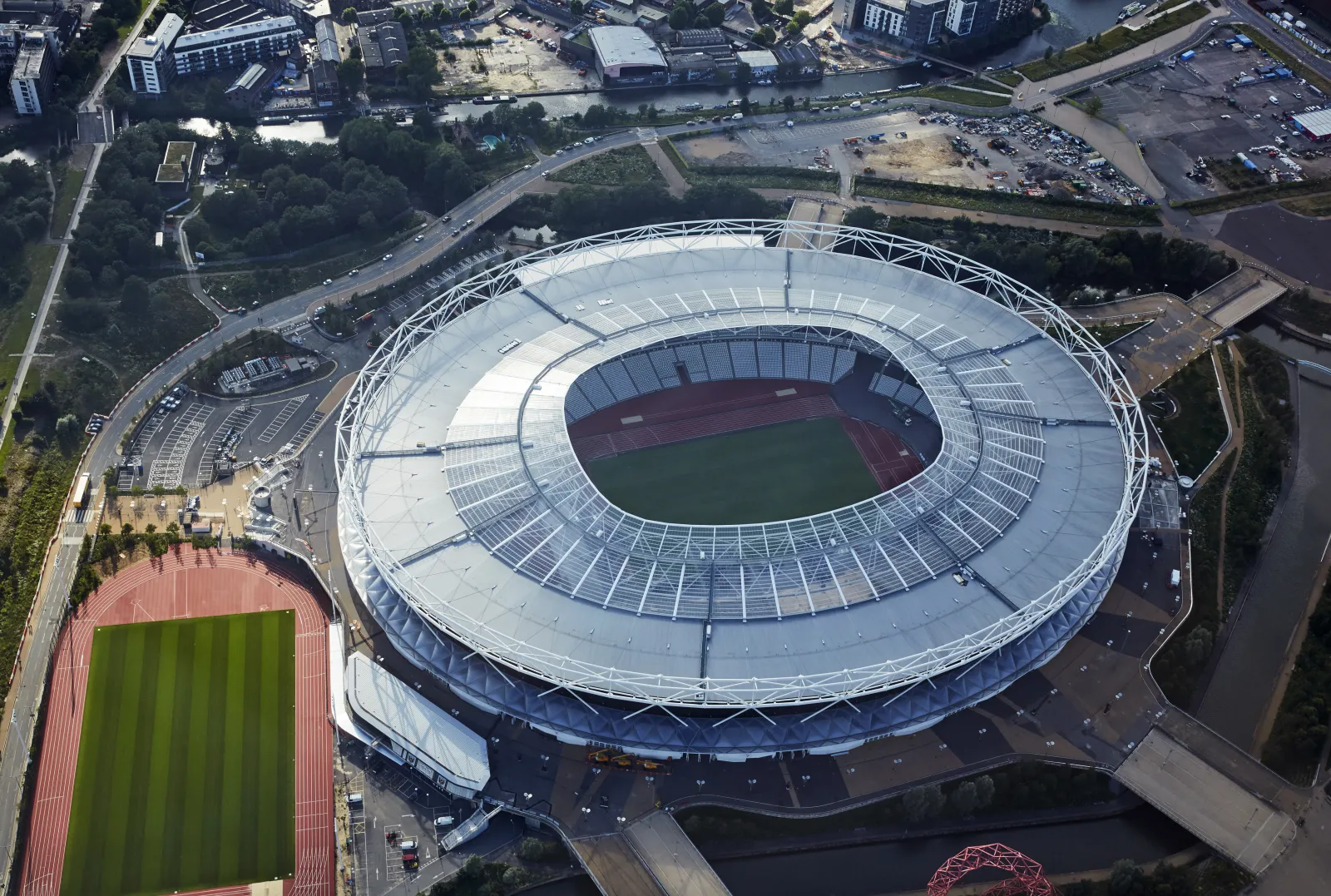
London Stadium Approved for 85,000 Capacity Increase
The London Stadium has been given the green light to increase its capacity to 85,000 for select events. The former London 2012 Olympics venue is now the home of West Ham United after the club took over the lease in 2016. The Hammers are the main tenants and maintain a capacity of 68,000 for matchdays, but the arena also hosts various other events throughout the year, including athletics and music gigs.
Local authority Newham Council has approved changes that raise the permitted number of non-sporting events from ten to 24 per year. Furthermore, the stadium will welcome even more fans for these gatherings. While the venue currently has an 80,000 capacity for concerts, that total will now increase to 85,000 for up to eight events a year. The new plans will not affect West Ham games, which will remain at 68,000.
Background on the London 2012 Olympic Legacy
The arena in Stratford was originally constructed as the centerpiece for the London 2012 Olympic and Paralympic Games, hosting high-profile track and field competitions as well as the opening and closing ceremonies. Following the conclusion of the games, the municipal asset underwent a major transformation project to convert it into a multi-purpose facility capable of accommodating both football and athletics.
West Ham United secured the lease for the ground in 2016, moving away from their historic Boleyn Ground home at Upton Park. Over the subsequent decade, the stadium served as a Premier League venue, hosting top-flight English football before the club experienced relegation. Despite the change in the team league status, the venue remains a prominent landmark in East London and a major hub for entertainment.
Understanding the Operating Model and Event Limitations
Managing a multi-purpose stadium requires balancing athletic fixtures, entertainment spectacles, and community interests. Local planning restrictions historically limited the number of non-sporting events that could be held at the Stratford ground to just ten per year, primarily to manage local traffic, noise levels, and public transport capacity in the surrounding borough.
The decision by Newham Council to increase the limit to 24 non-sporting events per year represents a substantial shift in operational flexibility. This regulatory change allows the management team to secure a broader calendar of international concerts and major entertainment productions, ensuring the venue remains competitive against other large-scale arenas across the United Kingdom.
Financial Context and Operational Pressures
The expansion of event limits and crowd capacities arrives at a critical juncture for the venue's financial administration. Recent financial disclosures revealed that the stadium posted an operating loss of £17million from the period spanning from April 2025 to March 2026. Increasing the volume of large-scale commercial gatherings is viewed as a key operational strategy to generate additional revenue and offset ongoing maintenance costs.
Stadium chief executive Darren Raczkowski addressed the decision, calling the news an important milestone. He stated that this is a hugely positive outcome for London Stadium and for East London. He added that the team is delighted that Newham Council has recognised the opportunity these changes present, both for the stadium and the wider local economy.
Community and Economic Impact in Stratford
Beyond the immediate financial balance sheet of the arena, municipal leaders and stadium operators emphasize the broader economic ripple effects across East London. Major concerts and global sporting spectacles draw hundreds of thousands of visitors to the Stratford area, supporting local hospitality businesses, hotels, bars, and restaurants.
Raczkowski noted that the venue was built to host the world's biggest sporting and cultural moments, and this decision will give management greater flexibility to continue attracting the very best international artists, sporting competitions, and major events to Stratford. He also emphasized that the initiative is about making the most of an extraordinary venue, supporting local businesses, creating opportunities for the community, and ensuring the venue continues to deliver a lasting legacy from the London 2012 Olympic and Paralympic Games.
What the Changes Mean for West Ham United Fans
Football supporters following West Ham United will experience no alterations to their matchday routines under the updated planning permissions. The club is currently playing in the second tier of English football following their relegation last season, competing in the English Football League Championship against sides such as West Brom, Swansea, Southampton, QPR, Sheffield United, Portsmouth, and Norwich.
Matchdays for the Hammers will continue to accommodate up to 68,000 spectators, keeping the configuration identical to previous seasons. The increased capacity limits of up to 85,000 apply strictly to non-football events, specifically up to eight major concerts or large-scale gatherings annually, ensuring that the primary footballing use and league requirements remain undisturbed while commercial entertainment offerings expand.





