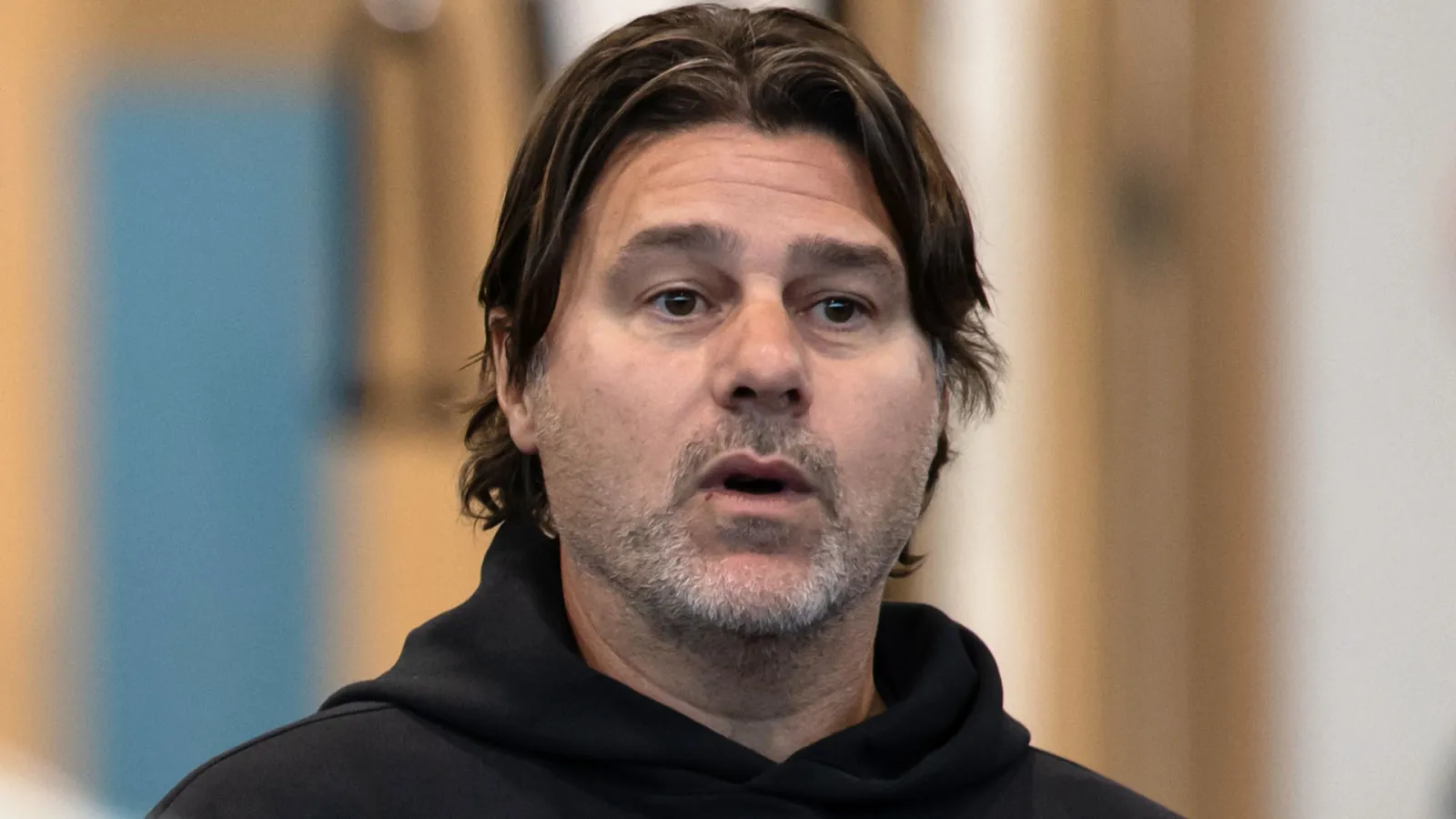
Mauricio Pochettino is seeking control in all squad-related decisions at Manchester United amid mounting pressure on director of football Jason Wilcox. Speaking at his maiden press conference after taking charge at Old Trafford, the new head coach outlined his vision for the club and his desire to have a major voice in personnel matters moving forward.
The appointment marks a return to club management for Pochettino, who recently led the United States national team. His arrival comes at a turbulent time for the club, with fans expressing frustration toward the existing administrative structure and the team sitting in 18th place in the Premier League table.
Mauricio Pochettino Returns to Club Management
Pochettino expressed deep enthusiasm for his return to domestic football during his introductory twenty-minute briefing with reporters. Dubbing himself an animal of the grass, he described the sensory experience of returning to day-to-day training ground work.
How does the grass smell? Lovely, because yesterday it rained and today is sunny, Pochettino said, describing an amazing morning at the Carrington training complex. He arrived in Manchester on Wednesday after overseeing the USA squad in a Concacaf quarter-final victory against Haiti in Cincinnati on Tuesday evening, joking that his initial priority upon landing was simply to sleep.
Reflecting on his time away from club football, the coach noted that national team management provided different challenges that ultimately improved his coaching abilities. He spent five and a half years at Tottenham, initially starting as a head coach before transitioning to a manager title upon signing a contract extension in 2016. However, his subsequent tenure at Chelsea lasted just one single season under a top-heavy structure where he held the official designation of head coach.
The Structural Debate and Pressure on Jason Wilcox
Manchester United has insisted on using the title of head coach since Ruben Amorim was appointed two years ago. This administrative approach places significant responsibility on the director of football, a position currently held by Jason Wilcox.
Wilcox has faced direct criticism from matchgoers in recent weeks amid a turbulent period for the club. Previous occupant Amorim experienced friction with Wilcox, who subsequently installed Michael Carrick as temporary head coach in January before giving him the job on a permanent basis in May. Carrick was later sacked in November, paving the way for Pochettino to take over.
Addressing the semantics of his job title, Pochettino drew on his extensive career history to downplay the exact wording. When I started at Espanyol, head coach, coach, manager, and in the end it is not changing too much, he explained. He noted that having a managerial title does not automatically guarantee total authority, just as being designated a coach can sometimes come with substantial power depending on the internal dynamics.
What Pochettino Wants From Squad Control
While acknowledging that his immediate focus remains on picking the starting lineup and preparing the team for upcoming fixtures, Pochettino made it clear that long-term authority is essential. He emphasized that he intends to be involved in all key decisions at the squad level once he settles fully into the role.
It depends on the structure, the communication, the relationship, with all the area, Pochettino stated. I know that being a head coach, I am the guy that is going to decide tomorrow the squad for Sunday and I am going to pick the starting XI. I am going to make the changes. And of course that in the future, I would like to be involved in all the main decisions that will happen on the squad, because in the end, Manchester United is a football club, no?
This desire for influence places a spotlight on how he will collaborate with Wilcox and the rest of the executive branch. Establishing clear lines of communication will determine how player acquisitions and departures are handled during upcoming transfer windows.
Player Meetings and the Future of Bruno Fernandes
Demonstrating a hands-on approach from his very first day, Pochettino spent three hours talking individually with players on Thursday at Carrington. He met with nearly the entire squad in his office, aiming to understand their perspectives both on and off the field, though he noted a few injured players remained to be seen in the following days.
Uncertainty has surrounded club captain Bruno Fernandes, whose form has nosedived this season. The thirty-two-year-old midfielder was previously dropped by Michael Carrick after questioning tactics during a heavy Champions League defeat against Como. Fernandes is currently approaching the final six months of his contract, though Manchester United holds an option to extend his stay until June 2028.
When asked directly whether Fernandes is certain to remain at the club beyond the current campaign, Pochettino declined to offer a definitive guarantee. Instead, he praised the overall commitment shown by the squad and reaffirmed the midfielder's leadership status.
I think the commitment from all the players that we were chatting with, I think was amazing from day one, Pochettino said. And I think Bruno is our captain and I think he is a very important player, but all the players need to feel that they are important, from the top to the bottom, or from the bottom to the top. Bruno is our captain and he is a very important player. I think we will have time after to talk about the things that you are asking me.
Upcoming Challenges for the New Coaching Staff
The immediate priority for the coaching staff centers on reversing the team's domestic fortunes. Sitting in eighteenth place in the Premier League standings represents an unfamiliar and uncomfortable position for a club of Manchester United's stature.
Pochettino and his staff have focused entirely on collective meetings and tactical preparation ahead of their next fixture. By taking the time to listen to individual grievances and build personal connections with the players, the coaching staff hopes to foster a more unified dressing room environment.
Observers will monitor how the relationship between the dugout and the boardroom develops in the coming weeks. If Pochettino successfully secures the influence he desires over squad planning, it could signal a shift in how Manchester United operates its football operations under the current leadership team.