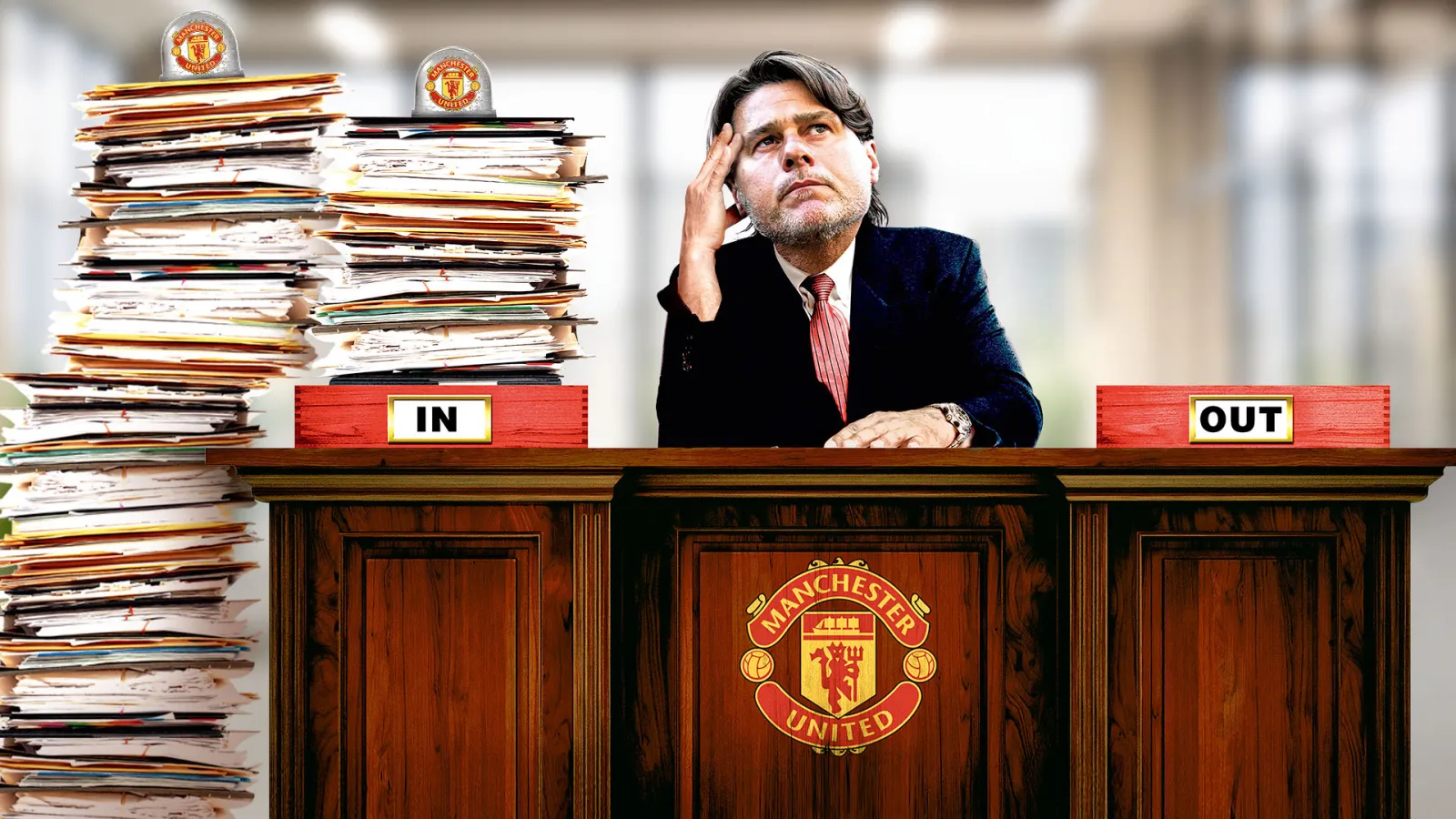
Mauricio Pochettino Takes Over Manchester United in 18th Place
Manchester United find themselves in a precarious position, sitting only one point further away from the top four than when they first evaluated Mauricio Pochettino as a managerial candidate in December 2018. Back then, the club occupied sixth place in the Premier League standings, but the current reality places them down in 18th. Matchgoers at Old Trafford want significant changes, voicing frustration toward the owners, the chief executive, the director of football, and a large portion of the playing squad.
Despite these difficult circumstances, lifting a talented group of players to a more respectable standing within a sub-standard Premier League should remain achievable. To succeed, Pochettino must receive sound advice and judge individuals strictly on their current output rather than past reputations. Five distinct priorities will define the opening phase of his tenure and dictate the immediate future of the historic institution.
Bruno Fernandes and His Uncertain Future at Old Trafford
The first major hurdle involves deciding the futures of several senior figures within the initial six months, which will set the tone for Pochettino. Multiple contract offers extended to Bruno Fernandes suggest the club wants to retain him, even though valid arguments exist for moving the playmaker on. While Fernandes has produced brilliant moments, Manchester United have largely operated as a one-man band during his tenure, a dynamic that has ultimately limited team progress.
Recent months have shown that this dependence is faltering, and interim management failed to extract cohesive performances from the supporting cast. The club must transition toward a more functional unit rather than relying entirely on a single conductor. Whether Fernandes stays or leaves represents a monumental choice, with options ranging from a January sale to a summer departure once his contract terms are fully understood. Pochettino possesses the authority to steer this decision after gauging the personal feelings of the player, working alongside director of football Jason Wilcox.
Deciding Which Players Must Leave Old Trafford
A thorough squad overhaul is necessary, starting with players whose contracts expire in the summer, such as Harry Maguire, Lisandro Martinez, and Luke Shaw. Luke Shaw previously expressed a desire to play under Pochettino in a 2017 book, but their reunion should not extend past the current campaign. Shaw has missed more matches than he has played across a 13-year career at the club and struggled with increased physical demands this season, mirroring Jose Mourinho concerns from 2018.
Lisandro Martinez has endured a difficult three-and-a-half-year spell marked by injuries and defensive errors, meaning shared nationality with the manager should not grant him a reprieve. Meanwhile, Harry Maguire has remained available for every match, offering some merit in retention for an extra year strictly as a squad option. Diogo Dalot and Noussair Mazraoui are signed until 2028, but at least one must depart to accommodate a new right back, a position the club has struggled to fill successfully since Paul Parker arrived in 1991. Marcus Rashford enters the final 18 months of his deal without an extension option, having spent over a month sidelined, nearly two years without a club goal, and showing reluctance to return over the summer. Additionally, recent arrivals Joshua Zirkzee, Manuel Ugarte, and Matthijs de Ligt require evaluation for potential exits.
January Transfer Market Demands and Reinforcements
Pochettino previously tolerated a quiet transfer window during his time at Tottenham, but going through the upcoming winter window without reinforcements at Old Trafford would prove intolerable. Following Ruben Amorim's arrival in November, the club secured bespoke left wing back Patrick Dorgu during the winter market. That move provides Pochettino with leverage, especially with the team sitting 18th and the defensive line in a dismal state reminiscent of the 1974 relegation era.
The squad requires a durable left back and a credible support striker to address glaring weaknesses. Players like Rayan Ait-Nouri and Rodrigo Muniz offer short-term Premier League experience, while Danny Welbeck represents an option worth exploring given his lack of playing time at Chelsea. Past winter windows relied on low-key loans like Jack Butland, Wout Weghorst, and Marcel Sabitzer, alongside data-driven buys and minor investments. Management acknowledged errors in failing to secure a left back and support striker during the summer, making active deal-making essential this time around.
Unlocking Academy Talent and Youth Development
Post-Ferguson managers at Old Trafford have consistently left an academy legacy, from Adnan Januzaj under David Moyes to Alejandro Garnacho and Kobbie Mainoo under Erik ten Hag. However, the production line slowed down during recent years amid constant changes behind the scenes. Shea Lacey showed promise under Amorim and Carrick, though 16-year-old JJ Gabriel recently departed for Madrid after starring in the run to the FA Youth Cup final last season.
Pochettino earned a strong reputation for developing youth during his Tottenham spell, helping build a young core for the England national team and transforming Kyle Walker into a globally renowned full back. This proven track record with youngsters was a primary reason for his appointment at Old Trafford. Given ongoing struggles at full back, 19-year-olds Jaydan Kamason and Harry Amass remain under consideration for senior call-ups, while 18-year-old Godwill Kukonki stands out as a prospect to monitor upon returning from injury.
Improving Athleticism and Fitness Standards
Statistical metrics highlight severe physical shortcomings within the squad, as Manchester United rank 19th for total distance covered in the Premier League, 17th for high-speed running distance, and 19th for average max speed. Comparisons with the 17 games managed by Michael Carrick last term reveal declines in high-speed distance running, sprint distance, sprints, high-speed runs, and accelerations. The team also sits at the bottom of the 20 Premier League clubs in the Gradient Sports athleticism score.
Previous methods lacked rigor, with the team lacking a dedicated fitness coach and receiving days off immediately following matches. Pochettino places immense emphasis on physical conditioning, famously running brutal pre-season sessions at Tottenham that contrasted sharply with relaxed environments found elsewhere. Rebuilding the physical standards of the players represents an immediate step toward restoring competitiveness on the pitch.