McKalie Ball Scores Bizarre Goal After Being Knocked Out
Collegiate women's football star McKalie Ball scored a bizarre goal on Thursday, netting after being flattened by a goalkeeper's clearance. The unusual incident occurred during a highly competitive fixture between the Louisville Cardinals and the North Carolina Tar Heels, capturing the attention of sports fans everywhere. As competitive collegiate sports demand intense physical commitment, freak occurrences can sometimes overshadow standard tactical play.
Louisville Cardinals forward Ball ran up to North Carolina Tar Heels goalie Peyton Trayer in the 73rd minute of the two sides' meeting. Forward pressure is a standard tactical approach in modern football, where attackers attempt to rush goalkeepers during build-up play or clearances. Trayer prepared to launch the ball up the field to relieve defensive pressure, unaware of the dramatic sequence that was about to unfold.
How the Freak Goalkeeper Clearance Goal Happened
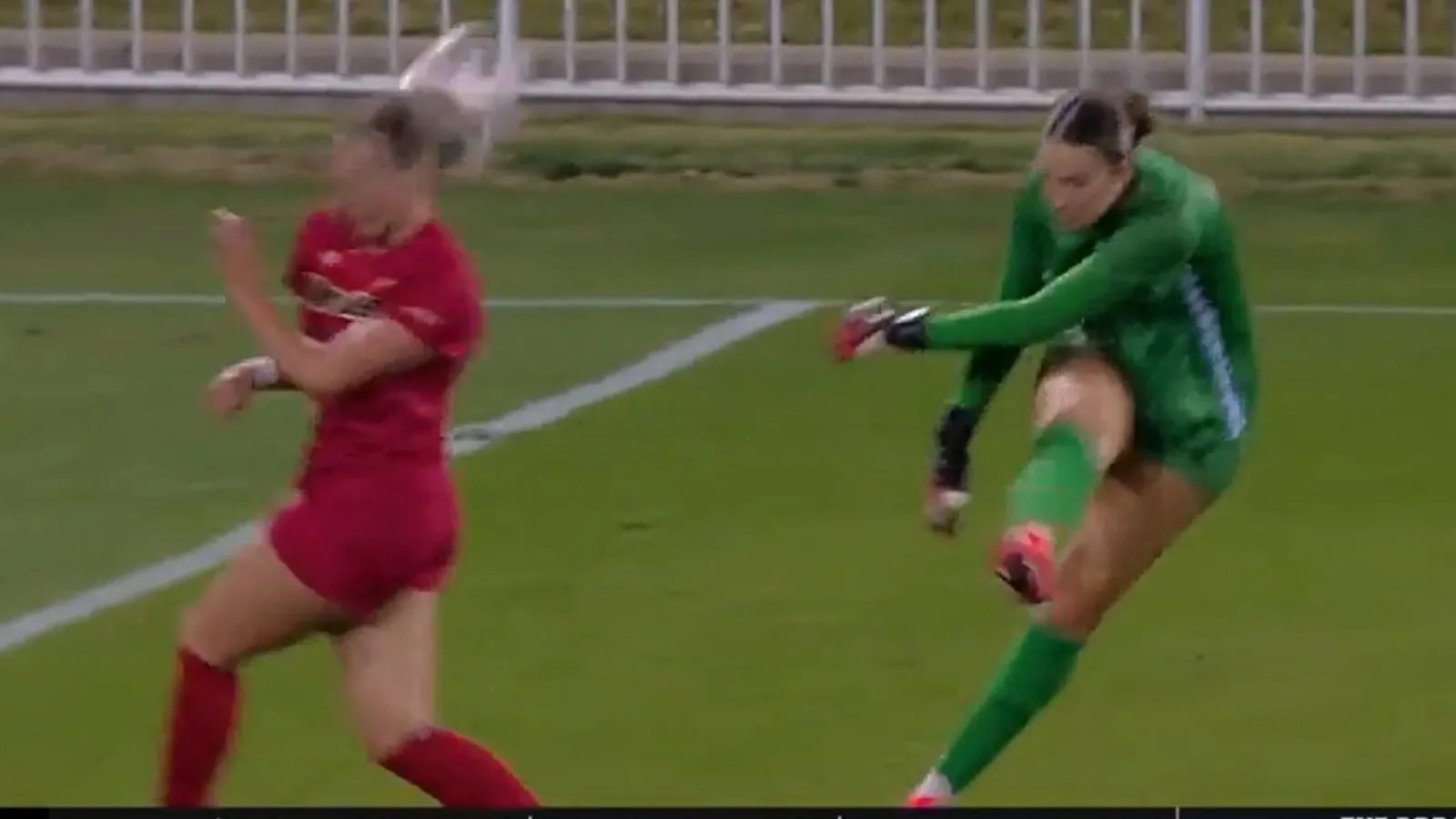
And Trayer's powerful boot up field landed flush on the back of Ball's head. The sheer velocity of the clearance meant that the impact was immediate and heavy. Goalkeeper clearances are designed to travel significant distances down the pitch, but close-range pressure fundamentally alters the physics of the clearance.
Ball went tumbling to the turf as the match ball looped over Trayer's head and bounced into the net. The trajectory of the ball carried it backward over the backtracking goalkeeper, leaving the defense helpless. Such defensive miscues are exceedingly rare in high-level collegiate competition, making the resulting scoreline talking point unique.
Immediate Aftermath and Player Injury Concerns
The stricken Cardinals star was still down in agony when the ball crossed the line and did not even realise she had scored. Football players celebrate goals instinctively, but the immediate concern shifted toward player safety as teammates recognized the severity of the impact. Head injuries and collisions require strict protocol adherence from medical staff on the field.
Some of her team-mates briefly celebrated the freak goal, which had levelled the scores up at 2-2. The equalizer brought Louisville back into a crucial match against a formidable opponent. However, the momentary joy of securing a tied scoreline quickly dissipated as players turned their attention to their fallen colleague.
But upon seeing Ball on the ground, several ran over to check on her. The attacker was clearly in serious discomfort as she writhed around while being tended to by a medic. Medical professionals rushed onto the pitch to evaluate the player for potential concussion symptoms and other physical trauma.
And Ball was unable to continue, needing assistance to leave the pitch. Sustaining an injury of this nature forces coaching staff to make enforced substitutions, altering team structure during a critical phase of the game. Player welfare remains a top priority across all collegiate athletic conferences, ensuring that injured athletes receive prompt professional evaluation.
Match Outcome and Season Standings
To add insult to injury, North Carolina reclaimed the lead just a few minutes later. Conceding shortly after scoring a morale-boosting equalizer can deflate a team's momentum. The Tar Heels capitalized on the shift in energy to reassert their dominance on the pitch.
Hope Munson was the scorer as she nabbed her third goal of the game, claiming her first career hat-trick. Achieving a hat-trick represents a major milestone for any collegiate forward, highlighting an exceptional individual performance. Munson's scoring prowess proved decisive in tilting the match back in favor of North Carolina.
That rounded off the regular season for North Carolina, who finished with a 15-2-0 overall record as Louisville sunk to 10-4-3. Regular season conclusions determine seeding and postseason momentum for collegiate programs. North Carolina carried a strong record into the next phase of competition, while Louisville looked to regroup following a hard-fought defeat.