Prime Minister Shehbaz Sharif Orders 100 Percent Digital Payments in Pakistan
Prime Minister Shehbaz Sharif has ordered a clear roadmap with time-bound targets for a 100 percent digital payments system across Pakistan, saying a cashless economy is among the government's top priorities. He gave the directions on Friday while chairing a high-level meeting in Islamabad on promoting a cashless economy, according to the Prime Minister's Office. The push toward electronic transactions represents a major administrative shift for the country, affecting how citizens interact with both state institutions and commercial service providers.
The high-level session gathered key financial and administrative leaders to review the current state of electronic banking infrastructure. Officials discussed the barriers that slow down adoption rates among the general population and evaluated technical solutions to bridge the gap between urban centers and rural areas. The administration views electronic finance as a tool to improve transparency, curb fiscal leakages, and streamline government disbursements across all provinces.
What the Prime Minister Ordered for Digital Payments
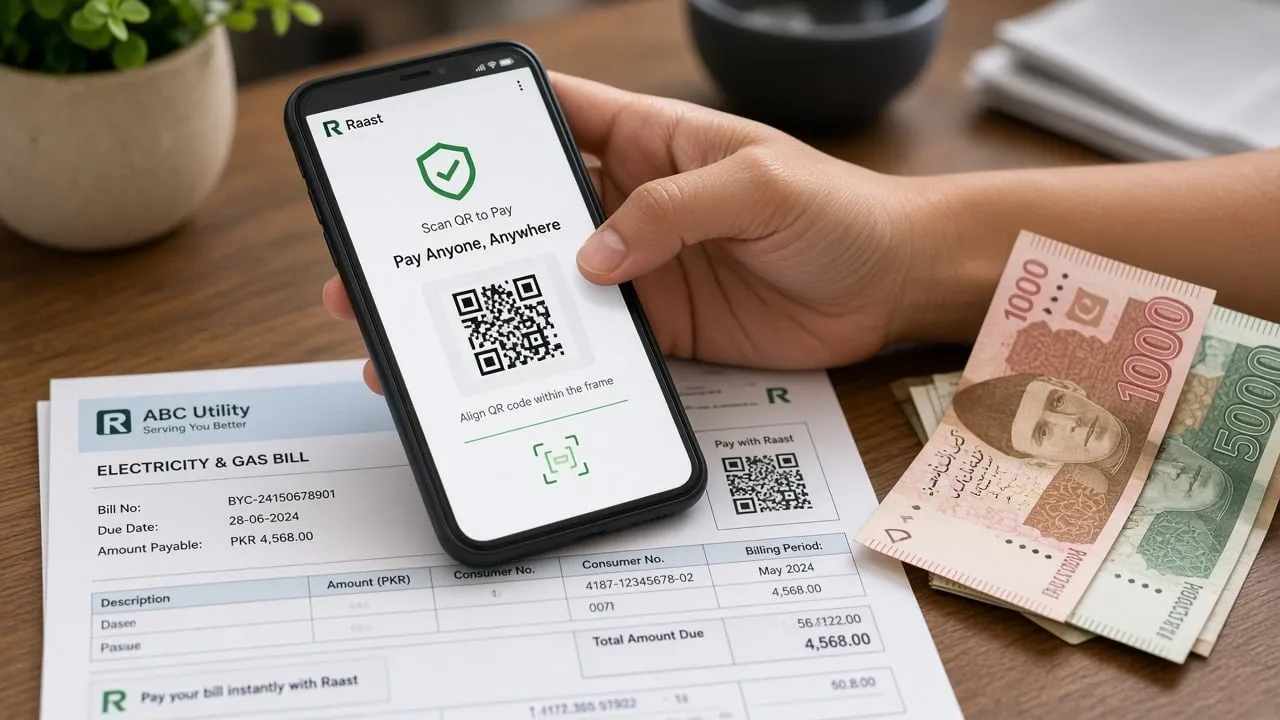
Officials must fix problems faced by digital payment users immediately and ensure internet access and easy technology for the public nationwide. Shehbaz said the Raast QR code payment system is already helping the cashless drive and must continue under government patronage. He also ordered a media campaign so electricity and gas consumers pay through QR codes printed on utility bills. This also builds on earlier plans to put QR codes on all utility bills.
All ministries and government institutions were told to fully implement the cashless economy plan. The directive removes any ambiguity regarding bureaucratic compliance, instructing every department to transition away from manual processing. By mandating QR codes on standard utility statements, the state aims to normalize electronic transfers for everyday household expenses.
Key Deadlines Set for Government Digitization
Most federal and provincial government payments are set to be fully digitised by December 2026. Benazir Income Support Programme payments are already 100% through digital wallets. Cheque payments under Asaan Assignment Accounts end on November 15. From November 16, those payments will move to the Raast digital system nationwide, with drawing and disbursing officers already trained.
These target dates create a strict timeline for public sector accounting departments to update their internal procedures. Personnel responsible for public funds have received instruction on the new platform to prevent administrative bottlenecks. The early conversion of social safety net disbursements demonstrates that large-scale electronic transfers are already operational within state frameworks.
Expanding Internet Infrastructure and Offline Solutions
Work is also underway on a digital payment system for areas without internet, while nationwide internet infrastructure is being expanded. Connectivity remains a primary challenge for remote communities, making offline transaction capabilities essential for total financial inclusion. Telecommunication authorities are working alongside financial regulators to deploy infrastructure capable of handling secure transfers without constant broadband connections.
Building a reliable network requires significant capital investment and coordination between private telecom operators and public regulators. The administration insists that technological upgrades must reach marginalized districts to prevent economic exclusion as paper currency usage declines. Technical teams are testing alternative protocols that authenticate transactions via basic mobile networks where high-speed data is unavailable.
The Role of the Raast QR Code System
The Raast instant payment system serves as the foundational architecture for the state electronic finance strategy. By using standardized QR codes, the platform allows users to complete transfers instantly using mobile applications linked to bank accounts. Government patronage ensures that transaction fees remain minimal or nonexistent, encouraging commercial adoption by small merchants and large utility providers alike.
Public awareness campaigns will instruct consumers on scanning codes printed on monthly statements for power and natural gas. State planners anticipate that familiarizing citizens with QR code mechanics in utility billing will naturally drive adoption in retail shopping and peer-to-peer transfers. Financial institutions have been instructed to update their mobile applications to support these state-backed protocols seamlessly.
Impact on Citizens and State Institutions
The complete transition to electronic finance alters the daily operations of government departments and corporate entities. Ministries must audit their payment channels to ensure compatibility with national platforms by the established deadlines. Citizens benefit from reduced waiting times at utility offices and enhanced security against cash theft, provided they have access to functional mobile devices and digital accounts.
Business owners face new expectations regarding customer payment methods, requiring investments in point-of-sale technology or static QR displays. The elimination of paper cheques in specific government accounts forces vendors and contractors to adopt institutional banking channels. Monitoring agencies expect these measures to improve tax collection efficiency by creating a verifiable digital trail for all financial exchanges.