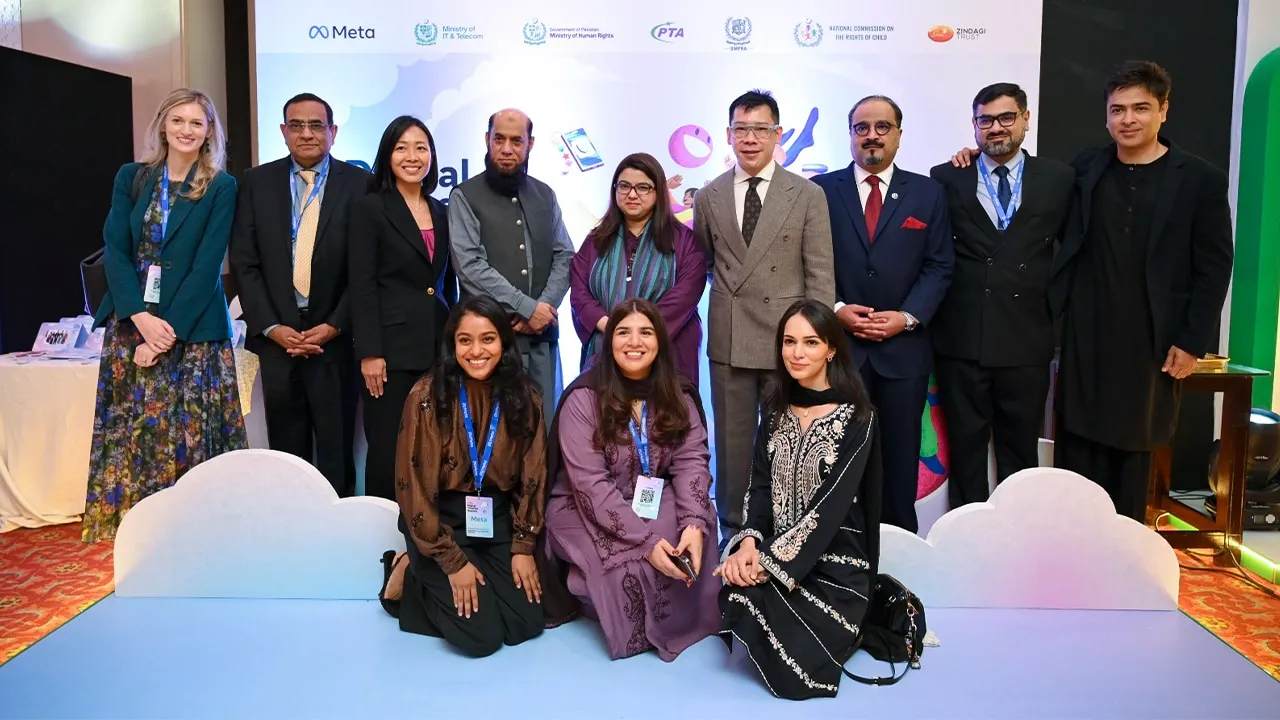
Meta convened the Digital Tahafuzz Summit in Islamabad on a day focused on youth safety online, partnering with the Ministry of IT & Telecom, the Ministry of Human Rights, the Pakistan Telecommunication Authority, the Social Media Protection & Regulatory Authority, the National Commission on the Rights of Child and Zindagi Trust.
Attendees included policymakers, educators, parents, civil-society representatives and creators who debated ways to let young people benefit from the internet while keeping them protected.
A Whole of Ecosystem Conversation
The discussion centered on shielding minors without cutting off internet benefits. Speakers examined frameworks that embed privacy, age-appropriate design and default safety into platforms, and explored a privacy-preserving age-assurance model for Pakistan. They stressed that safeguards work best when youths understand them and can turn to trusted adults.
During a panel, Ms. Ayesha Raza, Chairperson of NCRC, said, "Our goal must be to make the digital world safe for children. Bans alone push children toward less regulated, higher-risk spaces and leave them unprepared. What works is a whole-of-ecosystem approach. Platforms must be accountable and build safety into their design, with private-by-default settings, limits on addictive features, and swift removal of abusive content. The state must ensure child-friendly reporting mechanisms and swift redressal of complaints and build awareness among children. Parents and teachers must be equipped to guide children with confidence, and we must invest in digital literacy."
Mr. Salman Zafar, Member of SMPRA, added, "keeping children safe online should not be the child's burden. Protecting children online requires safer platforms, respect for their privacy, responsive reporting mechanisms, and close collaboration between regulators, platforms and parents." Mr. Shahzad Roy, President of Zindagi Trust, said, "Our children are growing up in an increasingly digital world. It is our responsibility to equip them with the skills to navigate this world safely and ensure their well-being online. Zindagi Trust and Durbeen's partnership with Meta is a step in the right direction. It aims to empower parents and guardians with tools to supervise their children's social media experiences, stay informed about their online activity, and take appropriate action to help keep them safe."
The summit also highlighted the need for a national digital-safety education drive backed by industry, aiming to position Pakistan as a regional leader in evidence-based youth-safety policy.
Digital Dialogues in Real Life launches in Pakistan
Meta unveiled Digital Dialogues in Real Life at the event - a free, browser-based tool that helps teens, parents, educators and community groups discuss everyday online scenarios together.
Developed from research with young people and teachers, the experience introduces parents and teens to safety features built into Teen Accounts. These accounts activate protections from the outset, limiting contacts, content and time spent, so parents need not configure them. Content settings follow 13+ film ratings and parental input; teens see age-appropriate material and those under 16 require parental consent to relax restrictions.
Users navigate five illustrated cards - Social Spaces, Feed Control, Beyond Likes, Kindness Online and Know Your Limits - each depicting a common online moment, prompting a response and pointing to relevant tools. Separate pathways exist for ages 13-17 and for adults.
Yuen Ting Chay, Director of Public Policy, South and Central Asia at Meta, said, "Keeping teens safe online is a responsibility we share with parents, educators, governments and civil society. We build for parents' peace of mind, with Teen Accounts on Facebook, Instagram and Messenger - putting protections in place by default. Alongside these protections, the conversations teens have with the adults in their lives matter just as much. That is why we built Digital Dialogues in Real Life, to help parents and teens talk more openly about life online."
Minister Shaza Fatima Khawaja, Federal Minister for Information Technology and Telecommunication, stated, "Pakistan cannot build a truly digital future unless it is a safe one for its children. Protecting young people online cannot rest on parents navigating complex settings alone. Safety must be built into technology, reinforced through digital literacy and upheld through collective responsibility. Today's Summit shows what that looks ..."
Senator Azam Nazeer Tarar, Federal Minister of Human Rights, added, "The protection of human dignity and fundamental rights must extend to the digital world... The right to safety, privacy and dignity must be protected equally in both physical and digital spaces. Safeguarding our younger generation requires collective efforts from government, technology platforms, educators, parents and civil society."
Chairman PTA, Major General (R) Hafeez Ur Rehman HI (M), SI, said, "Protecting children online is a shared responsibility. Alongside effective safeguards, we must equip children with the knowledge to navigate the digital world safely and empower parents to guide them. Through our partnership in Digital Dialogues in Real Life, PTA remains committed to promoting digital awareness and creating a safer online environment for Pakistan's children."
The Digital Tahafuzz Summit builds on Meta's teen-safety initiatives in Pakistan, and the company will keep collaborating with policymakers and partners to make such protections an industry standard.