Understanding the Mysterious Bus-Sized Object Heading Toward Earth
A mysterious object the size of a bus is heading straight for Earth, and its unusual speed has left scientists baffled. Researchers at the Georgia Institute of Technology in the US have said the object, labelled 1998 KY26, is speeding up and hurtling towards earth at a rate faster than a normal asteroid would travel. This unexpected velocity has triggered intense debate within the astronomical community regarding its true nature and origin.
According to reports, the object is currently about 189 million miles from Earth. While this distance sounds vast, astronomers track such trajectories closely to understand potential intersections with our planet. The unusual acceleration of 1998 KY26 separates it from typical space rocks, prompting experts to look beyond standard asteroid explanations.
Could 1998 KY26 Be a Lost Russian Spacecraft?
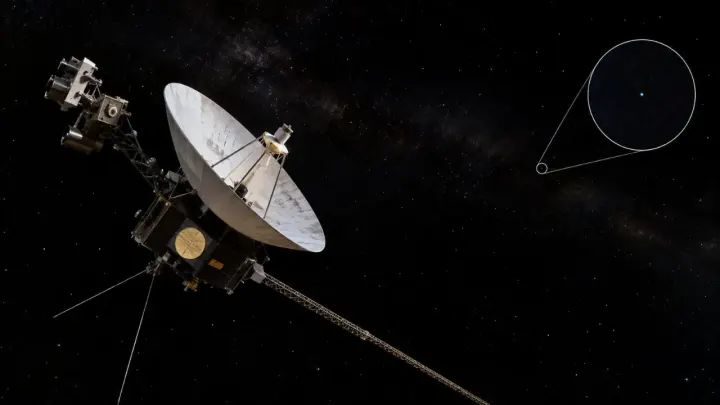
This abnormal behavior has led one professor to state it may not be an asteroid after all but a Russian spacecraft that vanished just months after its journey began. Harvard Professor Avi Loeb said the 36ft-long object could be Phobos 1, a spacecraft launched by the former Soviet Union in 1988. The size matches human-made hardware from that era, aligning with the dimensions of historical interplanetary probes.
Phobos 1 was reportedly on a mission to Mars when it lost contact with Russian controllers. Communication failure occurred early in the mission, leaving the probe to drift indefinitely in solar orbit. Over decades, such derelict hardware can enter complex gravitational paths that bring them back toward the inner solar system.
The Orbit and Connection to Phobos 1
Analyzing orbital mechanics provides the core argument for the spacecraft hypothesis. In a statement, Professor Loeb said, "The similarity of the orbit of 1998 KY26 to the orbit of the lost Phobos 1 spacecraft suggests that the two objects are the same." Mathematical modeling of historical launch paths against current tracking data forms the basis of this claim.
Space agencies monitor orbital parameters continuously using ground-based telescopes and radar systems. When an artificial satellite or probe is abandoned, it becomes space debris following Keplerian laws around the sun. Matching these paths requires precise historical telemetry data from Soviet-era mission logs combined with modern astrometry.
Upcoming Space Agency Interceptions and Projections
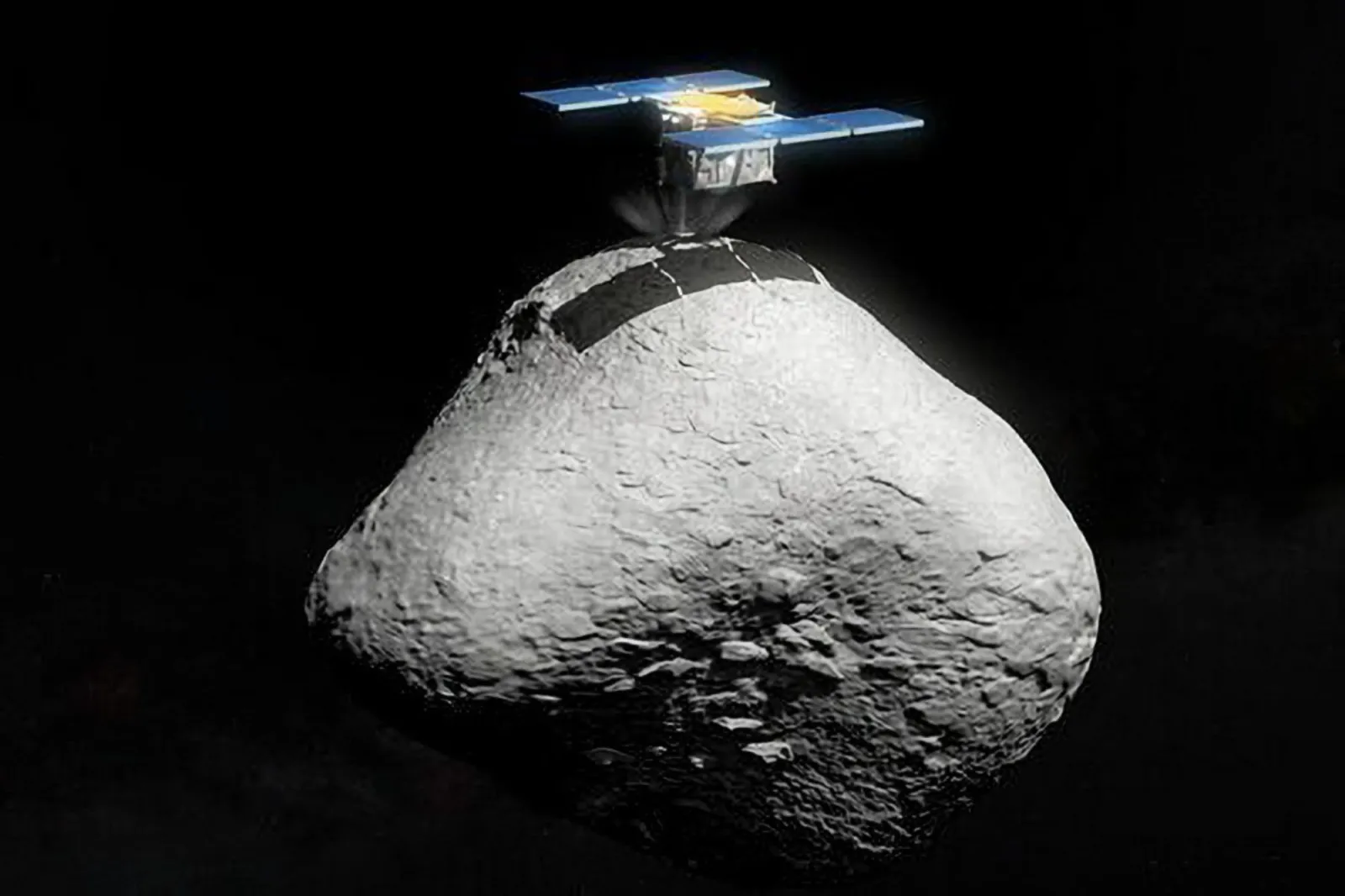
International space programs are already planning future observations of the mysterious visitor. A Japanese space probe, Hayabusa 2, is set to intercept the object in 2031 and return to earth with samples. This mission will provide definitive physical proof of the object's composition, whether rocky mineral or manufactured metal.
Expressing confidence in the artificial origin theory, Professor Loeb added, "Our prediction is that instead of an iceberg, Hayabusa 2's cameras will reveal the label 'Made in the U.S.S.R'." Close-up imaging will immediately resolve whether the surface shows impact craters of an asteroid or panels and antennas of a probe.
Future Close Approaches to Our Planet
Astronomers have mapped out several upcoming milestones in the trajectory of 1998 KY26. The European Space Agency said the object's orbit will take it even closer to our planet in 2039, coming within 10 million miles. These recurring passes offer multiple windows for radar imaging and spectroscopic analysis from ground-based facilities.
If it remains on its current course, the agency said it could be within 32 million miles of Earth in 2028. These calculated milestones help planetary scientists refine their tracking models and verify whether non-gravitational forces, such as solar radiation pressure, are acting on the surface differently depending on its material makeup.