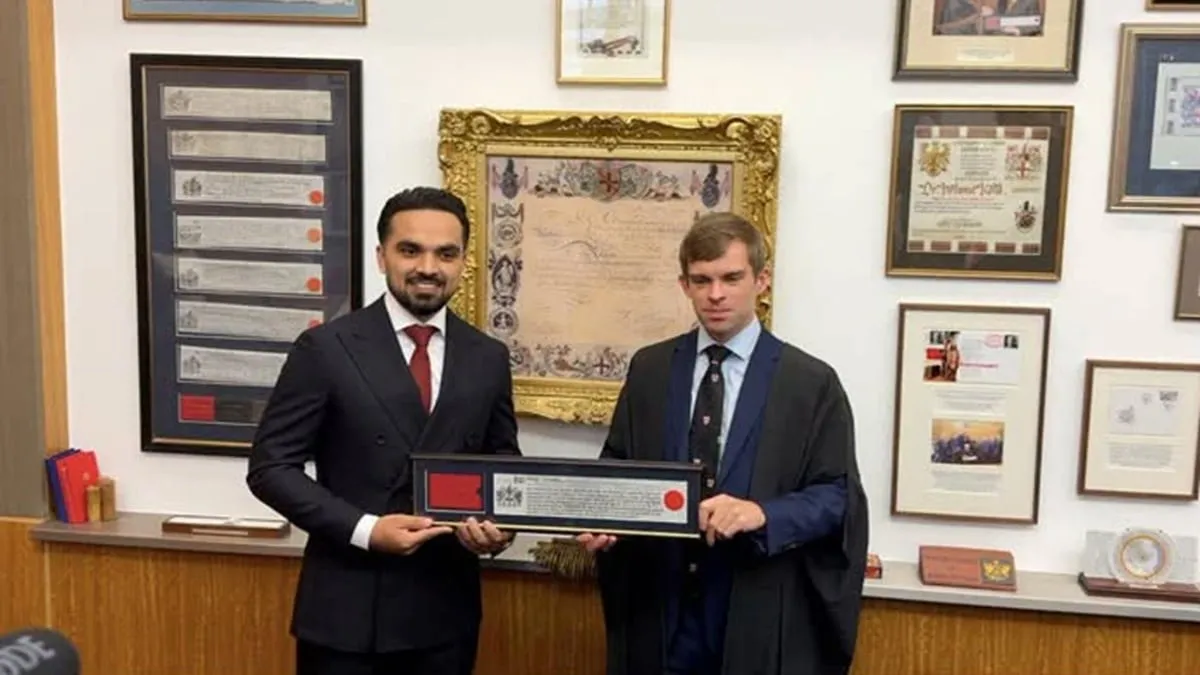
British-Pakistani businessman Nasir Younas, who moved to London from Lahore with just £200 and limited English skills, has received the Freedom of the City of London in recognition of his contributions to business, hospitality, and philanthropy in the UK.
What the Freedom of the City of London Means
The Freedom of the City of London is a historic honor dating back to 1237. Originally, it allowed recipients to conduct business and practice their trades within the city. Over the centuries the privilege became largely ceremonial, but it still carries great prestige and signals a recipient's lasting impact on the capital's civic and economic life.
Recipients sign the Register of Freemen, read the Declaration of a Freeman and are formally welcomed as Citizens of London. The ceremony typically takes place at the Chamberlain's Court in Guildhall, the ancient seat of the City's government.
Who Has Received the Honor Before
Previous recipients include Queen Elizabeth II, Princess Diana, former British prime ministers Winston Churchill and Margaret Thatcher, Nelson Mandela, Stephen Hawking, Morgan Freeman, and J. K. Rowling. The list shows that the award spans royalty, politics, science, arts and business, underscoring its broad relevance.
Nasir Younas's Journey from Lahore to London
Younas was born in Ghoray Shah, a small town near Lahore, as the eldest son of a shopkeeper. He began helping with his father's grocery business at age 14, opening the shop at 6 a.m. every Sunday while his friends played cricket. The early exposure to trade gave him a practical understanding of supply, pricing and customer service.
In 2004 he arrived in London with £200, money his father had borrowed to support the move, and limited English. His first job was at a restaurant on Oxford Street, where he spent 11 hours a day boiling rice in the basement for £40. The long hours and low pay were a stark contrast to the life he left in Pakistan, but they provided a foothold in the city's hospitality sector.
Younas credits London for educating him and providing opportunities that changed his life. He says the city "educated me and gave me chances that I never imagined." Over the next two decades he built a portfolio of businesses in hospitality, real estate and community development, creating jobs for other immigrants and supporting charitable projects in both the UK and Pakistan.
Why the Honor Matters for Business and Philanthropy
The Freedom of the City of London recognises not only commercial success but also civic contribution. Younas's businesses have reportedly employed over 200 staff members, many of whom are recent migrants navigating the same language and cultural barriers he once faced.
His philanthropic work includes funding scholarships for Pakistani students, sponsoring health clinics in Ghoray Shah, and supporting food banks in London's East End. These efforts align with the City's long-standing emphasis on charitable giving and community service.
Impact on the British-Pakistani Community
Younas's story resonates strongly within the British-Pakistani diaspora, which makes up one of the largest South Asian communities in the UK. His achievement demonstrates a pathway from low-paid entry work to civic recognition, encouraging entrepreneurship among newcomers.
Local community groups have already cited the ceremony as a morale boost, noting that visible success stories help counter negative stereotypes and inspire younger generations to pursue education and business ventures.
What Comes Next After the Ceremony
The Freedom ceremony was held at the Chamberlain's Court at Guildhall, attended by Younas's family, friends, and representatives from business and public life. After reading the Declaration of a Freeman, signing the Register of Freemen and being welcomed as a Citizen of London, Younas will join the Freedom's alumni network, which meets regularly to discuss civic initiatives and mentorship programmes.
There is no public schedule for further honours, but the City of London often invites new Freemen to participate in charitable galas, trade delegations and advisory panels. Observers will watch whether Younas takes on a formal advisory role, which could amplify his influence on policies affecting immigrant entrepreneurs.
Explaining the Freedom Ceremony Process
The ceremony follows a centuries-old protocol. First, the nominee reads the Declaration of a Freeman, a pledge to uphold the City's values of honesty, fairness and public service. Next, the nominee signs the Register of Freemen, a ledger that dates back to the medieval guild system. Finally, the Master of the City's Livery Companies formally welcomes the new Freeman into the community.
While the title no longer grants legal rights to drive livestock through the city or own a city-owned horse, it still carries symbolic weight. Holders may use the post-nominal letters "FCL" and are invited to attend the annual Lord Mayor's Show, one of London's most visible civic celebrations.
Historical Context of the Freedom of the City
The Freedom originated in 1237 when the City of London sought to regulate trade and protect its merchants from external interference. Recipients were granted the right to trade within the city walls without paying certain tolls. Over time, as the city's governance evolved, the practical benefits faded, but the honour remained as a mark of distinction.
In modern times, the Freedom is awarded to individuals who have made a lasting contribution to the economic, cultural or charitable life of London. The selection process involves nomination by a Livery Company or a City official, followed by scrutiny by the Court of Aldermen.
Practical Takeaways for Aspiring Entrepreneurs
- Starting with low-paid work does not preclude long-term success; perseverance and skill development are key.
- Engaging with local business networks, such as Livery Companies, can open doors to mentorship and civic recognition.
- Giving back to both the host community and the country of origin strengthens social capital and can enhance a business's reputation.
Nasir Younas's story illustrates how a combination of hard work, strategic networking and community focus can lead to both economic prosperity and civic honour.
Via: Geo