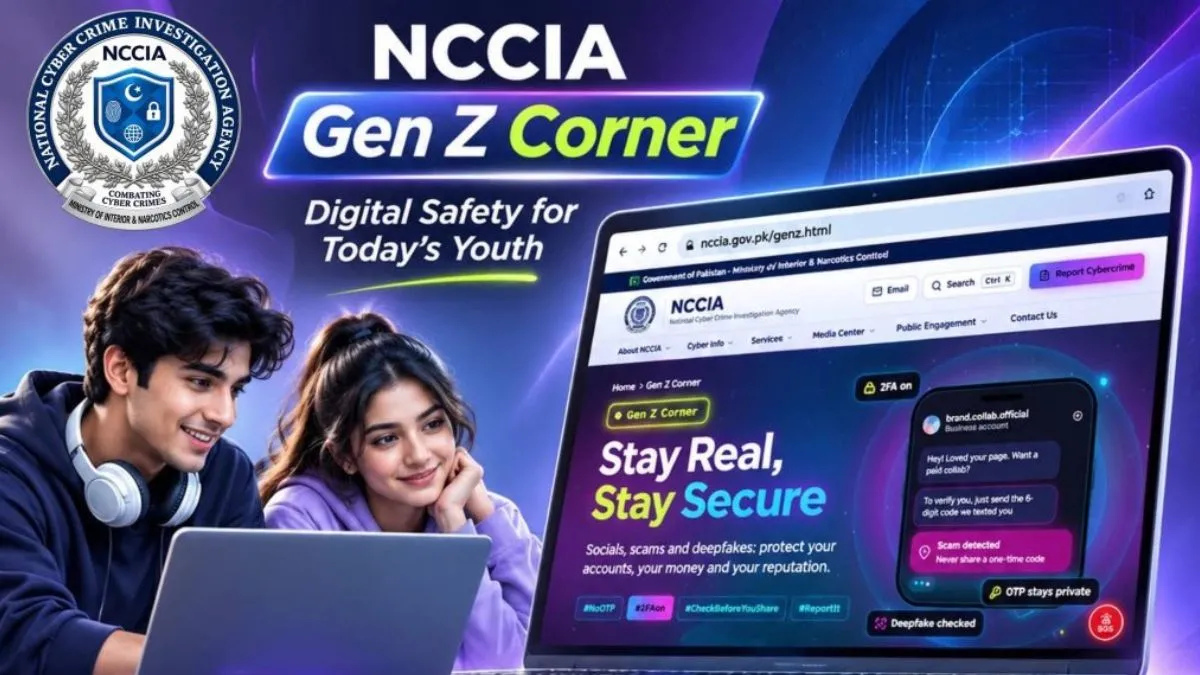
Pakistan's National Cyber Crime Investigation Agency has officially launched its Generation Z Cyber Zone initiative to raise awareness on online safety among the younger population. The new educational effort is designed to help young people recognize online fraud, spot fake links, and protect their personal information from malicious actors operating in the digital space. As internet usage expands rapidly across the country, institutions face growing pressure to equip citizens with the tools necessary to navigate virtual platforms securely.
The agency shared details of the initiative in a social media post, outlining the core objectives and the specific areas of digital hygiene that the program targets. By focusing directly on younger demographics, who typically spend significant amounts of time on social media and digital platforms, the agency hopes to build a more resilient digital generation capable of identifying threats before falling victim to financial loss or identity theft.
The NCCIA’s 'Generation Z Cyber Zone' provides young people with awareness regarding online fraud, fake links, the protection of personal information, responsible social media use and other essential safety precautions.
For Generation Z, visit:https://t.co/AcmVphAIGV#NCCIA… pic.twitter.com/NyDpnOwgNv
— NCCIA (@NCCIAOFFICIAL) November 24, 2026
What is Generation Z Cyber Zone?
The initiative combines fraud awareness with practical guidance on digital safety. It covers how to recognize suspicious links, which scammers can use to direct people to fake pages that ask for passwords or other private details. These deceptive tactics often mimic legitimate banking portals or popular social media login screens to trick unsuspecting users into handing over sensitive credentials.
It also highlights the importance of protecting personal information when using online services. Young users frequently share vast amounts of personal data on public platforms without realizing the long-term privacy risks or how cybercriminals can aggregate this information to launch targeted phishing attacks or social engineering scams.
Promoting Responsible Social Media Use
The agency said the Cyber Zone also promotes responsible social media use and covers other basic online safety precautions. This includes educating users on privacy settings, understanding who can view personal posts, and thinking critically about the veracity of information encountered online before sharing it with others.
That puts the focus on both what young people click and what they share online. For more details, you can visit the official NCCIA Cyber Zone website.
Understanding the National Cyber Crime Investigation Agency
The National Cyber Crime Investigation Agency serves as a primary federal body tasked with investigating digital offenses, prosecuting cybercriminals, and securing the digital infrastructure within the country. Law enforcement agencies face an evolving landscape of cyber threats, ranging from individual hackers to organized syndicates deploying sophisticated ransomware and financial fraud schemes.
Public awareness campaigns form a critical pillar of modern cyber defense strategies. By educating citizens on common threat vectors, investigative agencies reduce the total volume of successful scams, allowing limited law enforcement resources to focus on high-level criminal networks operating domestically and across international borders.
The Rising Threat of Online Fraud for Youth
Young demographics represent the most active segment of internet users, making them prime targets for online fraudsters. Cybercriminals exploit the digital fluency of youth by deploying modern tactics such as fake e-commerce stores, fraudulent scholarship portals, and deceptive gaming rewards that require personal authentication details.
Financial literacy regarding digital transactions remains uneven among teenagers and young adults entering the financial system for the first time. Educational initiatives bridge this gap by translating complex cybersecurity concepts into actionable, everyday advice that prevents common mistakes.
How the Gen Z Cyber Zone Protects Personal Information
Protecting personal information involves understanding data privacy rights and adopting secure digital habits across all connected devices. The Cyber Zone initiative teaches users to use multi-factor authentication, create strong and unique passwords, and recognize the warning signs of unsolicited communication asking for personal data.
Security experts emphasize that human error remains the weakest link in any cybersecurity architecture. Programs that target behavioral changes among regular users significantly lower the success rate of social engineering attacks.
What Comes Next for Digital Safety in Pakistan
As the Generation Z Cyber Zone initiative rolls out across digital channels, observers expect further announcements detailing expanded educational modules and collaborative workshops with educational institutions. Schools and universities may incorporate these guidelines into broader computer literacy programs to reach an even wider audience of students.
Citizens should monitor official agency communications for updates on new resources, reporting mechanisms for cybercrime incidents, and upcoming outreach events designed to foster a safer digital environment for all internet users.