Pakistan and Türkiye Push Judicial Digitalisation with New AI Deal
Pakistan Türkiye judicial digitalisation cooperation moved into a new phase this week, with both countries agreeing to work together on AI-powered justice tools, e-courts, and digital case management. The fresh push came from a high-level meeting in Islamabad on 24 November 2026, a day after a formal agreement was signed at the Supreme Court.
The Supreme Court of Pakistan and the Court of Cassation of Türkiye signed a Memorandum of Understanding on judicial cooperation on 23 November 2026. Chief Justice of Pakistan Yahya Afridi and President of Türkiye's Court of Cassation Ömer Kerkez signed the memorandum during a high-level visit that runs from November 23 to 27, 2026.
What the New Judicial Agreement Covers
The memorandum provides for cooperation in judicial education, professional training, institutional capacity building, and collaborative research. It envisages closer engagement between the Federal Judicial Academy of Pakistan and the Justice Academy of Türkiye through faculty exchanges, joint training programmes, and academic initiatives.
A Joint Working Group will be established under the agreement to identify areas of cooperation, develop joint initiatives, and oversee their implementation. This group will provide a structural basis for continued engagement and create opportunities for judges, judicial officers, researchers, and judicial educators from both institutions to share knowledge.
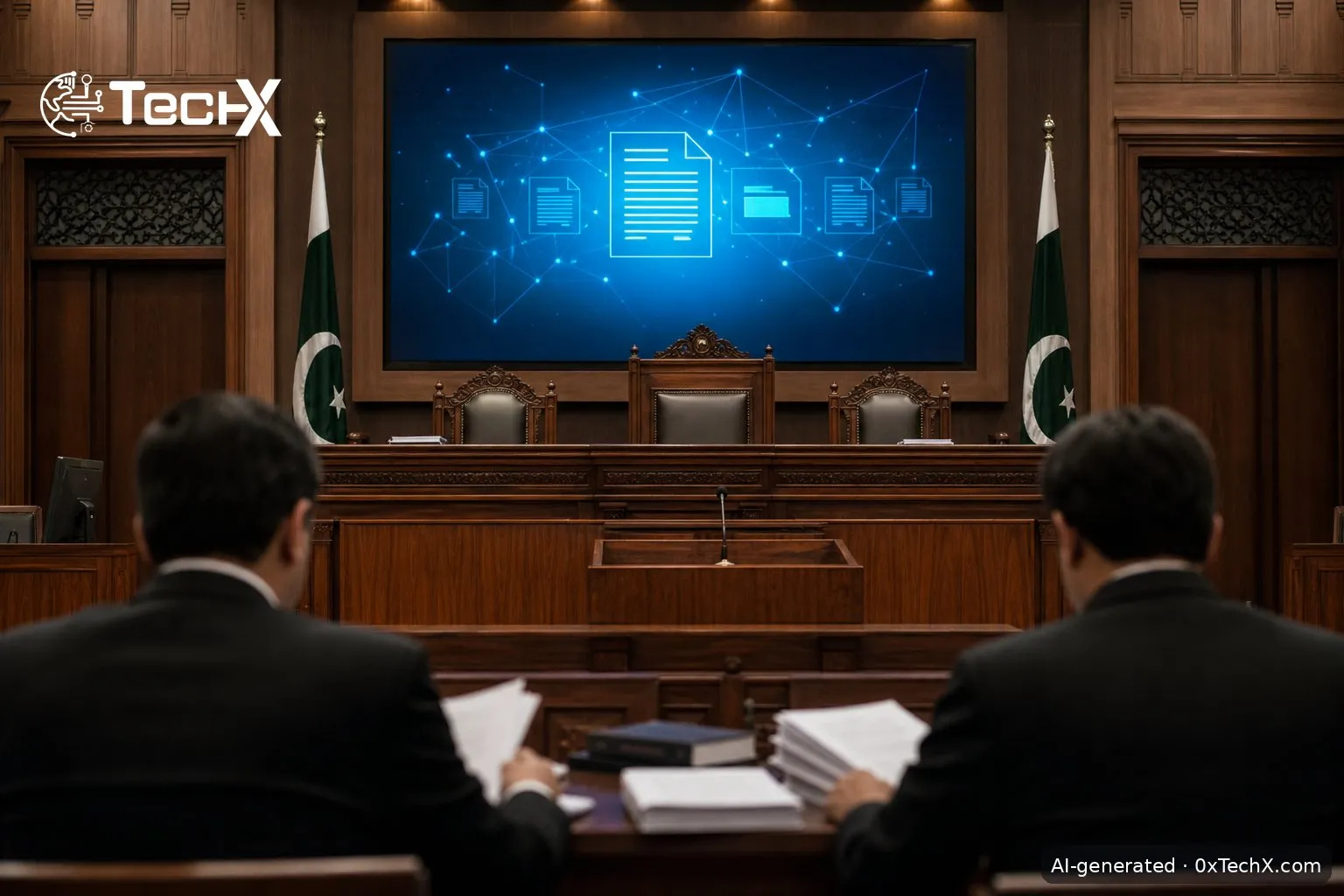
The collaboration is also expected to support the integration of modern technologies into judicial processes, aimed at improving efficiency, transparency, and access to justice. Discussions will focus on contemporary challenges in adjudication, judicial administration, and reform-oriented initiatives.
How Artificial Intelligence and Digital Courts Will Work
The meeting discussed digitalisation of the judicial system and the responsible use of artificial intelligence, with Pakistan expressing its desire to benefit from Türkiye's judicial experience and share its own expertise. Pakistan also expressed its desire to expand cooperation with relevant Turkish institutions, noting that alternative dispute resolution mechanisms could help reduce the burden of cases on the conventional judicial system.
Pakistan's courts carry one of the heaviest case backlogs in the region. Digital tools, AI-assisted case sorting, and online dispute resolution could all help ordinary people get faster access to justice without having to wait years for a court date. Türkiye has already made progress in this area, and Pakistan wants to learn from that experience directly.
Both sides drew attention to emerging challenges involving digitalisation, artificial intelligence, cross-border disputes, and increasingly complex economic relations, underscoring the need for closer judicial collaboration and exchange of expertise. Local tech startups in Pakistan are already scaling legal technology, meaning government-level cooperation with Türkiye will find a ready base of local innovation.
Background on Earlier Agreements Between Pakistan and Türkiye
This is the second formal judicial agreement Pakistan and Türkiye have signed in 2026. In April 2026, Pakistan and Türkiye entered a new era in judicial cooperation when the Chief Justice of Pakistan, Justice Yahya Afridi, and the President of the Constitutional Court of Türkiye, Kadir Özkaya, signed a separate memorandum at the Supreme Court.
That earlier deal focused on Pakistan's constitutional court link with Türkiye's Constitutional Court. The November 2026 agreement is a distinct arrangement between Pakistan's Supreme Court and Türkiye's Court of Cassation, which is Türkiye's highest civil and criminal appeals court, a different institution with a broader everyday jurisdiction.
What This Means for Pakistani Citizens and Court Backlogs
Most coverage of this story has focused on the ceremony and the diplomatic language, but the real-world impact for ordinary Pakistanis is in the details. If the Joint Working Group leads to actual e-court rollouts or AI-powered case management systems at the district level, it could cut waiting times for civil cases, reduce paperwork, and make legal processes more transparent.
Discussions have also covered case management systems, case flow mechanisms, and digital legal access platforms aimed at improving transparency and efficiency. The Turkish side highlighted technological reforms in its judiciary and appreciated Pakistan's progress in digital justice initiatives. Both countries agreed to expand cooperation in capacity building, court administration, and alternative dispute resolution.
Türkiye's Ministry of Justice has built a digital case management system called UYAP that handles millions of cases electronically. If Pakistan's Ministry of Law and Justice can draw on that model, even a partial rollout at district courts could have a wide impact across the country.