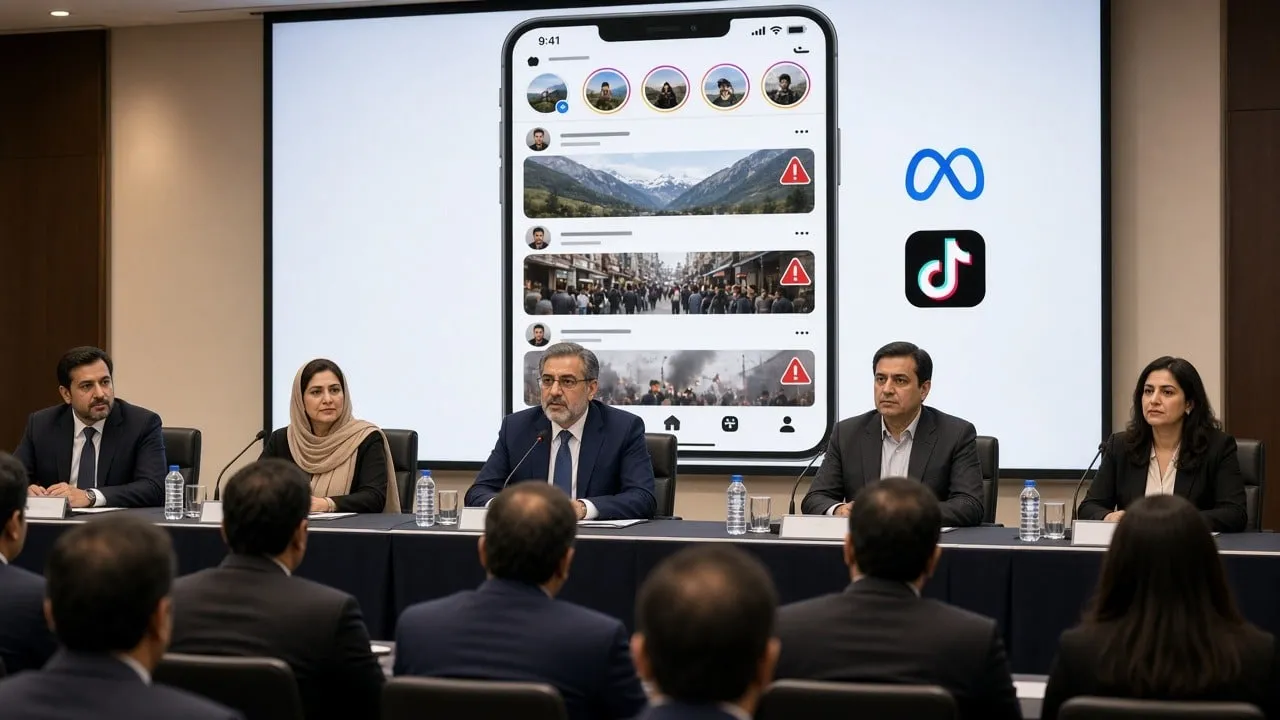
Federal ministers told global social media companies that they cannot escape responsibility for fake news and harmful content spreading on their platforms in Pakistan. They were speaking at an international seminar on Social Media Platforms and the Post-Truth Era, organised by the Sustainable Development Policy Institute (SDPI) in Islamabad on Tuesday.
The seminar brought together ministers, journalists, international experts and representatives of Meta and TikTok to discuss disinformation, platform accountability and how global companies should follow local laws.
Why Pakistan Is Tightening Control Over Online Disinformation
Pakistan has long struggled with the rapid spread of unverified information on digital channels. With a population of over 220 million, the country now has nearly 100 million social media users and around 160 million smartphone users, according to Federal Minister for Information Attaullah Tarar. The sheer scale of connectivity means that false narratives can travel across the country in seconds, often outpacing the ability of law-enforcement agencies to intervene.
In response, the government embarked on an 18-month consultation process that involved journalists, civil-society groups, technology firms and academic experts. The outcome was a revamp of the regulatory framework, including the creation of the Social Media Regulatory Authority (SMRA) and amendments to the Prevention of Electronic Crimes Act (PECA). The SMRA is tasked with monitoring content, issuing takedown orders and ensuring that platforms respect Pakistani privacy, honour and reputation standards.
What Ministers Said About the New Rules
In his keynote address, Federal Minister for Law and Justice Azam Nazeer Tarar warned that fake news spreads within seconds and its damage cannot be undone once it is out. He stressed that freedom of expression must be balanced with the protection of citizens' privacy, honour, reputation and dignity.
Tarar added that platforms cannot absolve themselves of responsibility and urged them to immediately remove content that is clearly false or scandalous. He highlighted that the revised PECA now gives the SMRA power to compel social media firms to delete illegal material within a prescribed timeframe, with penalties for non-compliance ranging from fines to temporary bans.
Federal Minister for Information Attaullah Tarar reiterated the statistical backdrop: "Pakistan has nearly 100 million social media users and around 160 million smartphone users, which makes the spread of unverified information a major challenge." He called for stronger collaboration between the government and tech firms to develop real-time verification tools.
Sindh Senior Minister Sharjeel Inam Memon urged platforms to use artificial-intelligence tools to filter terrorism-related and violent content before it is published. He noted that terrorist propaganda on social media has been linked to several recent attacks in the province, and early detection could save lives.
Balancing Regulation With Innovation
Federal Minister for IT and Telecom Shaza Fatima Khawaja warned that outright bans or shutdowns should be a last resort. She pointed to Pakistan's growing tech export sector, which has crossed $4.6 billion, and argued that heavy-handed restrictions could stifle innovation and deter foreign investment.
To avoid such outcomes, Khawaja called for better coordination with platforms through specialised bodies such as the Pakistan Telecommunication Authority (PTA) and the National Cyber Crime Investigation Agency (NCCIA). These agencies are expected to act as liaison points, processing lawful requests and monitoring compliance with SMRA directives.
National security expert Laurie A. Watkins proposed that major platforms operating in Pakistan appoint local representatives with the authority to respond to complaints and lawful requests. She also called for complaint mechanisms in local languages and regular disclosure of how long platforms take to review complaints.
Meta and TikTok Respond to Government Concerns
Dania Mukhtar, Head of Public Policy at Meta Pakistan, said government requests are first reviewed against Meta's policies and then go through legal and human-rights assessments before any content is restricted in the country. She emphasized that Meta seeks to balance compliance with local law against its global community standards.
Fahad Muhammad Khan Niazi, who leads public policy for emerging markets at ByteDance/TikTok, disclosed that the platform removed 33 million pieces of content in Pakistan during the second quarter of 2026, which was 1.1 % of all content uploaded during the period. He added that TikTok has signed a Memorandum of Understanding with the PTA, outlining cooperation on illegal content removal and data-sharing protocols.
SDPI Executive Director Dr Abid Qaiyum Suleri said in his welcome remarks that while social media has democratised access to information, terrorist groups are also using these platforms to spread propaganda and recruit supporters.
How the New Framework Works in Practice
The Social Media Regulatory Authority operates under a tiered notice-and-takedown system. When a complaint is filed, either by an individual, a media outlet or a law-enforcement agency, the SMRA reviews the claim within 24 hours. If the content is deemed illegal under Pakistani law, the platform receives a takedown order specifying the URL, the offending material and a compliance deadline, usually 48 hours.
Failure to comply can trigger a fine of up to Rs. 1.6 billion per day of non-compliance, or a temporary suspension of the service in the country. The authority also publishes quarterly transparency reports that detail the number of requests received, the categories of content removed and the average response time.
What This Means for Users and Businesses
For ordinary users, the new rules mean that false claims about health, politics or public safety are likely to be removed more quickly. However, critics warn that vague language around "honour" and "reputation" could be used to curb legitimate criticism. The government has pledged to set up an independent oversight panel to review contested takedown decisions.
Digital marketers and e-commerce firms operating in Pakistan must now ensure that any promotional material complies with local standards. The SMRA has indicated that misleading advertisements, especially those that exploit religious sentiment, will be scrutinised closely.
What to Watch for Next
The SMRA is due to release its first set of guidelines on AI-driven content moderation by the end of the year. Those guidelines will clarify the technical standards platforms must meet when deploying automated filters for extremist or false content.
In parallel, the PTA plans to launch a public portal where citizens can file complaints in Urdu, Punjabi, Sindhi and Pashto. The portal will assign a tracking number and promise a response within 72 hours, aiming to improve transparency and trust.
Both Meta and TikTok have signalled willingness to cooperate, but they have also stressed the need for clear, narrowly defined legal criteria to avoid over-reach. Ongoing dialogue at the SDPI seminar suggests that a formal framework for regular consultations between the government and tech firms will be institutionalised.
As Pakistan navigates the post-truth era, the balance between safeguarding free expression and curbing harmful misinformation will remain a central policy debate. The outcomes of these regulatory changes will likely influence how other South Asian nations approach the same challenge.