The US Commerce Department announced on November 22 that it will add Singapore-based Megaspeed and its subsidiary Speedmatrix to the Entity List, effectively banning the companies from buying or selling American goods and technology.
The decision follows a two-year investigation that accused Megaspeed of using shell networks to funnel advanced semiconductor technology to suppliers linked to China's People's Liberation Army, and of exploiting undisclosed ties between its executive Alice Huang and NVIDIA CEO Jensen Huang.
What Triggered the Blacklisting?
Federal investigators opened the probe after intelligence agencies flagged Megaspeed's repeated attempts to acquire US-origin chips that are subject to export controls. The agencies traced a series of offshore entities in Southeast Asia that moved money and hardware into a supply chain that ultimately reached manufacturers with documented connections to the PLA.
According to the Commerce Department, the evidence shows Megaspeed received $3.6 billion in Chinese state funding through a "complex web of shell companies" that masked the ultimate destination of the technology. The funding was used to purchase restricted chip designs and equipment that would otherwise be barred from export to Chinese military-linked firms.
How the Entity List Process Works
The Entity List is administered by the Bureau of Industry and Security (BIS) within the Commerce Department. When a company is placed on the list, US exporters must obtain a license before any controlled items can be sold to that entity, and licenses are rarely granted for national-security reasons.
Adding a firm to the list requires a recommendation from multiple agencies, typically the Department of State, the Department of Defense, the Treasury, and the intelligence community. In this case, Treasury Secretary Scott Bessent confirmed that four federal agencies had supported the move "for months" before the public announcement.
Despite the inter-agency consensus, Commerce Secretary Howard Lutnick's department holds final authority. The delay in acting on the recommendation became public when Bessent confronted Lutnick in a White House Situation Room meeting, exposing an internal disagreement that had kept the blacklist pending for months.
Who Is Alice Huang and What Was Her Role?
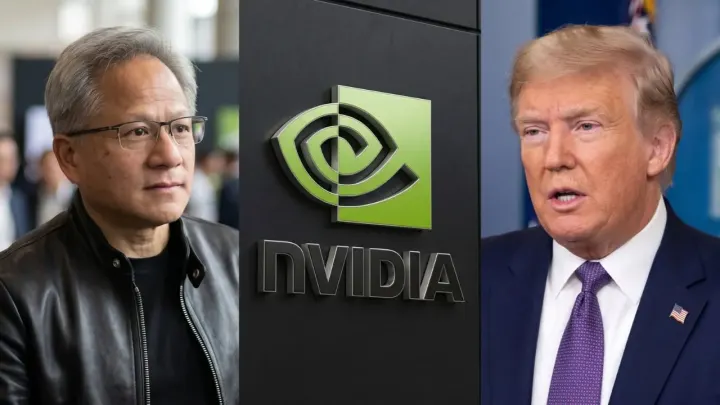
Alice Huang, an executive at Megaspeed, is alleged to have maintained undisclosed relationships with Jensen Huang, CEO of NVIDIA. Investigators say these ties gave Megaspeed privileged access to restricted chip technology that NVIDIA was developing for US customers.
The alleged personal relationship also overlapped with a separate affair involving a senior NVIDIA employee, a detail that sparked a leadership crisis at the graphics-chip maker. Jensen Huang resigned on November 12 after admitting the affairs, but was reinstated on November 22 following public endorsement from former President Donald Trump and a reversal by the NVIDIA board.
Impact on US Semiconductor Export Controls
The Megaspeed case has become a flashpoint in the broader debate over how the United States enforces export restrictions on advanced semiconductor technology. Critics argue that the government's intelligence community had been aware of Megaspeed's activities for years, yet the firm operated openly until the high-profile NVIDIA scandal brought the issue to public attention.
Industry analysts note that the blacklist will likely halt ongoing shipments of US-origin chips to Megaspeed and Speedmatrix, but the longer-term effect depends on whether the companies can re-route their supply chains through non-US sources. The move also sends a signal to other firms that the US is prepared to act decisively when export violations intersect with national-security concerns.
What Does the Ban Mean for Singapore and the Region?
Singapore hosts a vibrant semiconductor ecosystem, with many multinational firms operating research and manufacturing facilities. The blacklisting of two Singapore-based entities underscores the importance of compliance with US export rules, even for companies that are physically located outside the United States.
Local regulators in Singapore have pledged to cooperate with US authorities and to tighten oversight of firms that engage in cross-border technology transfers. Companies in the region are expected to review their supply-chain due diligence procedures to avoid similar sanctions.
Next Steps and Ongoing Investigations
After the announcement, the Commerce Department will issue formal Entity List entries for Megaspeed and Speedmatrix. US exporters will be required to submit license applications for any pending transactions, and those applications will be evaluated on a case-by-case basis.
Federal prosecutors have indicated that criminal charges could follow if evidence shows willful violations of export-control statutes. The Department of Justice is reportedly reviewing the investigation files to determine whether indictments are warranted.
Meanwhile, Congress is expected to hold hearings on the effectiveness of current export-control frameworks, with particular focus on how shell companies can be used to evade restrictions. Lawmakers have suggested amendments that would require greater transparency for foreign subsidiaries of US-origin technology firms.
Practical Takeaways for Businesses
Companies that deal in US-origin semiconductors should immediately audit their customer lists for any entities that may be linked to restricted parties. Enhanced screening of indirect partners, such as distributors and shell companies, is essential to avoid inadvertent violations.
Legal counsel should advise on the need for robust record-keeping of all communications with foreign partners, especially when dealing with high-technology items that fall under the Export Administration Regulations (EAR). Failure to comply can result in severe penalties, including fines, loss of export privileges, and criminal prosecution.
For firms operating in Southeast Asia, the Megaspeed case serves as a reminder that US export controls have extraterritorial reach. Even if a company never physically ships goods from the United States, the use of US-origin technology in its products can trigger the same licensing requirements.
Broader Implications for US-China Tech Competition
The scandal arrives at a time when the United States is tightening its overall technology strategy toward China. Recent policy moves include expanded restrictions on AI chips, increased investment in domestic semiconductor manufacturing, and heightened scrutiny of foreign direct investment in critical tech sectors.
By targeting a firm that allegedly funneled US chips to the PLA, the Commerce Department reinforces the message that violations will be met with decisive action, regardless of the firm's geographic location. Observers say this could deter other intermediaries from acting as conduits for prohibited technology transfers.
However, experts caution that the underlying challenge remains: sophisticated supply-chain networks can obscure the ultimate end-user. Continued cooperation between intelligence agencies, customs officials, and industry partners will be essential to close those gaps.
In summary, the addition of Megaspeed and Speedmatrix to the Entity List marks a significant enforcement step in the United States' effort to protect its semiconductor leadership and to limit the flow of advanced chips to China's military apparatus.