Pakistan and Türkiye have signed three agreements to strengthen cooperation in the mining sector, covering the exploration and development of antimony, copper, gold and other mineral resources in Balochistan.
Under the first agreement, the Pakistan Mineral Development Corporation (PMDC) and Türkiye's MTA International Company (MTAIC) signed a shareholders' agreement to develop antimony resources in Pishin district. In a separate agreement, Mari Minerals (Pvt) Limited and MTAIC agreed to jointly pursue the exploration and development of copper, gold and associated mineral deposits in Chagai district.
What the Agreements Entail
The two project-specific agreements were accompanied by a tripartite memorandum of understanding (MoU) signed by the Geological Survey of Pakistan (GSP), Türkiye's General Directorate of Mineral Research and Exploration (MTA) and MTA International Mining and Consultancy Inc. (MTAIC). The MoU aims to promote technical exchanges, institutional cooperation and capacity building in geological research and mineral resource development.
All three documents create a legal and operational framework for sharing technical expertise, joint field work, data sharing and training programmes. The shareholders' agreement gives each partner a defined equity stake in the exploration licences, while the MoU sets out mechanisms for joint workshops, staff exchanges and the establishment of a joint advisory committee.
Why Antimony, Copper and Gold Matter for Both Countries
Antimony is a critical mineral used in flame-retardant chemicals, lead-acid batteries and semiconductor manufacturing. Global demand for antimony has risen as electronics and clean-energy technologies expand. Pakistan's Pishin district holds one of the country's few known antimony deposits, but commercial production has never been established.
Copper is a base metal essential for electrical wiring, renewable-energy infrastructure and electric-vehicle batteries. The Chagai district sits on a belt that has produced copper ore for decades, yet large-scale modern mining has been limited by financing and technical capacity.
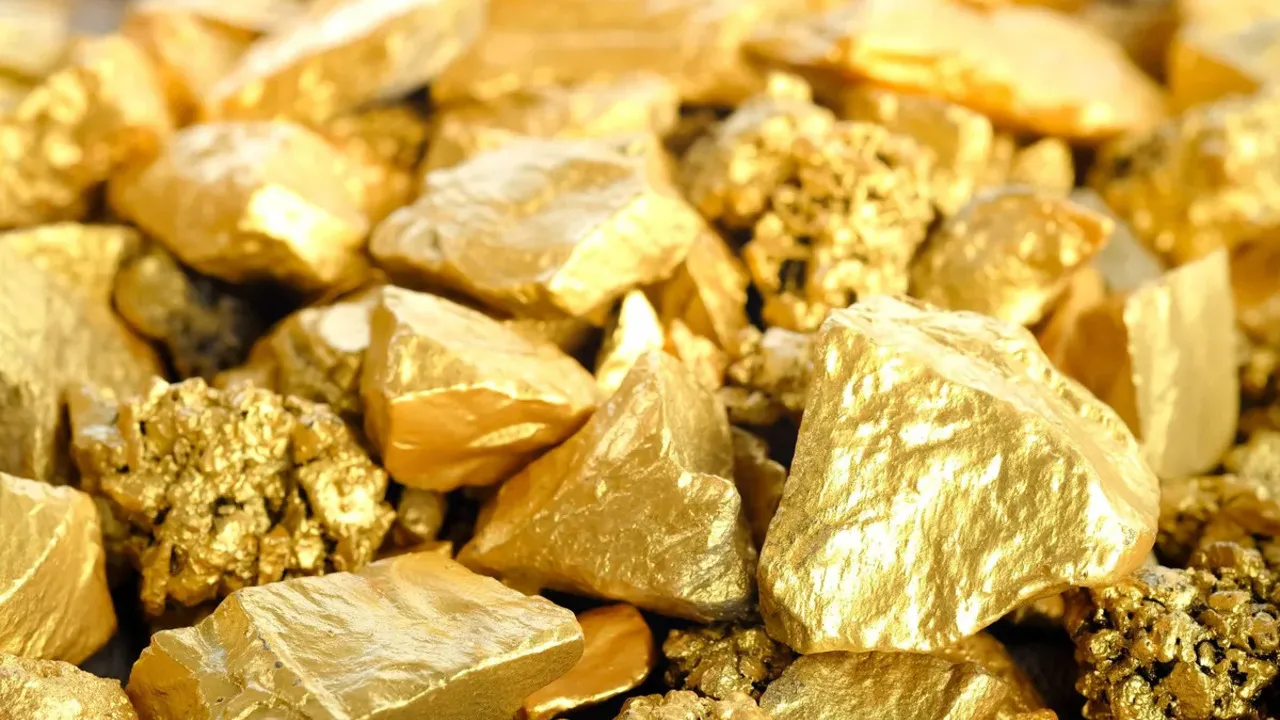
Gold remains a high-value export commodity and a hedge against currency volatility. Balochistan's historic gold fields have attracted intermittent exploration, but no sustained, large-scale mining operation exists.
For Türkiye, the agreements align with its national strategy to secure raw material supplies for its growing manufacturing sector. Türkiye imports most of its antimony and copper, and a reliable source from a friendly partner reduces exposure to market volatility.
Historical Context of Pakistan-Türkiye Mineral Ties
Economic cooperation between Pakistan and Türkiye dates back to the 1970s, when trade missions first exchanged visits. In the mining sector, joint projects have been limited to small-scale feasibility studies. Over the past five years, both governments have signed memoranda to explore deeper collaboration, driven by Pakistan's 2020 Mineral Policy that encourages foreign investment and Türkiye's "Strategic Mineral Access" program.
The 2022 Pakistan-Türkiye Business Council meeting highlighted mining as a priority area, and several Turkish firms expressed interest in Balochistan's under-explored belts. The current agreements are the first to translate that interest into binding contracts.
How the Partnership Will Operate on the Ground
Under the shareholders' agreement, PMDC will retain a 51 % stake in the antimony project, while MTAIC will hold 49 %. For the copper-gold venture, Mari Minerals will own 60 % and MTAIC 40 %. Both projects will be subject to Pakistan's mining licence regime, which requires environmental clearances, community consent and royalty payments.
Technical teams from GSP and MTA will conduct joint geological mapping, geophysical surveys and drilling campaigns. Data will be processed using software platforms supplied by Turkish partners, while Pakistani geologists will receive training in modern exploration techniques.
Capacity-building workshops are scheduled for early 2027, focusing on ore-reserve estimation, mine-design software and health-safety standards. A bilingual knowledge-exchange portal will host reports, maps and best-practice guidelines for both sides.
Potential Economic Impact on Balochistan
If commercially viable deposits are confirmed, the projects could generate direct employment for local workers, ranging from drill-crew operators to laboratory technicians. Indirect jobs may arise in logistics, catering, security and construction.
Revenue projections from a modest copper output of 30,000 tonnes per year and gold production of 5,000 ounces could add several hundred million rupees to provincial coffers, subject to royalty rates set by the provincial government.
Infrastructure upgrades, such as improved road access to the Chagai mining site and upgraded power supply for the Pishin camp, would benefit surrounding communities. The MoU also calls for community-development funds to support schools and health clinics.
Challenges and Risks Ahead
The success of the partnership hinges on exploration results. Early drilling may reveal lower-grade ore than anticipated, which could affect the economics of any future mine.
Investment commitments from Turkish partners must be secured before large-scale capital spending begins. Financing in the mining sector often requires guarantees from sovereign wealth funds or multilateral lenders, which have not yet been confirmed.
Security concerns in parts of Balochistan remain a factor. Companies will need to work with local authorities to ensure the safety of personnel and equipment.
Environmental compliance will be closely monitored. Both Pakistan and Türkiye have pledged to follow international best practices, but any breach could trigger community opposition and regulatory delays.
What Comes Next
Both governments have indicated that the first phase of field work will start in the fourth quarter of 2024, with an initial drilling program of 5,000 metres in each district. Results from that program are expected by mid-2025 and will determine whether full-scale mine development proceeds.
The joint advisory committee will meet quarterly to review progress, approve budgets and address any regulatory issues. A formal investment plan, including detailed capital-expenditure estimates, is slated for approval by the Pakistan Ministry of Energy and the Turkish Ministry of Energy and Natural Resources in early 2026.
Stakeholders, including local NGOs and provincial officials, have been invited to observe the environmental impact assessments. Their feedback will be incorporated into the final project design.
Overall, the agreements mark a concrete step toward deeper mineral cooperation between Pakistan and Türkiye, but the ultimate contribution to Pakistan's mineral economy will depend on the outcomes of exploration, the level of investment and the ability to navigate security and environmental challenges.