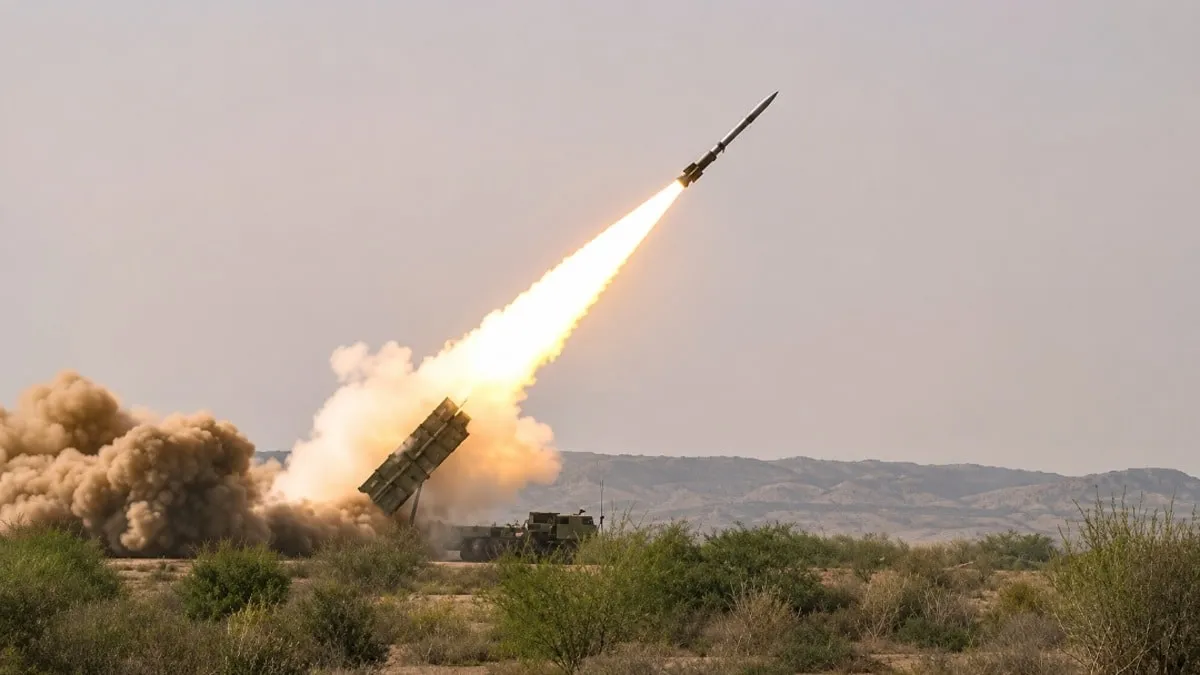
Pakistan Army Test Fires Fatah 3 Supersonic Cruise Missile
The Pakistan Army has successfully test-fired the Fatah-3 supersonic cruise missile, marking another milestone in the country's defense capabilities. This recent technological advancement highlights the ongoing efforts of the nation to upgrade its military hardware and maintain a strong defensive posture in the region.
According to the Inter-Services Public Relations (ISPR), the missile features advanced navigation and propulsion systems and can strike targets at long range with high precision at supersonic speeds. The successful test demonstrates the growing technical expertise of local engineers and defense scientists.
Understanding the Fatah 3 Supersonic Cruise Missile Technology
Cruise missiles are guided weapons that fly at lower altitudes and maintain a constant speed, using an aerodynamic lift to navigate toward targets. The addition of supersonic capabilities means the Fatah-3 travels faster than the speed of sound, significantly reducing the reaction time for any defensive systems attempting to intercept it.
Modern guidance systems, such as the advanced navigation integrated into the Fatah-3, rely on a combination of inertial guidance, satellite navigation, and terrain-matching databases. These technologies ensure that the weapon can hit coordinates accurately regardless of electronic jamming or adverse weather conditions.
Impact on the Army Rocket Force Command
The Fatah-3 will enhance the operational flexibility and strike range of the Pakistan Army's Army Rocket Force Command, strengthening the country's conventional deterrence and defense capabilities. Specialized units within the military will integrate this hardware into their standard operational procedures to ensure readiness.
پاکستان آرمی کا فتح-3 سپرسانک کروز میزائل کا کامیاب تجربہ
پاکستان آرمی نے فتح-3 سپرسانک کروز میزائل کا کامیاب تجربہ کر لیا، آئی ایس پی آر
میزائل کا کامیاب تجربہ ملکی دفاعی صلاحیتوں میں ایک اور اہم سنگ میل ہے۔
فتح-3 جدید نیویگیشن اور پروپلشن سسٹم سے لیس ہے،
میزائل سپرسانک… pic.twitter.com/4WSj87qblp
— Aamir Ilyas Rana (@RanaAamirilyas) November 18, 2026
Operational flexibility allows military commanders to respond to various tactical scenarios with precise force options. By extending the reach of conventional artillery and rocket units, the armed forces can project power effectively while maintaining strategic stability.
High-Level Observation of the Missile Test
The launch was witnessed by the Commander of Army Rocket Force Command, senior military officers, scientists and engineers. Their presence highlights the collaborative effort required between military leadership and technical developers to bring such complex weapon systems from the drawing board to field trials.
Field testing is a critical phase in defense procurement and indigenous manufacturing. It validates computer simulations, aerodynamics research, and propulsion efficiency under real-world environmental conditions.
National Leadership Praise for Defense Scientists
President Asif Ali Zardari, Prime Minister Shehbaz Sharif, Chief of Army Staff and Chief of Defence Forces Field Marshal Asim Munir and the services chiefs commended the successful launch of Fatah-3. They appreciated the dedication and commitment of all those who contributed towards achievement of another significant milestone in development of national defence capabilities of Pakistan.
Political and military leaders frequently emphasize self-reliance in defense production to secure national sovereignty. Public recognition from top officials serves to boost the morale of technical personnel working in state laboratories and manufacturing facilities.
Future Outlook for Pakistan Defense Development
As the military incorporates the Fatah-3 into its active inventory, defense analysts will monitor further developments regarding production numbers and deployment locations. Continuous testing and refinement of guidance systems and rocket motors usually follow successful initial flight trials.
The success of the Fatah-3 program points toward continued investments in domestic defense technology. Future defense programs will likely build upon the telemetry and propulsion data gathered during this test to create even more capable systems.